English
EN


Russia has 25 tonnes of gold in its reserves in June added, as shown by the most recent Figures of the Bank of Russia. In total, the country now has an official gold reserve of 1,275 tonnes, good for sixth place in the ranking of countries with the largest reserves. In recent years, Russia has been adding precious metals to its reserves almost continuously in order to diversify its reserves.
In less than ten years, the country managed to expand its gold reserves from less than 300 to 1,275 tons, more than four times as much. Whereas in 2007 the country had only 2% of its total reserves in the form of gold, now it is more than 13%.
Since 2006, Russia has been adding gold to its reserves almost monthly. A significant part of this comes from domestic gold mines, which sell their product on to the central bank via the Russian banking sector. In 2014, Russia was by far the largest buyer of gold, as the chart below from the World Gold Council shows.
China has also added gold to its reserves in recent years. Since 2009, China's central bank has increased its gold reserves by more than 600 tonnes to a total of 1,658 tonnes. With this, the country rose to fifth place in the ranking of countries with the largest public reserves of gold. In total, central banks bought a net 477 tonnes of gold last year, of which 173 tonnes were accounted for by Russia.
The fact that, seven years after the crisis, central banks are still massively Buy gold is a very positive signal for the gold market.
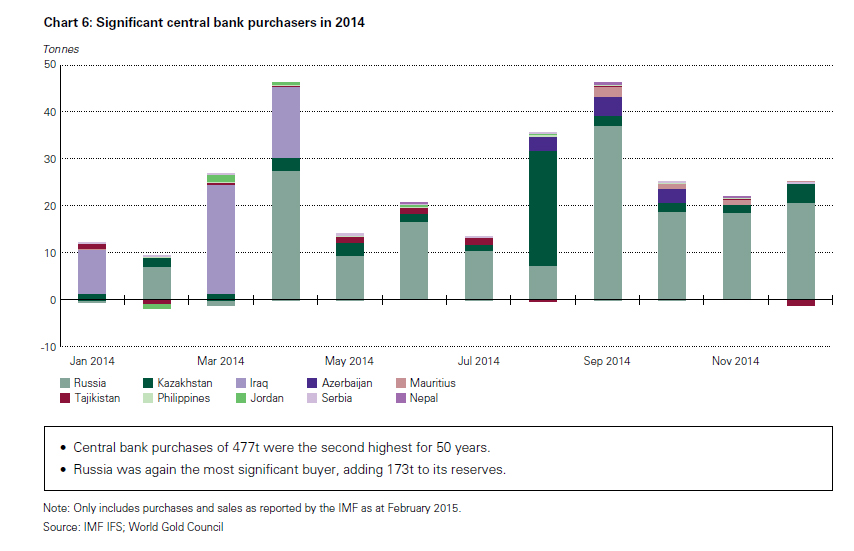
Russia already bought a lot of gold in 2014 and will continue to do so in 2015 (Chart from the World Gold Council)