English
EN


The central bank of Russia added gold to its reserves again in August, according to New figures of the central bank. In a month's time, half a million troy ounces were purchased, which is the equivalent of 15.55 metric tons.
With this latest addition, the total gold supply of Russia comes to 1,745 tons, which represents a value of $73.5 billion converted to the current gold price. That is almost 17% of the central bank's total reserves.
The following chart shows how Russia has built up its reserves since the beginning of this century, broken down into foreign exchange reserves and gold. The second graph shows how the size and value of the gold stock has increased over the years.
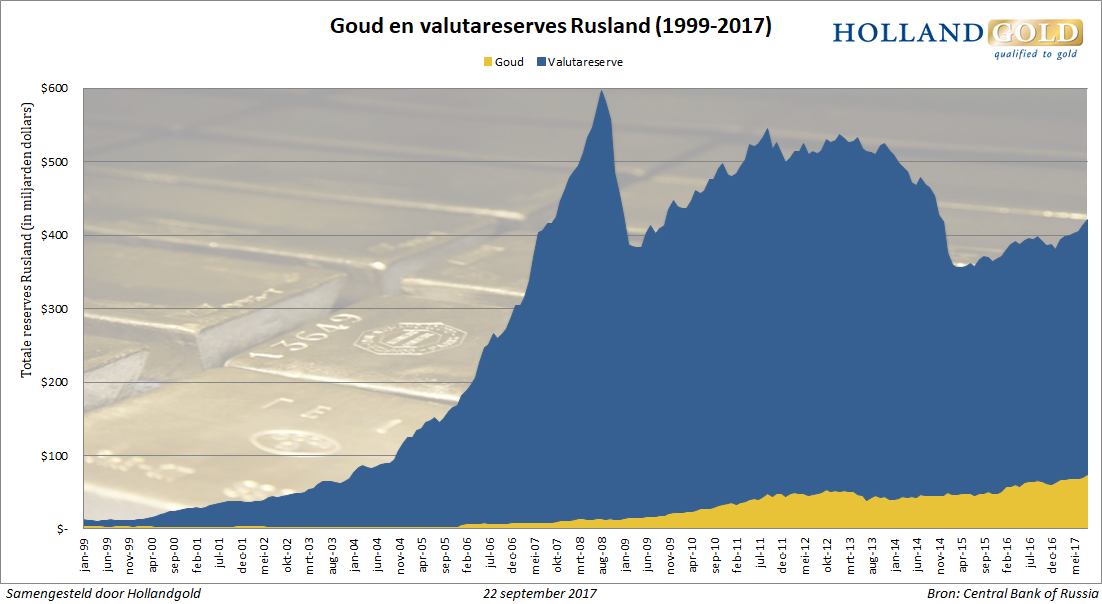
Gold and foreign exchange reserves Russia since 1999
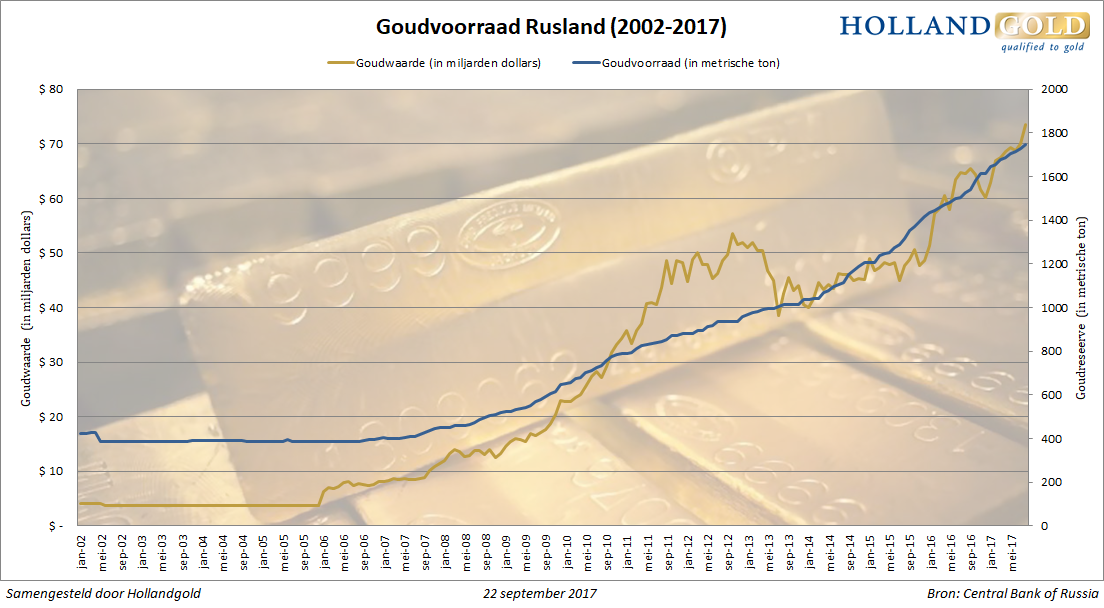
Russia keeps buying gold
No central bank buys as much gold as Russia's. Ten years ago, the country only had a little more than 400 tonnes of the yellow metal in its vault, now it is more than four times as much at 1,745 tonnes. Meanwhile, the price of gold also rose, which means that the gold stock is now worth much more than the amount for which it was purchased in recent years.
The governor of the central bank, Elvira Nabiullina, sees the precious metal as a way to spread risk. The central bank's second-in-command, Dmitry Tulin, said in 2015 that the gold stock is a 100% hedge against political and legal risk. Whatever the reason, it is apparently still beneficial for the central bank of Russia to buy gold under the current circumstances.
Since the outbreak of the financial crisis, central banks have been net buyers of gold again. Emerging economies, in particular, are adding more precious metals to their reserves to supplement foreign exchange reserves. Unlike foreign exchange reserves, precious metals have no counterparty risk. The precious metal has also proven itself over the centuries as a stable store of value for the longer term.
The United States and many European countries already have relatively large gold reserves. In fact, since the beginning of this century, several European countries have disposed of hundreds of tons of the precious metal in a coordinated manner.
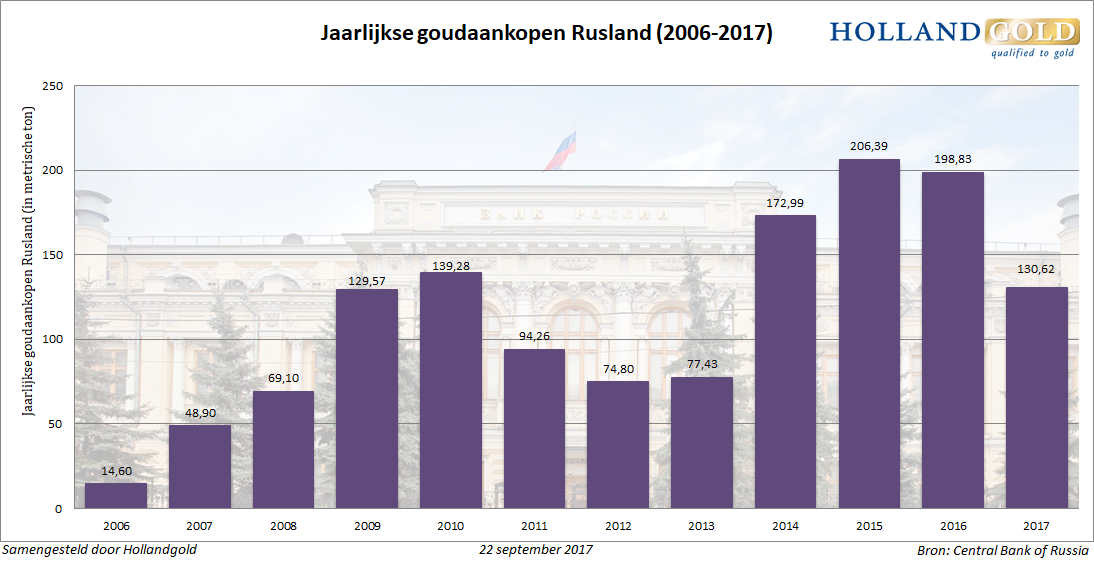
Russia is also buying a lot of gold this year