English
EN


Gold plunged by more than 2% on Friday following the hawkish speech by Fed Chair Warsh. Higher oil prices and rising bond yields appear to be setting the direction for now. Bessent's intervention in the bond market seems to have been in vain. In Dutch news: new Box 3 plans have been put on hold.
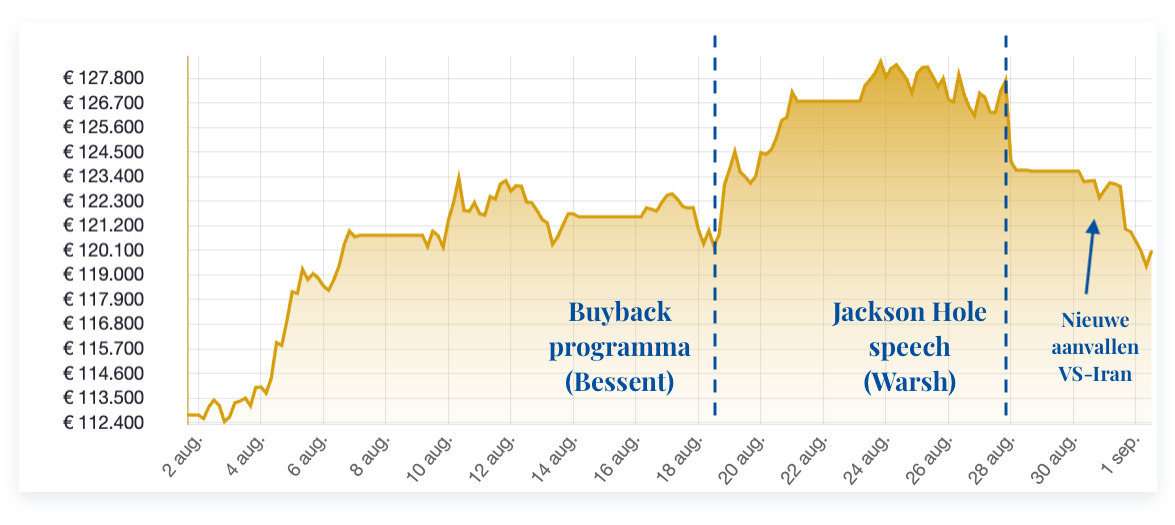 Gold price over the past month in euros per kilogram
Since last Friday (28-8), we have entered a new world when it comes to interest-rate expectations and gold prices. Just one week earlier, US Treasury Secretary Scott Bessent announced a controversial buyback programme for long-term government bonds, which pushed gold prices sharply higher. Read more about this and the new ‘milestone’ reached by US national debt as it broke through the $40 trillion mark in our weekly selection of 21 August.
Last Friday, Fed Chair Kevin Warsh delivered his long-awaited speech at the Jackson Hole symposium, where central bankers from around the world gather to discuss the latest monetary developments. Everyone was wondering whether Warsh would walk back his previous Fed presentation, which markets had viewed as a blunder. He did: most notably by adopting a firmer tone on inflation, positioning himself more clearly as a hawk.
Markets now put the probability of an interest-rate increase at 70% at the Fed's next rate decision on 15 and 16 September. This is a 180-degree turn compared with the previous week. At that point, markets still expected Warsh not to follow through with an interest-rate increase to combat inflation.
Those doubts have not entirely disappeared, however. “Words are just words,” says Tracy Chen, portfolio manager at Brandywine: “Actions speak louder.” George Catrambone, head of fixed income at DWS Americas, highlights another risk. The bond market may begin to treat a Fed rate increase as a foregone conclusion, causing bond yields to rise in anticipation. If economic data turn out differently, there is still a chance that the Fed will not follow through with that rate increase. “It's less about the fact that inflation has been above the 2% target, and more about the direction in which the economy is developing,” Catrambone says.
The risk described by Catrambone is already beginning to unfold, as yields on 10- and 30-year bonds rise while markets anticipate a Fed rate increase. This is being further reinforced by the resumption of exchanges of fire between the US and Iran. As the conflict escalates, concerns surrounding the Strait of Hormuz are also increasing and oil prices are surging. This raises the risk that high energy prices will fuel inflation and force the Fed to intervene by raising interest rates. This is weighing on the gold price.
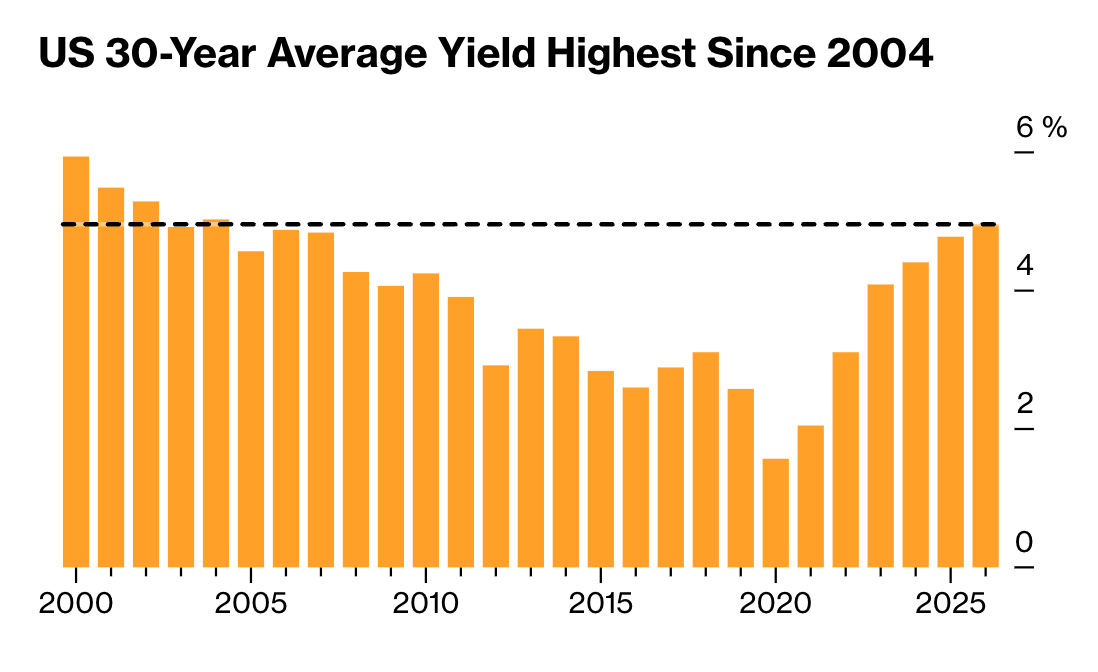 Average yield on US 30-year bonds at its highest level since 2004 (Source: Bloomberg).
|
Explainer: why gold can move in either direction when interest rates rise. Gold does not pay interest, while a government bond does. When yields rise, bonds become a more attractive safe haven than gold because they pay (more) interest. However, this can work in two different ways. Last week, yields rose following Bessent's intervention in the bond market. Investors interpreted this as a sign that the US debt burden was getting out of hand, making commodities or gold more attractive assets to own. This is the so-called debasement trade. The dollar weakened and gold surged. This week, yields rose again, this time because the market expects an interest-rate increase following Warsh's speech. A more hawkish Fed makes the dollar more attractive. The dollar strengthened and gold fell. The same rise in yields can therefore produce the opposite outcome. What matters is not simply thát yields are moving, but why. If yields rise because of a more hawkish Fed, that is negative for gold. If they rise because of doubts about government debt, it is actually positive news. |
Turning to Dutch news: most of you will probably have noticed that the planned reform of Box 3 has temporarily been shelved, De Telegraaf reported on Tuesday (1-9).
Following rulings by the Dutch Supreme Court, the way Box 3 tax is levied had to be changed. The proposed plans came under heavy criticism and made international headlines. This was because the proposal included taxing unrealised gains, for example increases in the value of shares, even if those shares had not yet been sold.
Although the legislation had reluctantly been approved by the House of Representatives, it still had to pass through the Senate. As part of the Budget Day deal, it was decided not to have the Senate consider the legislation for now and to put it on hold. Yesterday (1-9), this information leaked from the budget agreement, which had been concluded only a day earlier. The aim is to find another way to tax gains that have actually been realised.
Key dates to watch in the coming period: