9.3
8.713 reviews

English
EN


The Gold price in euro has fallen over the past two weeks, even hitting its lowest level in two months on Friday. At the time of writing, the price stands at around €48,400 per kilo and €1,506 per troy ounce, down 7.7% from the record set on May 18. This decline is largely attributable to an exchange rate effect, as the exchange rate fell by only 3.2% in dollar terms over the same period.
As the graph below shows, the Gold price In dollars at the time of writing, it is still above $1,700 per troy ounce. In euros, almost €100 per troy ounce and more than €3,000 per kilo were taken off the price in the same period. Despite this correction, gold is still well in the plus for this year with a year to date return of 12.9% in dollars and 11.5% in euros. As a result, the precious metal significantly outperformed equities, which are still lower than at the beginning of the year despite the recovery rally.
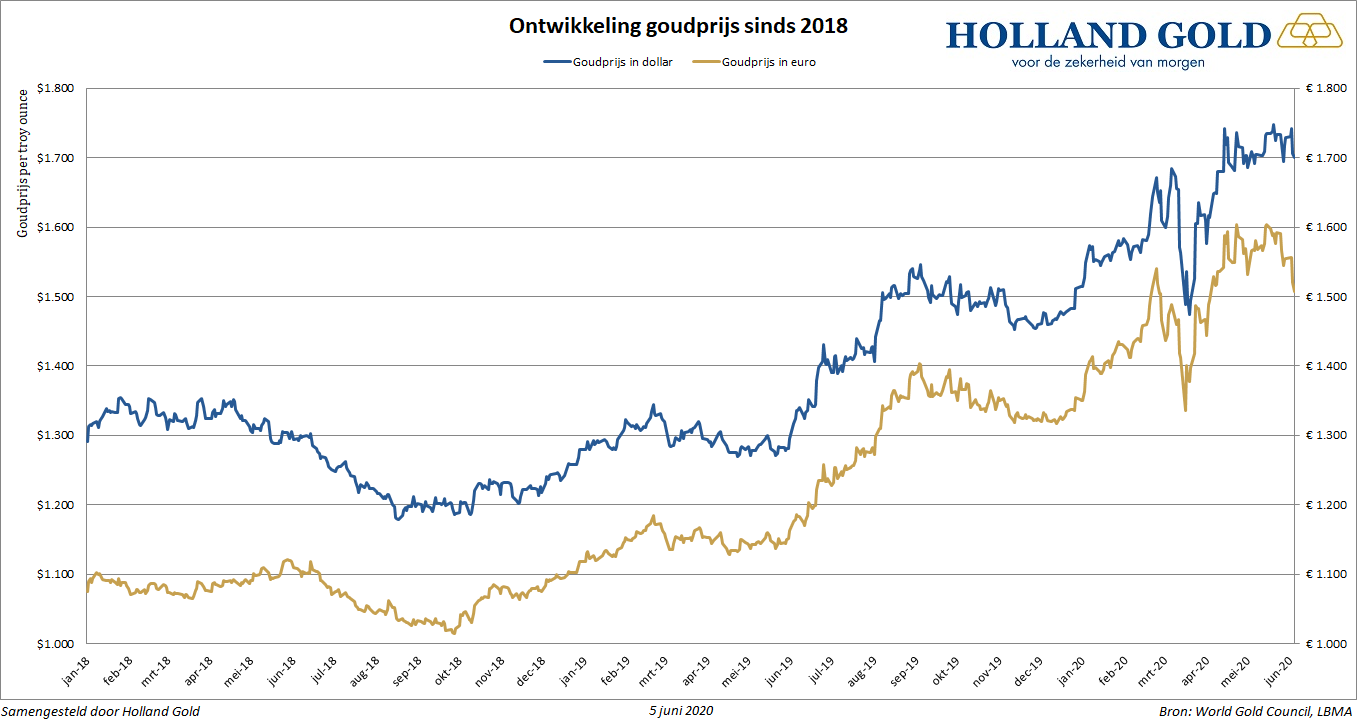
Gold price development since the beginning of 2018
The exchange rate effect also strengthened the upward movement of the gold price over the past two years. As a result, the gold price in euros has risen faster than in dollars over the past two years. As the chart below shows, the euro fell from almost $1.25 at the beginning of 2018 to a low of less than $1.10.
The euro initially appeared to benefit from the turmoil in the financial markets in February and March, but this upward movement proved short-lived. The common currency squandered its gains and fell back below $1.10. At the time of writing, the exchange rate is at $1.13. That's the highest level in three months and 4.5% higher than the May 25 bottom.
The euro has risen in recent days ahead of an expansion of the ECB's asset purchase programme. The central bank is going to €600 billion buy more government bonds to reduce interest rate differentials between euro area countries. This gave financial markets more confidence in the value of European government bonds, especially those of southern euro area countries. For example, the interest rate on Italian 10-year bonds fell from about 1.6 to 1.4 percent as a result of the decision.
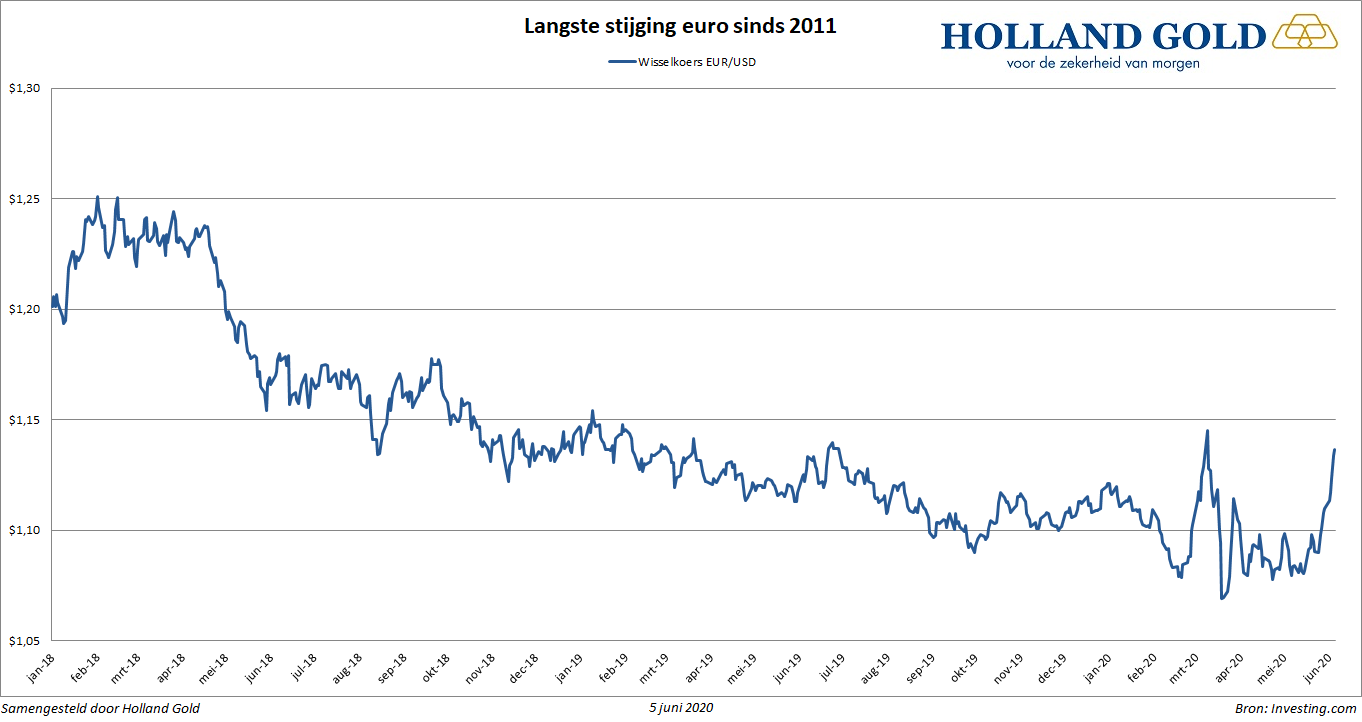
Longest euro rise since 2011
This contribution was made from Geotrendlines


