English
EN


Demand for silver rose to a record level in 2015, mainly due to a strong increase in demand for silver coins. The demand for silver jewellery is also increasing every year. And while demand is rising, the supply of scrap silver is lagging behind, with the result that 2015 was the third year in a row with a shortage in the silver market. Those are the key findings from the 2016 Silver Survey released Thursday by Thomson Reuters GFMS.
In 2015, the silver price fell to its lowest level in five years, but that has not had a negative impact on the demand for silver investment coins. On the contrary, Thomson Reuters GFMS figures show that it was a record year for the world's major mints. Never in recent years have so many silver coins and silver bars been sold as in 2015, as the graphs below show.
We also saw this trend in Hollandgold, because the Silver Coins were unstoppable for a long time. When the silver price dropped to a new low in the summer, the coins were hard to come by and long delivery times arose at the mints. But elsewhere in the world, there was also a rush for physical silver as a result of the price drop.
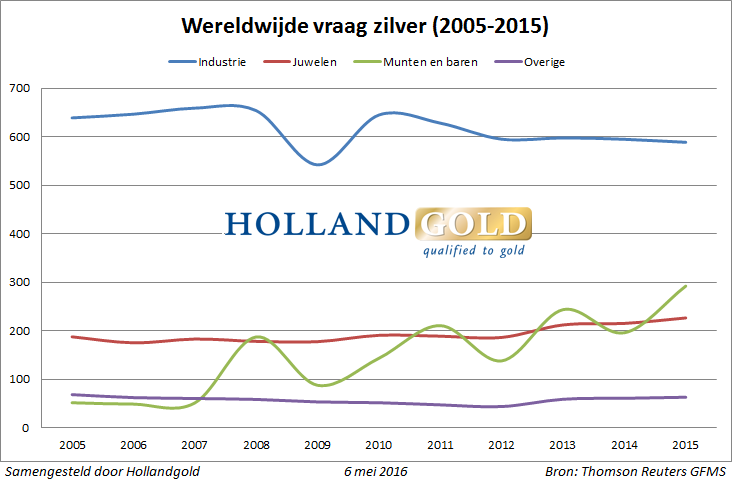
Global demand for silver since 2005 (Source: Thomson Reuters GFMS)
Another notable trend is the increasing demand for silver for the production of solar panels. In 2014, 63.2 million troy ounces of silver were used for these panels, in 2015 that had increased by 23% to 77.6 million troy ounces. Due to relatively weak growth in the global economy, the demand for silver for electronic devices fell to 246.7 million troy ounces in 2015, a decrease of 10%.
The figures from the latest Silver Survey 2016 show that investing in silver is gaining popularity. Despite the further decline in Silver price In 2015, total investment demand rose by 16% to a record level. Demand for physical coins and bars increased by 24%, while the amount of silver in investment products such as ETFs fell by 17.7 million troy ounces to 617.8 million troy ounces. Investors' preference is therefore shifting towards the physical ownership of precious metals.
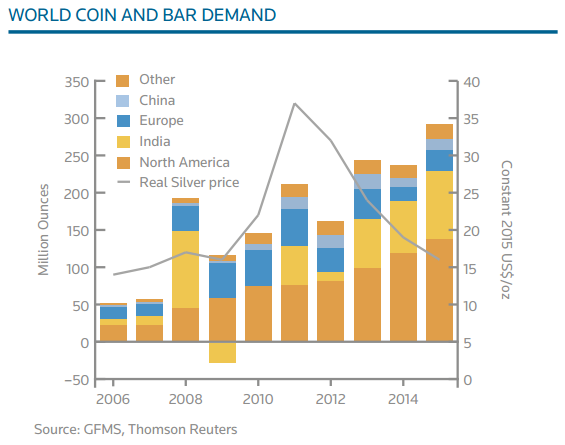
Demand for silver coins and bars continues to rise (Source: Thomson Reuters GFMS)
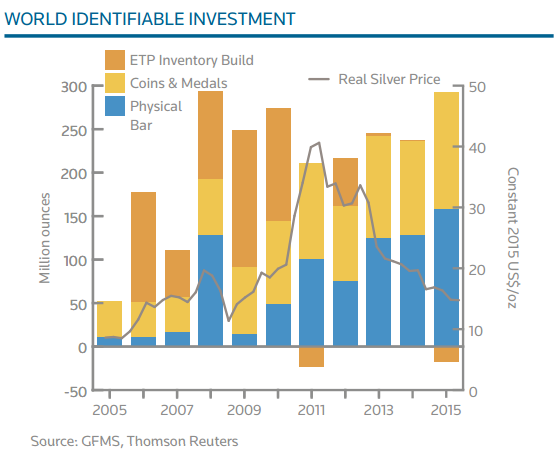
Investors prefer coins and bars over ETFs (Source: Thomson Reuters GFMS)
The production of silver mines also rose to a record level in 2015, as the silver price was higher than the average cost price. Last year, the drop in prices pushed down the supply of scrap silver by 13% to the lowest level since 1992. This development put further pressure on the silver market in 2015. It is striking that governments have also stopped selling their silver stocks. In the last ten years, Russia has brought tens of millions of ounces of silver to the market.
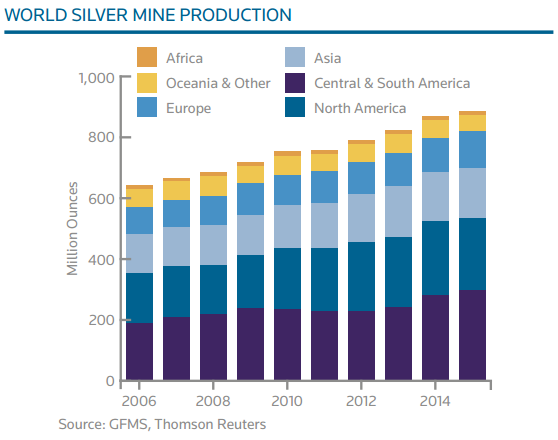
Silver mining production continues to rise (Source: Thomson Reuters GFMS)
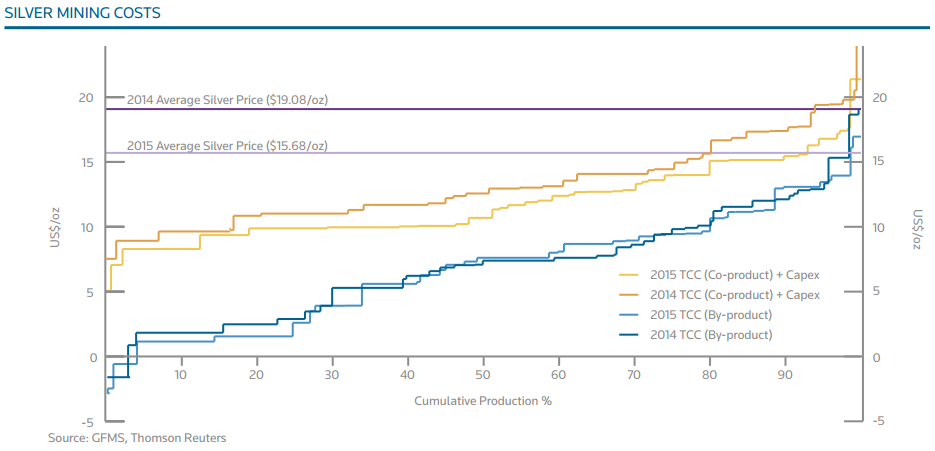
Silver mining production costs (Source: Thomson Reuters GFMS)
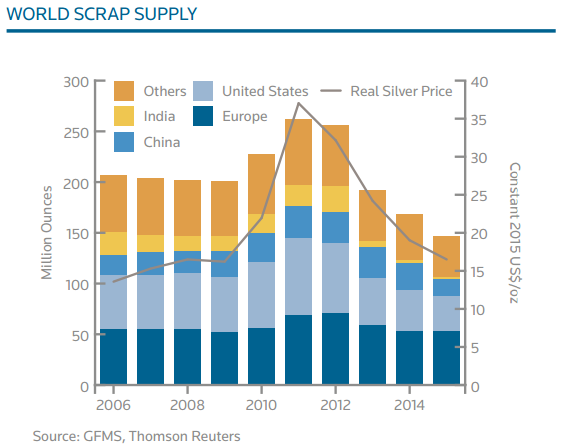
Supply of scrap silver to lowest level since 1992 (Source: Thomson Reuters GFMS)
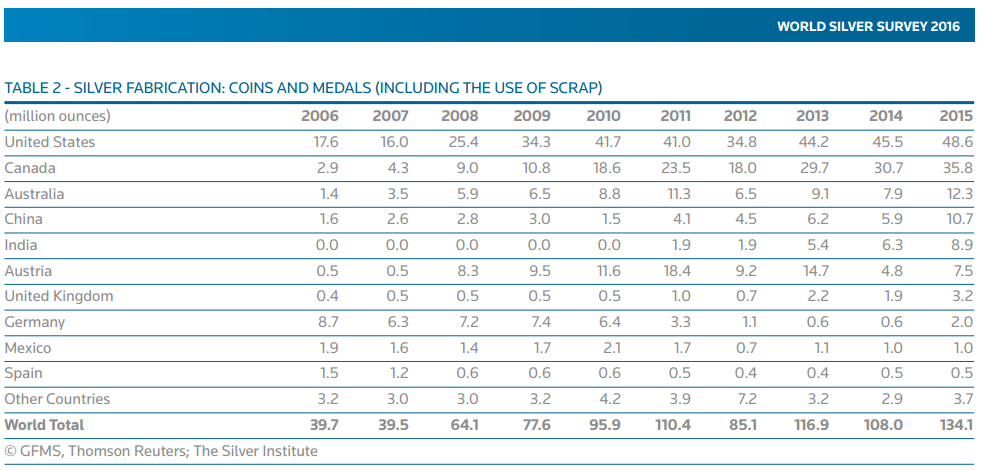
Full figures from the Silver Survey 2016 (Source: Thomson Reuters GFMS)