English
EN


The Fed is considering its inflation target to compensate for the period when inflation was below target. That's what Fed board member Lael Brainard said last Friday during the US Monetary Policy Forum in New York.
The central bank believes inflation is too low and sees a 'flexible inflation target' as an effective tool to bring average inflation to the 2% target more quickly. It also gives the central bank room to cut interest rates again, even if inflation rises above 2%.
Normally, a central bank has to raise interest rates when inflation rises. Raising interest rates makes it less attractive to borrow money, which reduces lending. In this way, a central bank can influence the money supply in the economy and thus indirectly inflation. When deflation threatens, a central bank can lower interest rates in order to stimulate lending and boost inflation.
Since the financial crisis of 2008, central banks have thrown these rules overboard. To prop up the financial system and the global economy, they lowered interest rates to historic lows. After a decade of extremely low interest rates and stimulative policies, debt has risen to record levels, making the economy even more vulnerable.
Now that inflation is rising, central banks should actually put on the brakes, but no one dares to take that step. At the end of 2018, the Fed already had to change course by 180 degrees, when investors became nervous and stock markets plummeted. The economy could not tolerate even higher interest rates.
It is no coincidence that the Fed is now proposing to ease the inflation target. The coronavirus poses a major threat to the global economy, which may require new stimulus measures. In a Submitted article on Bloomberg, Narayana Kocherlakota, former president of the Federal Reserve Bank of Minneapolis, is already advocating for a central bank rate cut.
Kocherlakota expects a flight towards the dollar, which the central bank should slow down by cutting interest rates again. According to him, a pre-emptive rate cut of 25 or even 50 basis points is a cheap insurance against impending doom.
An easing of monetary policy could further boost inflation, which the central bank can absorb by easing the inflation target. All signs point to central banks and governments coming up with new stimulus. In both cases, it is the saver who pays the bill in the form of higher inflation or lower interest rates. We will continue to monitor developments closely.
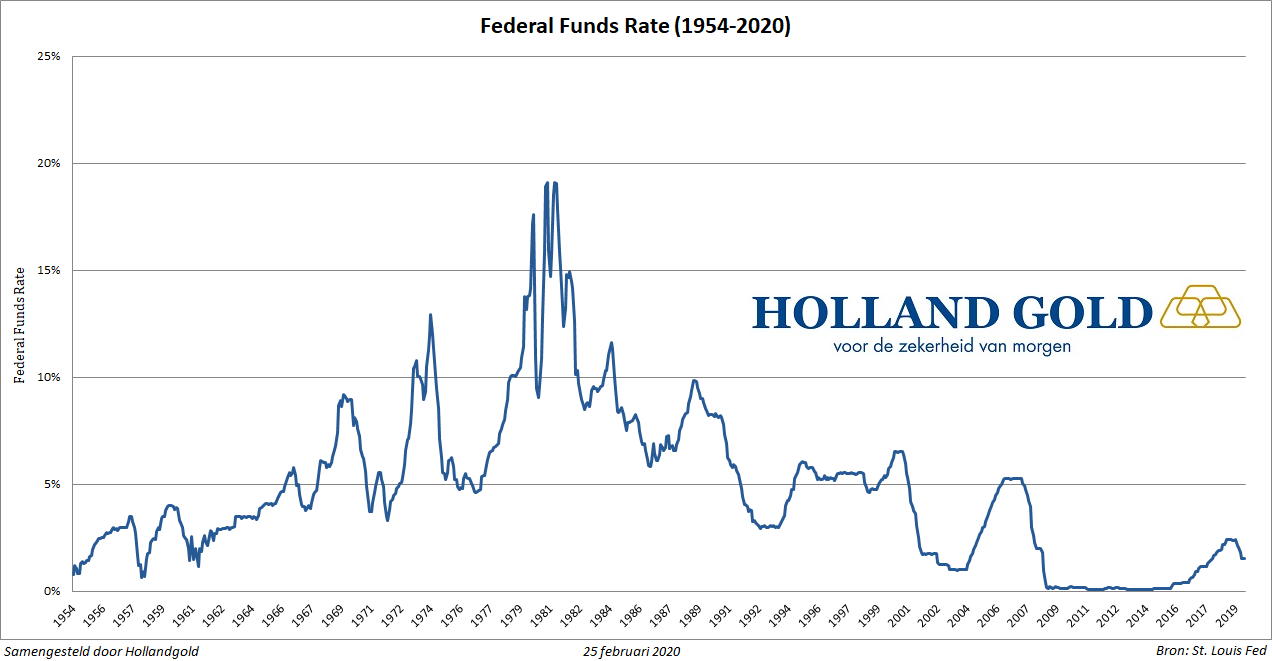
Federal Reserve has cut interest rates three times this year
This contribution was made from Geotrendlines