English
EN


The U.S. commodity exchange has increased the margin requirements for gold by 9.1% this week lowered. For a contract for 100 troy ounces of gold, the margin goes to $10,000, while for a mini contract of 50 troy ounces it drops to $5,000. This reduction makes it easier for traders to take a position in gold via the futures market. Major players in the gold market such as traders, smelters, and mining companies use this market to hedge their physical gold reserves. Also Bullion banks hedge their stocks of physical bullion through futures contracts to remove price risk.
Traders who enter into futures contracts must have a certain amount of money in their account for this purpose, the so-called Margin Requirement. This is an amount of 3 to 12 percent of the total value of the contract. This is not a deposit of the underlying asset, but a margin of safety that the broker uses as a hedge against a decline in the underlying asset. The CME Group, the company behind the Chicago Mercantile Exchange, regularly adjusts these margin requirements according to market conditions. If volatility increases, it will charge a higher margin. If volatility drops, traders are allowed to take a position with less margin.
There are two different types of margin requirements in the futures market. The 'Initial Margin' is the margin that you as a trader must maintain in order to conclude a new futures contract. The 'Maintenance Margin' is the minimum amount that a trader must always have in his account during the contract. If the balance on the account is no longer sufficient, a so-called margin call, which means that the trader has to deposit additional funds in order to hold the position. If that fails, the broker will liquidate (part of) the open position.
The phenomenon of margin exists not only in the futures market, but also in the stock market. Yet these are two different things, as the video below from the CME Group shows. In the stock market, margin refers to the portion of a stock position that an investor has purchased with borrowed money. For example, an investor can hold a larger position in a particular stock with a margin than if he or she were to put in the full amount. In the futures market, the margin is the amount you need to have in the account to be able to conclude a futures contract. Thus, it is not a deposit for the underlying value of the contract.
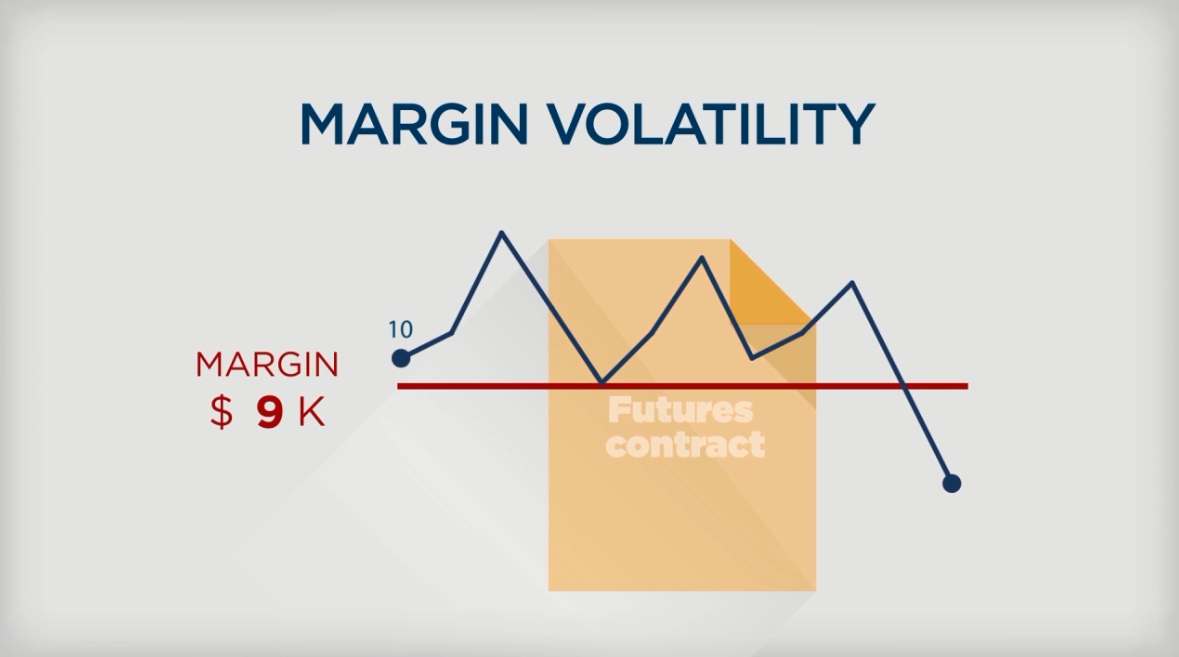
How do margin requirements work in the futures market?
This contribution comes from Geotrendlines