English
EN


Yesterday marked Chinese New Year (Lunar New Year). This holiday is widely celebrated during the Spring Festival, the most important vacation period in China. In the shadow of these festivities, gold and silver prices appear to be declining. Asian exchanges are closed and trading volumes remain limited. Could the calm of Chinese New Year present the perfect buying opportunity for gold and silver?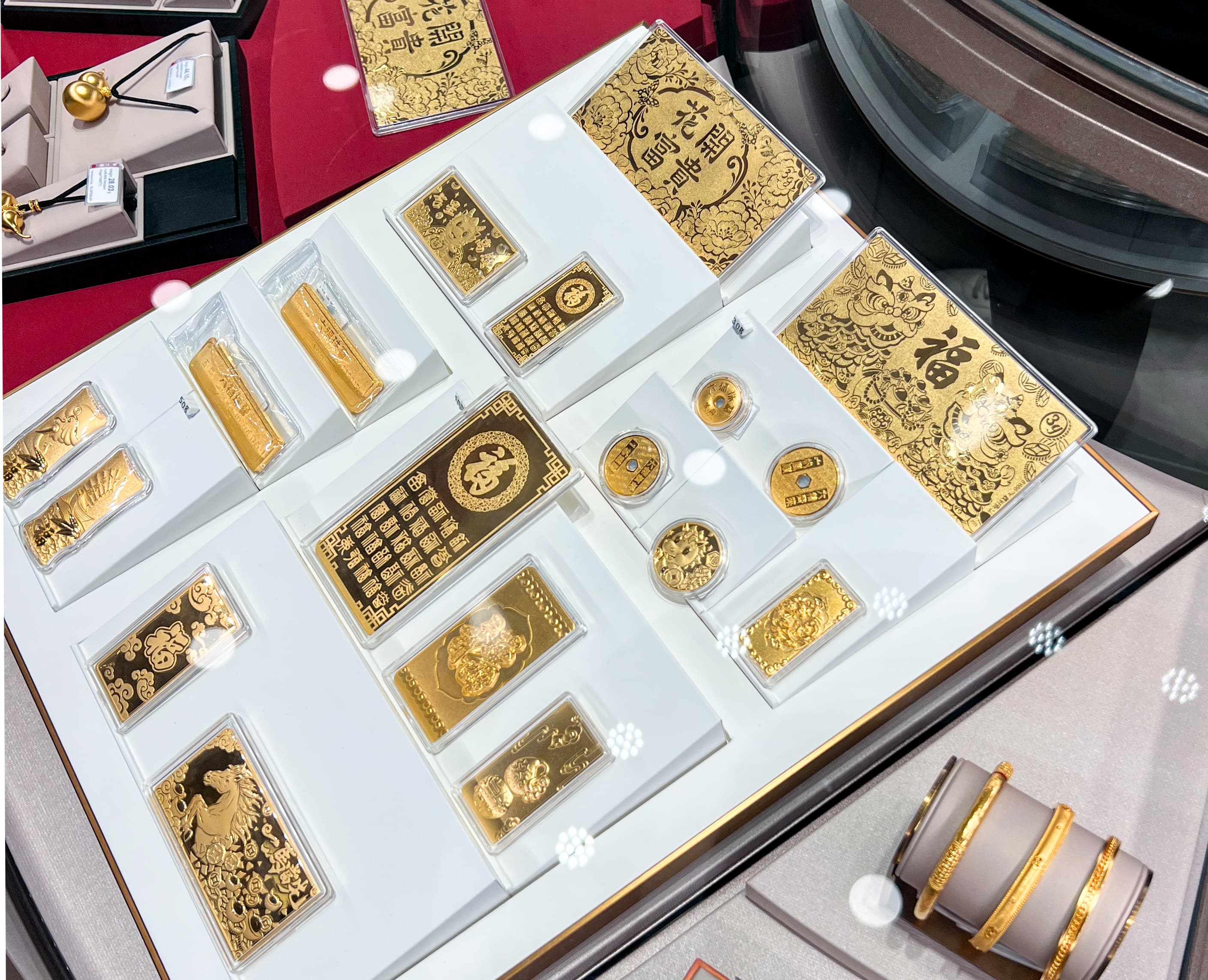 Chinese gold traditionally given as a gift during Lunar New Year
Seasonal effects in gold and silver prices are frequently analyzed. When recurring patterns emerge, they can offer attractive moments to buy or sell gold and silver. A well-known example is India’s important Diwali festival, when millions of Indians purchase silver at a time when tradition and investment converge. In October 2025, this contributed to a historic silver squeeze, as shortages driven by strong physical demand intensified pressures on the market. Chinese New Year also sees substantial gold purchases in China, ranging from recognized investment coins to richly decorated products resembling coins or banknotes. Premiums on these items are typically higher than those on standard investment coins and bars.
To support consumers amid elevated gold prices, China’s largest retailer Chow Tai Fook Jewellery Group has introduced temporary discounts. With Valentine’s Day and Chinese New Year occurring in close succession, retailers are experiencing intense activity. “Consumers are showing strong demand, with rising investment interest and a noticeable shift toward younger buyers,” said Fu Yifu, a researcher at Su Merchant Bank in Nanjing, speaking to the South China Morning Post.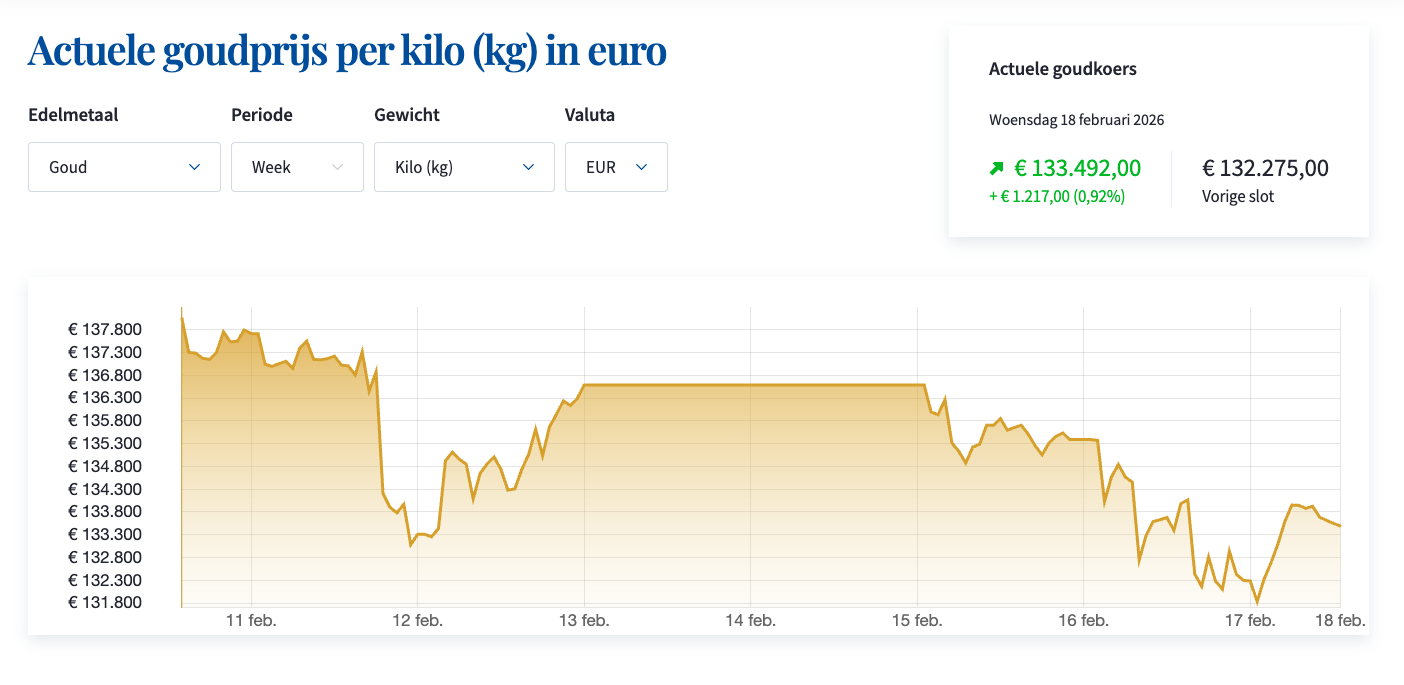
Gold prices declined heading into February 17, alongside silver prices, source: Holland Gold
During periods like this, one might expect higher gold and silver price. However, further corrections were observed over the past two days. Analysts note that the closure of Asian exchanges temporarily removes a significant portion of institutional market participation. “With China largely on holiday this week, we are seeing reduced liquidity. It remains unclear whether there is sufficient momentum for prices to fall substantially, or whether investors will buy the dip if renewed weakness in the dollar emerges,” said market analyst Fawad Razaqzada of Forex.com.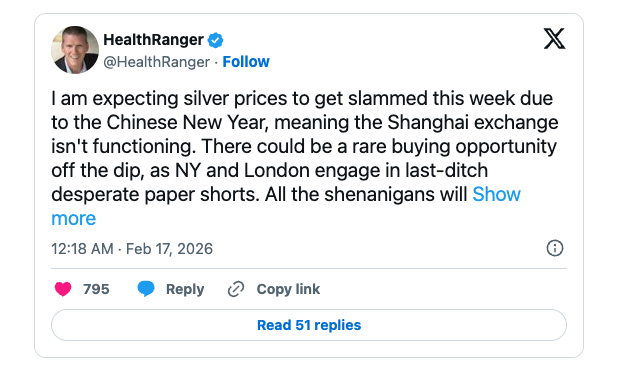
“I expect silver prices to drop sharply this week…” claims a speculative X account of Mike Adams, Source: X
Silver also declined ahead of Chinese New Year. In particular, China’s industrial demand for silver plays a significant role. In recent months, Chinese industry has absorbed substantial volumes of silver, contributing to higher prices and lower inventories on the Shanghai Exchange. The temporary disappearance of this demand appears to explain the price declines seen in recent days.
On Monday, UBS Bank published a note forecasting a gold price of $6,200 by mid-year. The price currently stands at $4,900 per troy ounce. Despite the late-January correction, analysts at JP Morgan and Sprott maintain that the fundamental drivers behind gold remain firmly intact. They point to continued central bank purchases as well as persistent geopolitical tensions. Should these assumptions hold, the current environment could represent an interesting entry point. Following yesterday’s decline, today’s trading already shows positive momentum, with prices rising 1.5% for gold and 4% for silver.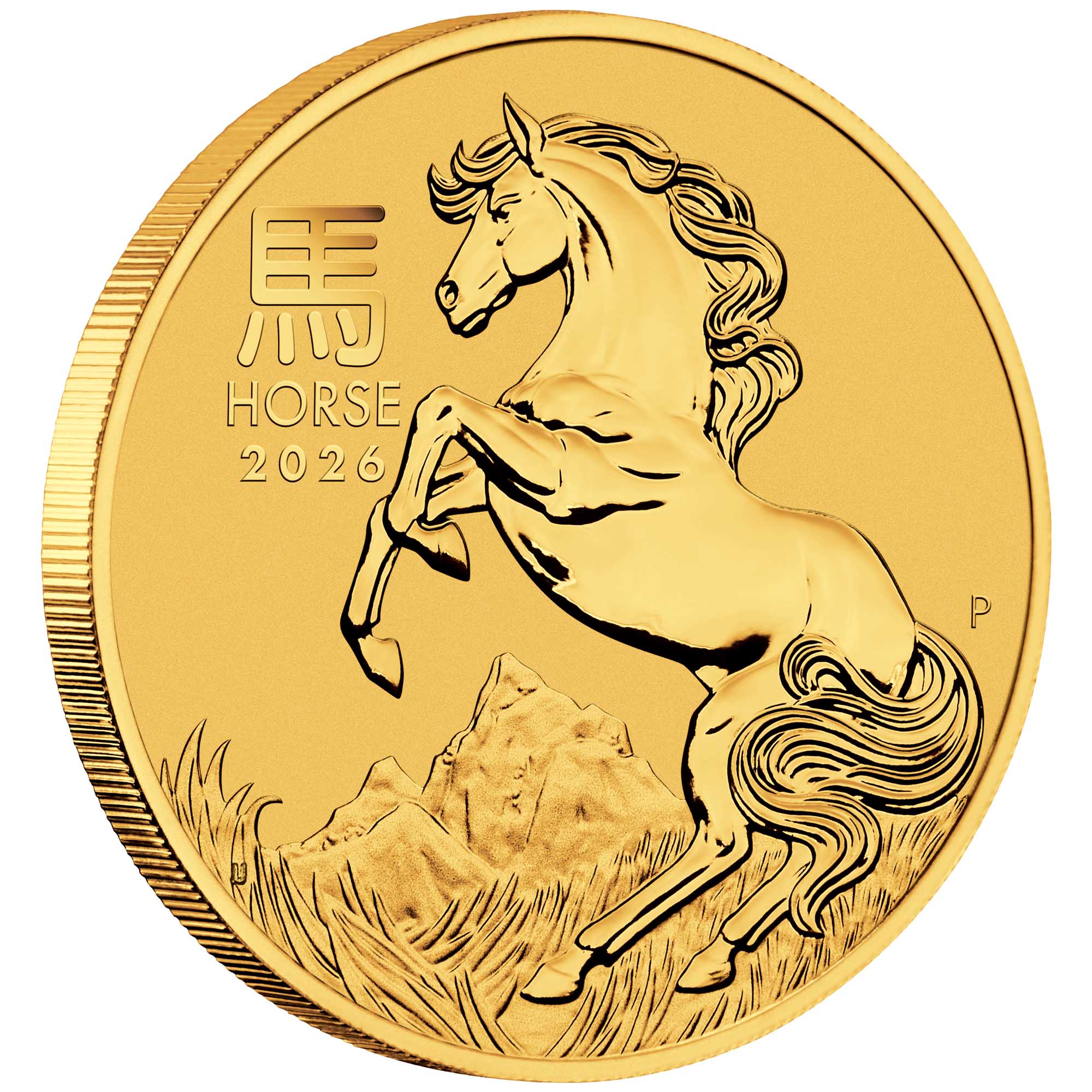
Australia’s Perth Mint releases its Lunar coin series annually, featuring a different animal from the lunar calendar each year. Source: Holland Gold.
The question remains whether Chinese New Year consistently triggers an annual price dip. Unfortunately, the answer is not straightforward. In 2024, gold prices did decline during this period, but in 2025 they moved higher. Holiday-related exchange closures do have an impact, though not always the same one. Festivals such as Chinese New Year and Diwali boost physical demand for gold and silver, yet this does not necessarily translate into higher international prices, as several veterans within Holland Gold explain. In some cases, local premiums rise, pushing up the price of physical silver domestically while leaving the international spot price less affected.
The physical demand generated by these festivals is therefore one of many factors influencing global pricing, but not a decisive one on its own. What remains notable is the continued strength of these festivals year after year. As the Chinese analyst cited earlier observed, demand from younger buyers is also growing — a positive signal for long-term trends.
Perhaps the symbolism of the Year of the Horse also aligns with expectations surrounding gold and geopolitics. In the Chinese zodiac, the galloping animal represents strength, elegance, perseverance, and success. This resonates with the Chinese proverb: “When the horse arrives, success follows.” However, 2026 — the Year of the Fire Horse — is also associated with transformation and societal change. For evidence of that, we need not look far.
Each year, the Australian mint The Perth Mint releases a new design in its Lunar series. This year features a striking depiction of the horse, capturing the same strength and dynamism described above. These internationally recognized 24-karat bullion coins are issued annually, each dedicated to a different animal from the Chinese zodiac. View the Lunar series here.