English
EN


The German economy, the largest in Europe, is off to a rough start in 2024. The ifo institute Reports that business expectations have deteriorated for the second month in a row. Analysts had expected a slight rebound, but instead, the expectations index fell from 84.2 to 83.5. The current situation index also declined. Clemens Fuest, president of ifo, reports that the first positive forecasts for the first quarter are giving way to a possible contraction. This decline is mainly due to unexpectedly weak data from the services sector. Recently, Ab Flipse warned about this in the podcast by Holland Gold.
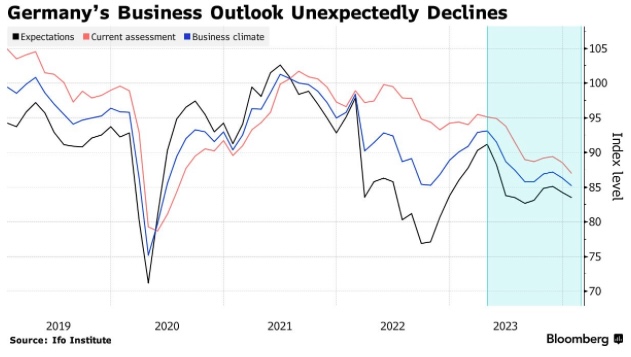
German business prospects are deteriorating. Source: Bloomberg
The situation in Germany has been further exacerbated by weak global demand and the aftermath of the energy crisis. While there was hope for recovery thanks to increasing consumer spending, this has so far failed to materialize. The Bundesbank does forecast modest growth of 0.4% in 2024.
The upcoming wage negotiations could be crucial for the recovery of private spending. IG Metall, Germany's largest trade union, is preparing for negotiations in the metal and electronics sector. In addition, a six-day strike by train drivers is causing disruptions. They have rejected a wage proposal from Deutsche Bahn, which is currently paralyzing the country.
There is some optimism about the German economy, partly due to expectations that the European Central Bank may cut interest rates. However, the ECB will keep the deposit rate stable at 4% for the time being. Analyst Fuest emphasizes that, despite possible positive developments such as falling interest rates and rising wages, confidence remains low and the outlook, especially for the first quarter, is bleak.
Dutch industry is also affected by the strikes in Germany. Raw material deliveries are delayed, which may affect the production of Dutch companies. According to policy advisor Geert van Eijk of evofenedex, who represents the logistics and trade interests of thousands of companies in the Netherlands, the situation is precarious. The steel, chemical and food industries in particular may experience problems.
Some companies are turning to road transport in order to remain operational. However, this can damage the long-term reliability of rail transport and lead to an increase in less sustainable road transport. Although the strike has so far had little impact on Dutch freight transport by train, the situation remains uncertain.
The port of Rotterdam, often seen as the mirror of the world economy, is experiencing declining ship movements, a direct result of the Shrinking economies in Germany and China. Port economist Bart Kuipers points to the decline in the number of ships and declining container throughput rates as signs of a global economic slowdown. These developments do not bode well for the future, both for Rotterdam and for the wider European and global economy.
In these turbulent times, both the German and Dutch economies continue to face significant challenges. As policymakers and business leaders grapple with these issues, the world continues to watch closely as these economic powerhouses navigate through this period of uncertainty.
Do you want toBuy gold by means of Gold bars or Gold Coins?
This can easily be done via our website.
Have a look at us YouTube channel
On behalf of Holland Gold, Paul Buitink and Joris Beemsterboer interview various economists and experts in the field of macroeconomics. The aim of the podcast is to provide the viewer with a better picture and guidance in an increasingly rapidly changing macroeconomic and monetary landscape. Click here to subscribe.