English
EN


Following the disastrous final week of October, precious metals staged a modest recovery in the first week of November, despite a strong jobs report. The decline below technical support levels had attracted a substantial number of momentum investors. When the decline failed to continue, these short positions had to be unwound. This allowed gold and silver to move back above the $4,000 and $50 marks, respectively. This represented a gain of 2.7% for gold and 2.5% for silver.
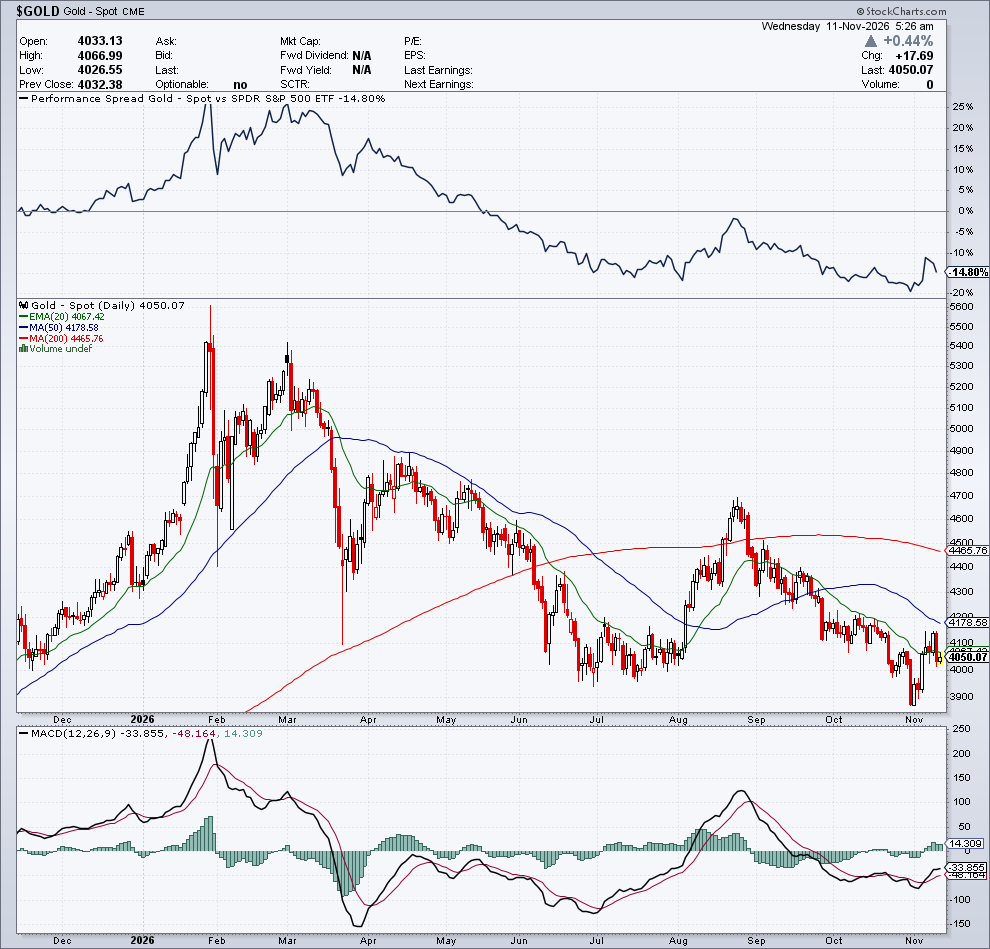
From a technical perspective, gold remains constrained by a descending trendline, with its tentative recoveries failing to reach the 50-day moving average for almost two months. With around a month and a half remaining in 2026, gold's year-to-date return stands at -7% in dollar terms and -2.5% in euro terms. The last time gold delivered a negative annual return in euros was in 2017, and even then the loss was just 1%. In dollar terms, gold also posted negative returns in 2021 and 2022, at -3.5% and -0.3%, respectively.
Silver is now trading 28% below its level at the start of the year. In euro terms, the decline is 23.5%. Silver has recorded considerably more years of negative returns in recent history, with four such years since 2017. It is also noteworthy that the gold-to-silver ratio remains close to its highest level in almost a year. This points to gold's continued outperformance relative to silver.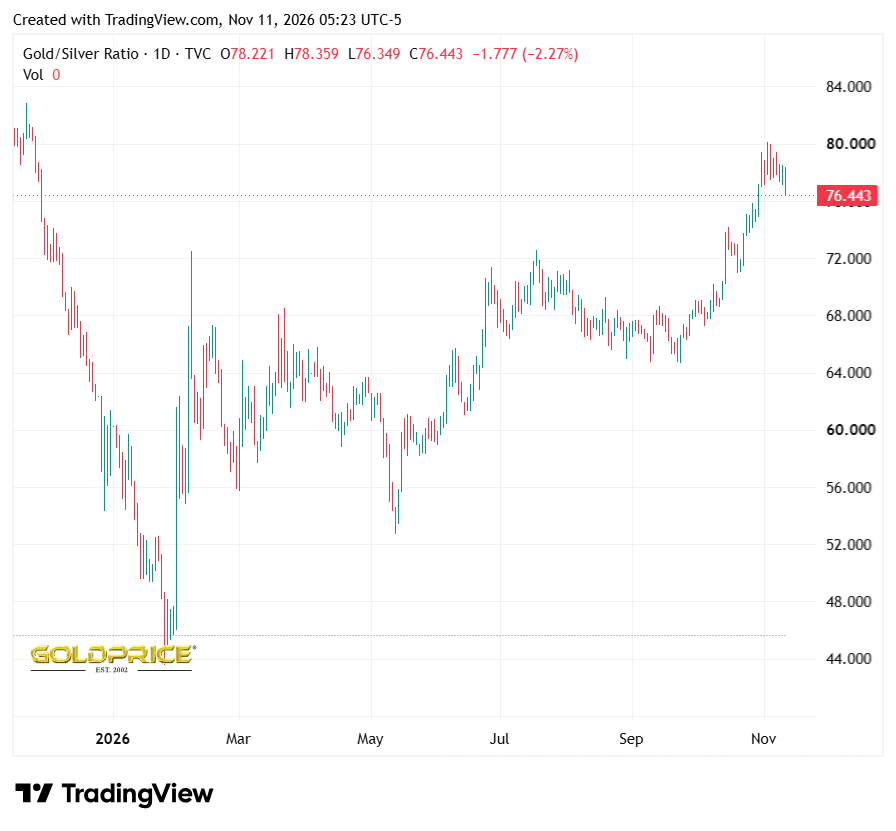
However, precious metals' price reactions to macroeconomic data remain highly erratic. For example, the November 6 jobs report pointed to a persistently strong labor market in October. The number of new jobs far exceeded expectations, while unemployment fell to 4.1%. In addition, the figures for August and September were revised upward. A strong labor market, and therefore persistent wage inflation, increases the likelihood of an interest rate hike by the Federal Reserve. Yet the gold price barely reacted to this jobs report.
The reaction was very different following Tuesday's release of the October inflation report. This report was somewhat unusual because the BLS did not provide year-over-year comparisons on this occasion. This is because a shutdown of US government services was underway in October 2025, leaving no comparable price data available.
The published monthly figures did come in higher than expected, with the Consumer Price Index rising by 0.4%. The consensus forecast was 0.3%. Particularly notable was the 0.5% month-over-month increase in food prices. This suggests that higher energy and transportation costs are gradually feeding through to food prices as well. Core inflation, which excludes food and energy, also exceeded expectations, coming in at 0.3% against a forecast of 0.2%. Gold and silver did react negatively to this inflation report, with gold falling by 1.8% and silver losing as much as 2.2%.
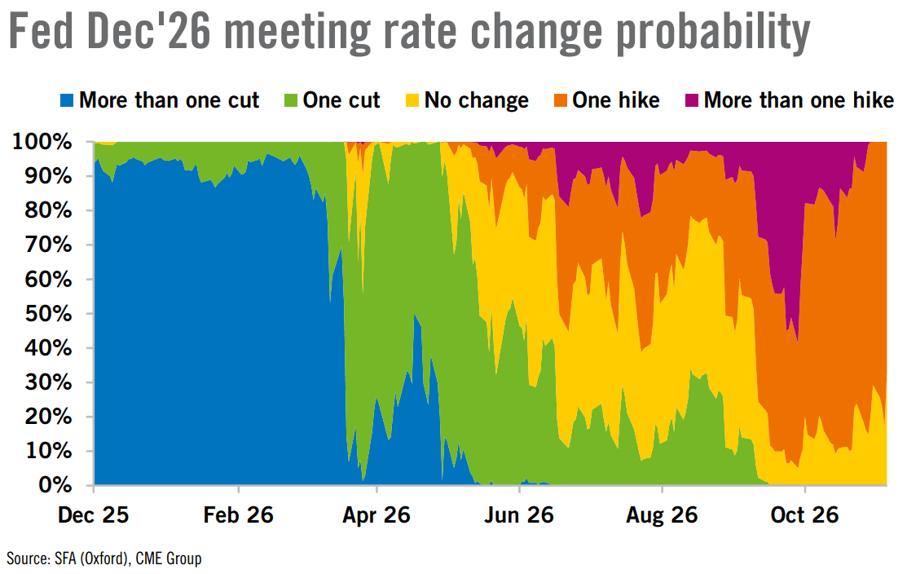
As a result, the market increased its expectations for a possible interest rate hike on December 9. The probability of a 25-basis-point increase now stands at 90.5%, compared with 9.5% for a 50-basis-point increase, according to the CME FedWatch Tool. Christopher Waller, a member of the Federal Reserve's Board of Governors, indicated in a speech in London on November 10 that a 50-basis-point increase was a possibility. Yet when he took office, Fed Chair Kevin Warsh called for less communication about monetary policy between scheduled meetings. Not everyone agrees with that approach, and what we are now seeing in practice is that some governors continue to do as they please.
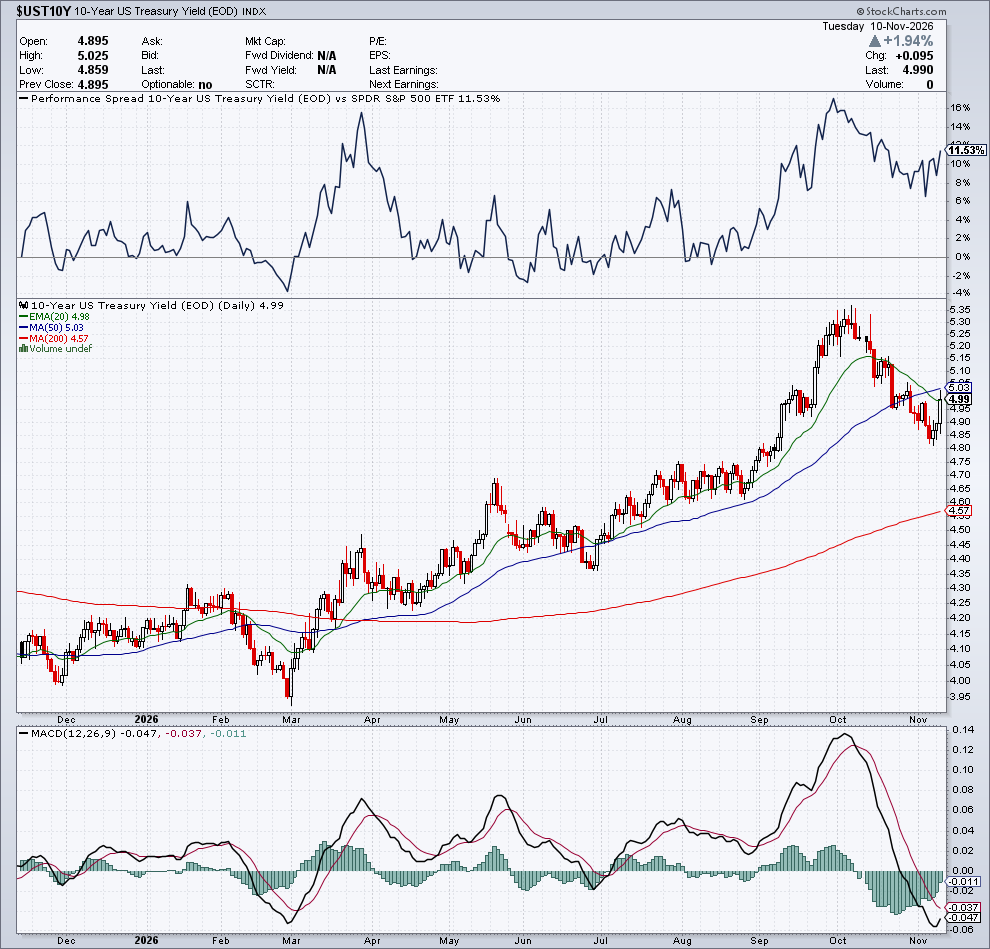
The inflation report pushed the yield on the 10-year US Treasury bond back above 5%, after it had fallen to 4.8% from its early-October peak of 5.35%. The dollar also moved higher again. The latest Commitments of Traders report showed that the short position against the euro was at its largest in 10 years!
However, another interest rate hike in December has been the overwhelmingly favored scenario for some time, so in that respect, the sharp price reaction of gold and silver to the inflation report was somewhat surprising.
In our latest weekly roundup, we took a closer look at gold demand during the third quarter. In the meantime, some figures for October have also been published. China's central bank, the People’s Bank of China (PBOC), increased its gold reserves for the 24th consecutive month. The PBOC purchased 830,000 troy ounces of gold, equivalent to 25.8 tonnes. This brings its total reported holdings to 2,435.4 tonnes. Physically backed gold ETFs also recorded another 19 tonnes of inflows, worth $2.7 billion. The total amount of gold held by these ETFs now stands at 4,275 tonnes. Strategic buyers are therefore continuing to accumulate gold.
Be sure to check out our YouTube channel
On behalf of Holland Gold, Paul Buitink and Yael Potjer interview a range of economists and macroeconomic experts. The podcast aims to give viewers a clearer understanding and a better sense of direction in an increasingly fast-changing macroeconomic and monetary landscape. Click here to subscribe.