English
EN


Investors have added more than 7,000 tonnes of gold to their investment portfolios since 2010, according to figures from Metals Focus that Philip Klapwijk used yesterday for his Presentation on the gold market. That's more than the production of gold jewelry and more than what central banks added to their reserves during this period.
The world's total gold supply was estimated at 186,700 tonnes at the end of last year, but the gold mining sector is adding a few thousand tonnes every year. The following chart shows at a glance where all that new gold that has hit the market since 2010 has gone. We see that a lot of gold is still used for the production of jewelry, but that most gold is now bought as an investment or as an alternative to savings. We're talking about Gold bars, gold coins and the gold stocks of so-called exchange traded funds (ETFs).
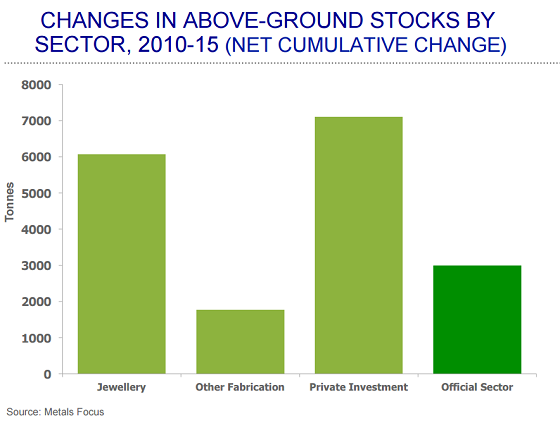
Investors have bought more than 7,000 tonnes of gold since 2010 (Source: Metals Focus)
Most gold today is bought as a form of investment or savings. This is a development in recent years, because in the past the precious metal was most often used for the production of jewelry. Due to the biggest financial crisis since the 1930s, interest in buying physical gold has continued to increase, especially in Western countries where people were not at all familiar with investing in precious metals until a decade ago. This fact is confirmed by the production of several mints and smelters.
It is striking that central banks have also shown renewed interest in the precious metal since the outbreak of the crisis. While they sold a few hundred tons of gold on an annual basis in the past two decades, since 2010 many central banks have been adding gold to their reserves. The following charts show that gold sales by Western countries have gradually stopped, while China and Russia account for the largest share of total gold purchases.
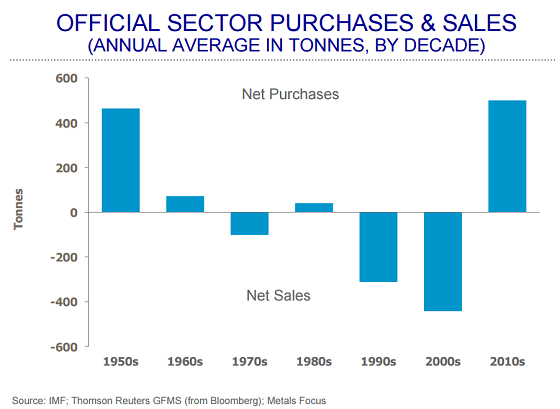
Central banks have not bought as much gold since the 1950s as they do now (Source: IMF, Reuters, Metals Focus)
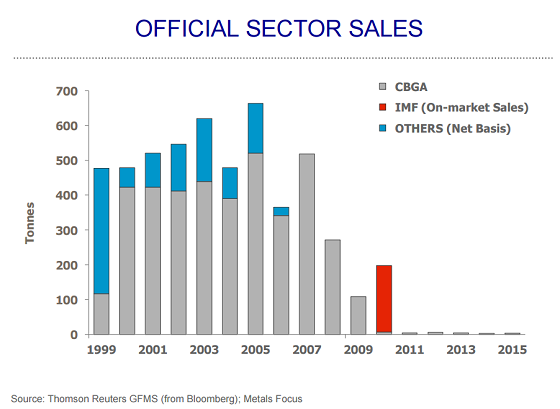
Central banks have not sold gold for a number of years (Source: Reuters, Metals Focus)
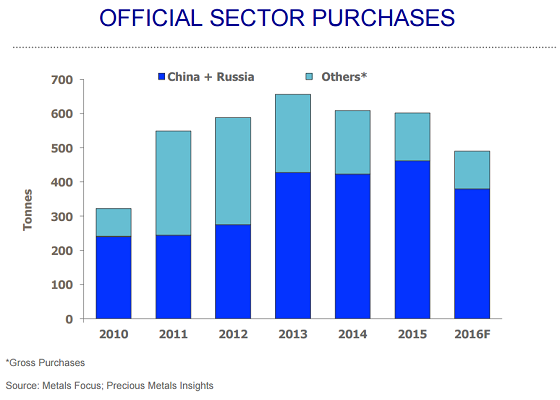
It is mainly China and Russia that are expanding their gold reserves (Source: Metals Focus, Precious Metals Insights)