English
EN


On the seabed off the coast of Colombia, a centuries-old Spanish ship is full of Gold Coins and other valuables found. It is probably the largest treasure ever found on the seabed, because in addition to gold, the ship is said to contain other valuables such as precious stones, jewels, platinum and silver. The value of the cargo is estimated to be at least $1 billion.
According to the Colombian government, the ship in question is the San José, a Spanish galleon that was sunk by the British fleet in 1708. According to old cargo documents, the ship carried a cargo of 116 emeralds, 2,000 kilos of platinum and the entire collection of jewels of the then governor of Peru.
The Spanish were at war with the British at the time, a very costly war that was slowly draining the treasury. That is why Spain regularly brought shiploads of silver from South America. "With that, the country paid for the war," Ruud Paesie told the Algemeen Dagblad.
The shipwreck was found a week ago by a team of international experts, the Colombian Navy and the country's archaeological service. With the help of robots, they made images of the shipwreck, which lies at a depth of 300 meters. After three hundred years, not much is left of the ship itself, but on the basis of the cannons and the jars it will soon be determined that it is indeed the San José.
The hunt for shipwrecks is lucrative, because over the centuries countless ships have sunk to the seabed in war or due to bad weather with crew and valuable cargo. The American salvage company SSA searches for shipwrecks all over the world and already had this example on its radar off the coast of Colombia in 1981.
Initially, the salvage company was supposed to share the proceeds of the treasure with the Colombian government, but later the country claimed the entire treasure. In a lawsuit that was subsequently filed, Colombia was vindicated. The shipwreck was located on the territory of the South American country and therefore belonged entirely to the Colombian government.
A shipwreck automatically falls under the protection of UNESCO after a hundred years. All human traces on the seabed that are more than 100 years old are considered a piece of history that must be respected. This means that the salvors have to be careful if they want to retrieve the gold coins and other valuables.
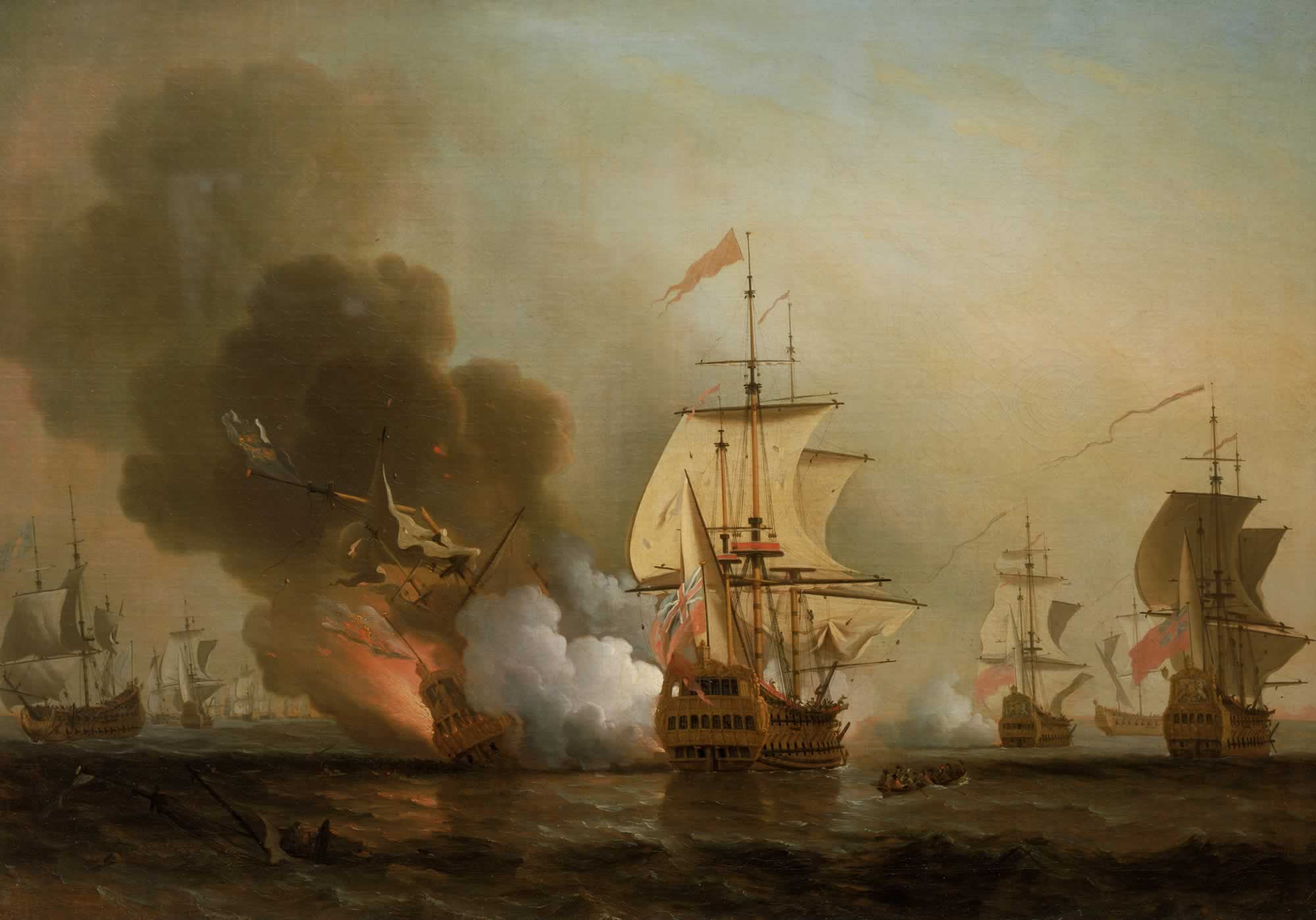
The Battle of the San José River to Sink in 1708 (Painting by Samuel Scott, via Wikipedia)