English
EN


In September, investors added a net $10 billion to gold ETFs, while central banks purchased approximately 63 tonnes of physical gold, according to preliminary figures. Key drivers include the deteriorating fiscal position of countries such as the United Kingdom and France, as well as diversification away from currencies and into gold. Yet the gold price is falling. What is driving this?
It is striking to see the gold price fall while investors are increasing their positions in gold ETFs. A gold ETF is an exchange-traded fund that holds physical gold in a vault and thereby tracks the gold price. In September, global gold holdings in these funds increased by 67 tonnes, according to the World Gold Council, while the gold price fell by 8.5%. According to Bloomberg, this trend continued into early October.
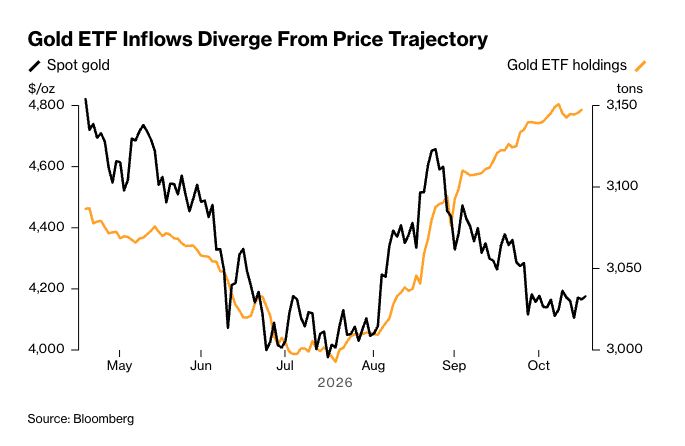 Gold ETF holdings are rising, measured by the tonnes of gold they hold, even as the gold price remains under pressure. (Source: Bloomberg).
According to the World Gold Council, investors added $10 billion to gold ETFs in September. Another notable shift can be seen in where demand for gold ETFs is coming from. The share accounted for by North America, and Europe in particular, has suddenly increased.
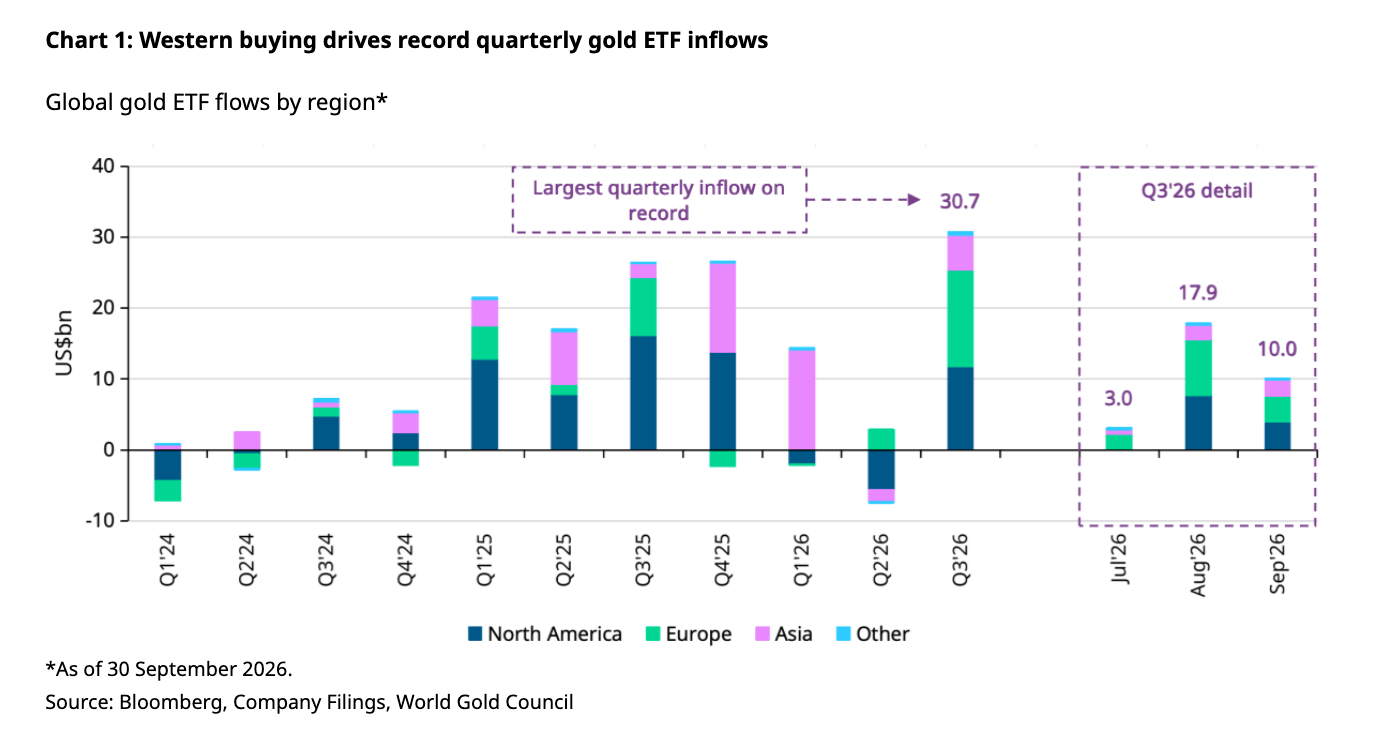 Gold ETF inflows by quarter, shown in a bar chart and broken down by region. July, August and September are also shown separately. North America (dark blue) and Europe (green) account for the largest share of purchases, while Asia (pink) bought roughly as much as North America in the fourth quarter of 2025 and was the largest buyer in the first quarter of 2026. (Source: World Gold Council).
Central banks are also continuing to add substantially to their gold reserves. Based on preliminary estimates, net purchases amounted to approximately 63 tonnes of gold in September. These were the largest monthly purchases since November 2024, according to the Financial Times.
Poland is the largest buyer this year, according to the World Gold Council, having purchased 98 tonnes through August. These purchases are primarily linked to long-term reserve objectives. China follows closely behind and bought 23 tonnes in September, its largest monthly purchase since October 2023. Investment bank CIBC sees central banks diversifying their reserves away from the US dollar. Russia is an exception to this trend. Russia sold 6.2 tonnes in September to help finance its budget deficit.
At the FT Precious Metals Symposium, several speakers forecast new record highs for gold over the next two years. Charlotte Yonge of Troy Asset Management expects gold to reach a new record within just 12 to 18 months. One of the main reasons is that gold can provide a hedge against deteriorating public finances.
Peter Marrone, chair and CEO of mining company Allied Gold, said investors should be asking whether “we are at the beginning of a financial crisis”.
“It seems to me that we are on the cusp of a financial turning point,” Marrone said. As the macroeconomic environment becomes more uncertain, family offices (private investment firms that manage the wealth of one or more very wealthy families) are increasingly investing in physical gold, according to Marrone. Wealthy investors are “diversifying away from government bonds in favour of gold,” he added.
There are several possible reasons for this sudden diversification. Gold can serve as a hedge against a potential AI bubble, but more importantly, it can provide protection against spiralling government debt. Few will have missed the increasingly precarious situation in France.
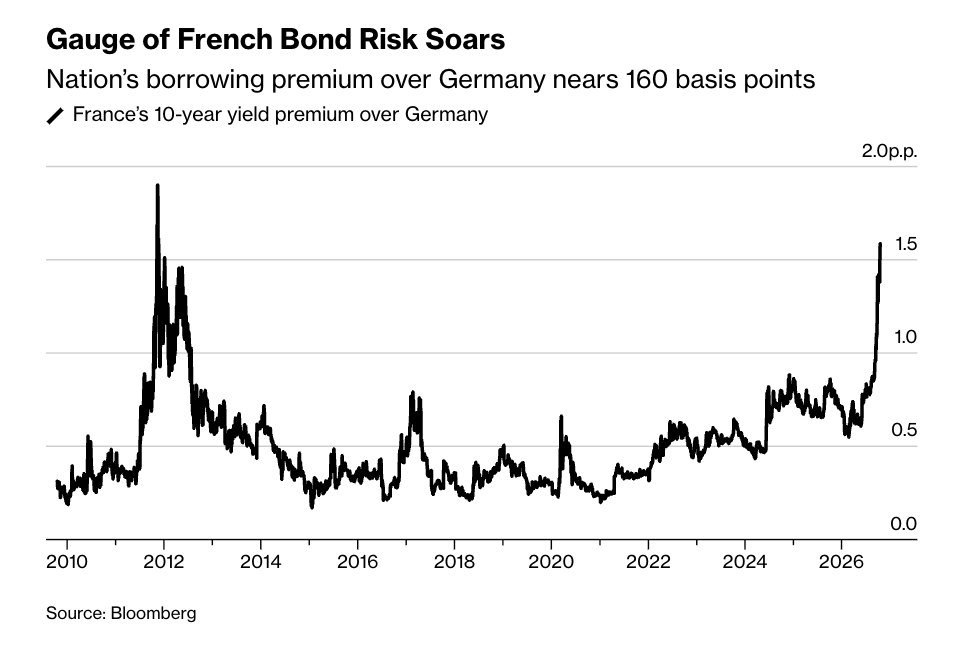 The yield on French 10-year government bonds is moving increasingly further above its German equivalent. The spread now stands at almost 1.6 percentage points. (Source: Bloomberg).
On Wednesday, the French 10-year yield reached 5% for the first time since 2002, while a divided parliament continues to struggle to agree on a budget. “Even if the budget passes, investors remain concerned about broader signs of faltering fiscal policy and political fragmentation,” says Pooja Kumra, interest-rate strategist at Toronto-Dominion Bank.
Despite all the positive signals for gold, the physical market is currently being overshadowed by the paper market. Trading volumes in the futures market are many times larger than purchases by ETFs and central banks. In September, an average of $423 billion worth of gold was traded each day, according to the World Gold Council, of which $187 billion was traded on exchanges such as COMEX. The ETF inflows for the entire month ($10 billion) amounted to less than 3% of a single day’s trading volume.
Futures contracts for delivery at a later date are traded on the futures market, often with only a relatively small amount of capital required upfront, and this market plays a major role in short-term price formation. In September, investment funds reduced their positions on the US COMEX futures exchange by the equivalent of 84 tonnes, around $12 billion, more than the entire month’s ETF inflows. According to the WGC, these sales ‘likely contributed’ to the decline in the gold price.
Gold is also facing three major headwinds. The first is high interest rates. The US 10-year Treasury yield rose to 5.3% in September. Gold itself does not pay interest, so the higher the yield available on bonds, the less attractive gold becomes on a relative basis.
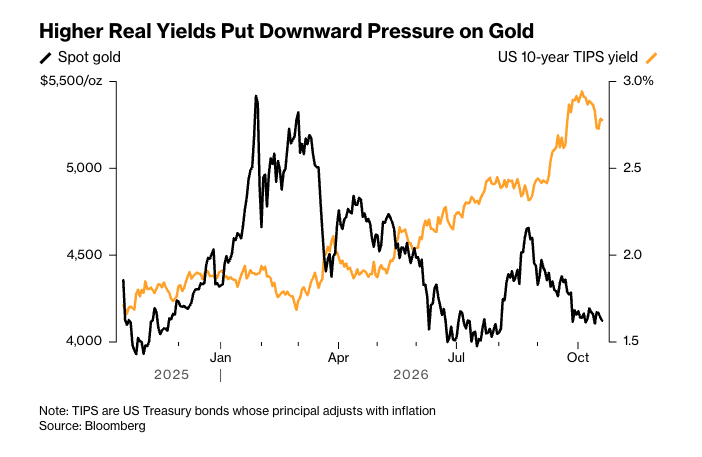 Gold versus real yields: the yield on US 10-year inflation-protected Treasury securities (TIPS) is shown in yellow, with the gold price in black. Adjusted for inflation, the real yield on 10-year Treasuries, with nominal yields above 5%, is around 2.75%. The higher the real yield, the greater the pressure on gold. (Source: Bloomberg).
Second, expectations surrounding the Fed have shifted. The US central bank raised interest rates in September, and since the higher-than-expected inflation figures released on 14 October, markets have been pricing in further tightening. A pause is still expected at the 28 October rate decision, but for December, markets are pricing in roughly an 85% probability of another rate hike, according to the CME FedWatch Tool.
Third, there is the oil price. Following deadly Houthi attacks in Saudi Arabia, Brent crude rose above $111 per barrel on Thursday morning. “Higher energy prices are reviving inflation concerns and keeping the threat of further Fed tightening alive, weakening gold’s safe-haven appeal,” says Hebe Chen of Vantage Global Prime.
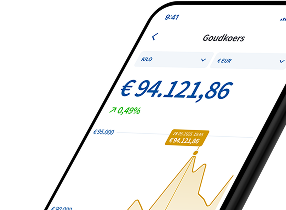
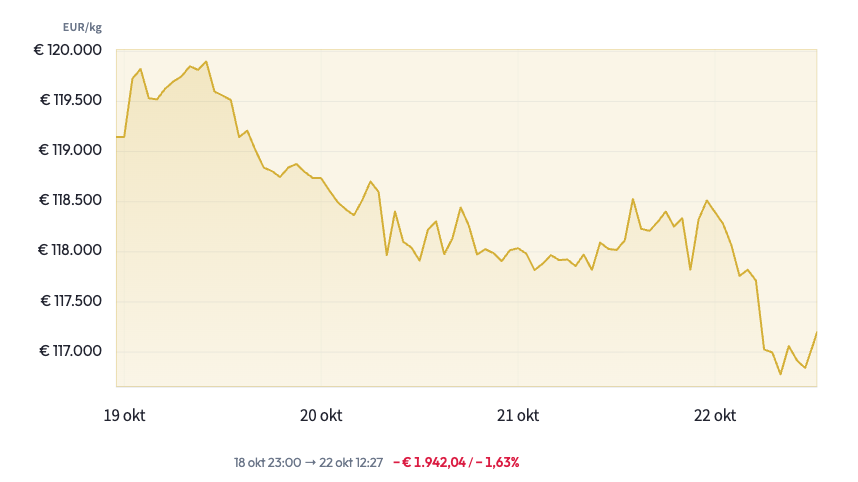 Gold price from Monday 19 October to Thursday 22 October at 12:27, in euros per kilogram. Gold lost 1.63% in euro terms this week. (Source: Holland Gold).
The following are some important dates to watch in the period ahead: