English
EN


Gold has been known as a store of value for centuries and often holds up well during turbulent times. Yet the gold market can experience sharp swings in the short term. What can you expect from gold, and how can you respond wisely to these movements without having to monitor them every day?
When US President Richard Nixon ended the gold standard in 1971, the gold price was free to fluctuate. Since then, gold has risen from 35 dollars per ounce to over 3,600 dollars today, an average annual increase of around 8.8%. An investment of 100 dollars in gold in 1971 would now be worth approximately 10,350 dollars. However, that average paints a misleading picture: in some years, gold rose much more sharply, while in others, the price fell.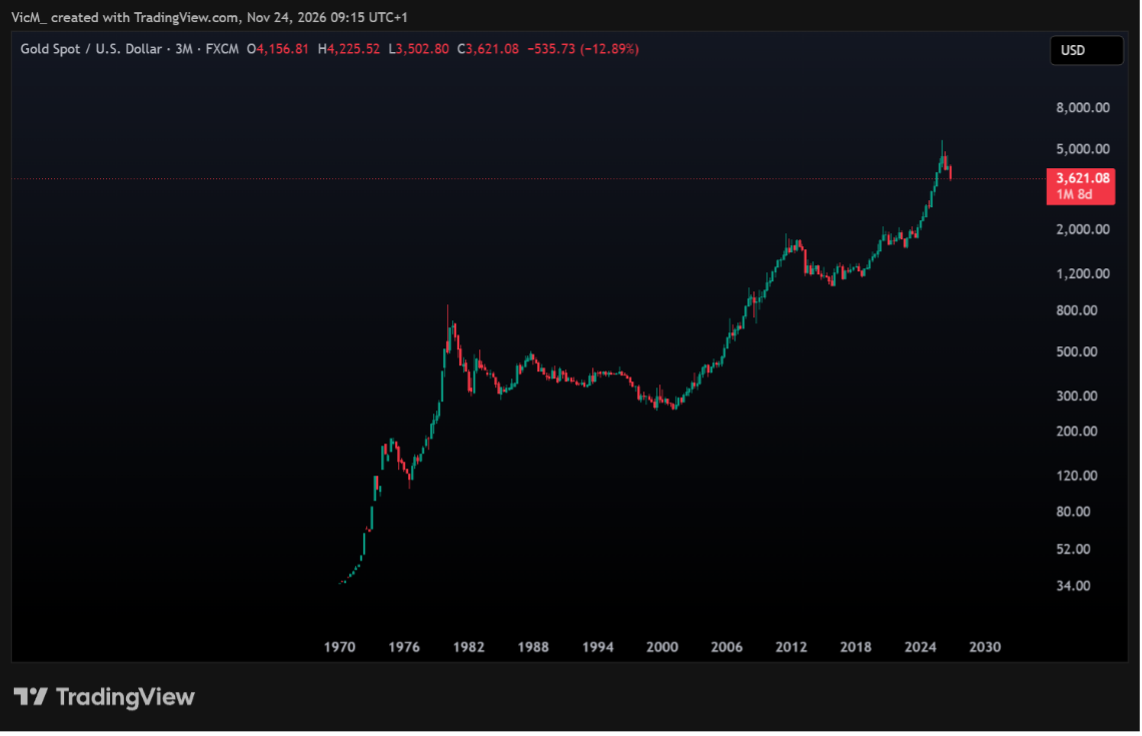
Gold price (USD) since 1971 (Source: TradingView)
At over 25 trillion dollars, gold has the largest market capitalisation of any individual asset. It therefore takes a substantial amount of capital to move the gold market. This is why, over the long term, the gold price often moves in extended cycles: a prolonged, strong rise is followed by a period of decline or consolidation. The market then takes a breather and attracts new buyers, allowing the price to rise again.
Such a pause is part of a healthy price trend, even if it feels uncomfortable. Since its record high in late January, the gold price has fallen by around 35%. That is a substantial decline, but not an unprecedented one. An article by the World Gold Council examines gold's volatility, a measure of how much its price fluctuates. Since 1971, this has averaged around 15%, with spikes above 30% during turbulent periods. Volatility of 15% means that, on an annual basis, the gold price deviates by around 15% above or below what you would expect on average.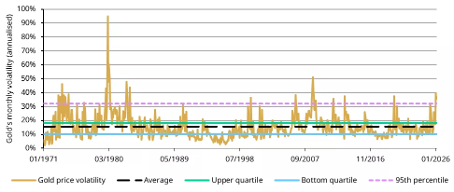
Gold volatility (Source: World Gold Council)
Gold is also known as a source of stability and confidence during turmoil. Rabobank examined how its price behaves during periods of panic in financial markets. The findings showed that gold often performs strongly or retains its value while other investments lose value. Because gold often has a low correlation with equities and bonds, it can help to further diversify risk within a portfolio.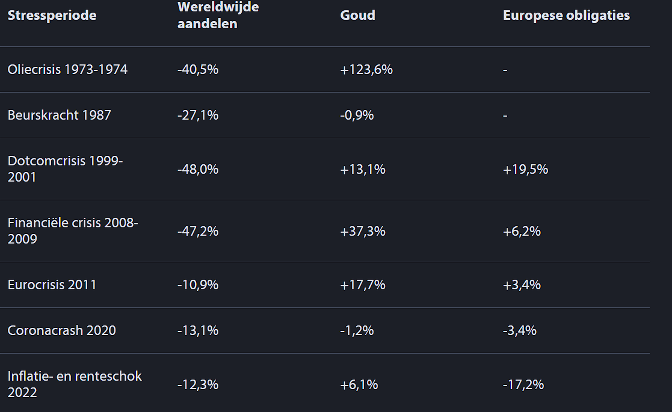
Asset performance during periods of stress
Gold has preserved its value well over the centuries. You are not dependent on countries or companies, it has proven itself during turbulent times, and its low correlation with equities and bonds helps to diversify risk. Gold therefore offers protection over the long term. That does not mean the gold price is always stable in the short term: it can fall sharply or consolidate for a while.
With its long and proven track record as a means of protecting wealth, gold is therefore well suited to a consistent strategy: Dollar Cost Averaging (DCA). This involves investing the same amount at regular intervals, for example 200 euros every month. This way, you avoid the risk of investing all your money right at a market peak. You buy both when the price is high and when it is low, resulting in an average purchase price.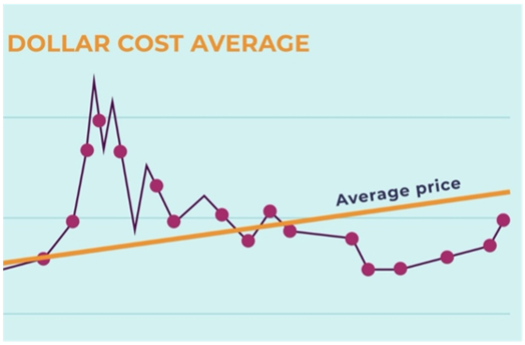
When the gold price falls, you automatically get more gold for the same amount of money: at 80 euros per gram, you can buy more than at 100 euros per gram. With a fixed monthly investment, a decline like the current one therefore means you get more gold for your money. DCA also helps to smooth out the effects of price fluctuations. If you buy everything at once, you are heavily dependent on that single moment, whereas investing monthly spreads your risk.
DCA also makes it easier to manage emotions. Investing everything at once can create a lot of pressure. Thoughts such as “I'll wait until it falls further” or “I'll wait for the perfect moment” often lead to missed opportunities. With DCA, you do not have to focus on timing your purchase or on what the gold market is doing today. It is a calm approach to protecting wealth over the long term by investing in a metal that has served this purpose for centuries.
Anyone wishing to apply Dollar Cost Averaging to gold or silver can do so through the Holland Gold Savings Plan. A fixed amount is invested periodically through the app or website, automatically spreading purchases over time. This allows you to build a position in precious metals step by step, without depending on a single entry point.
Be sure to check out our YouTube channel
Paul Buitink and Yael Potjer interview a range of economists and macroeconomic experts on behalf of Holland Gold. The podcast aims to give viewers greater insight and a clearer sense of direction in an increasingly fast-changing macroeconomic and monetary landscape. Click here to subscribe.