9.3
8.064 reviews

English
EN


The gold market is constantly changing and gold miners can anticipate this by fixing the yield of future production now. With this kind of Hedging For example, strategies can help gold miners hedge against a fall in the price of gold or attract financing for new investments. But how does this work exactly? And how have gold mines done that over the past twenty years?
The gold mining sector is used to high peaks and deep troughs, as both the price of gold and the production costs of gold mines can fluctuate greatly over the years. Since the beginning of this century, for example, the gold price has risen from $300 per troy ounce to peaks of more than $2,000 per troy ounce, but in the meantime there have also been sharp corrections. To hedge that risk, gold miners can make price agreements about their future production, hedging the price risk and generating a stable cash flow.
The most commonly used instruments for this are futures and options. With futures, gold miners can already agree on a price for gold that they will only deliver in the future, for example in two or three years' time. Options give mines protection against a drop in the price of gold. These instruments were very popular at the beginning of this century, because the price of gold was very low at that time. The price of the precious metal has been in a long downward trend, reinforced by coordinated gold sales by central banks. The Gold price was below $300 per troy ounce in 2000 and mines feared that they would become loss-making if prices fell further.
To absorb this risk, gold miners fixed the price of their future gold production on a large scale with futures or options. At the turn of the century, more than 800 tonnes of gold were hedged with futures and options, almost a third of the annual production. In the years that followed, the gold price started a new upward trend and gold miners decided to reduce their hedging strategies. This allowed them to take maximum advantage of the rising gold price.
In 2013, however, the gold market began to tilt again. After years of price increases, the gold price fell again, causing a large part of the profit margin of gold miners to evaporate. In the years that followed, the gold mining sector operated with relatively small profit margins and decided to sell more gold in advance through futures and options. That started in 2014 and continued to increase in the following years, as the chart below from Metals Focus shows.
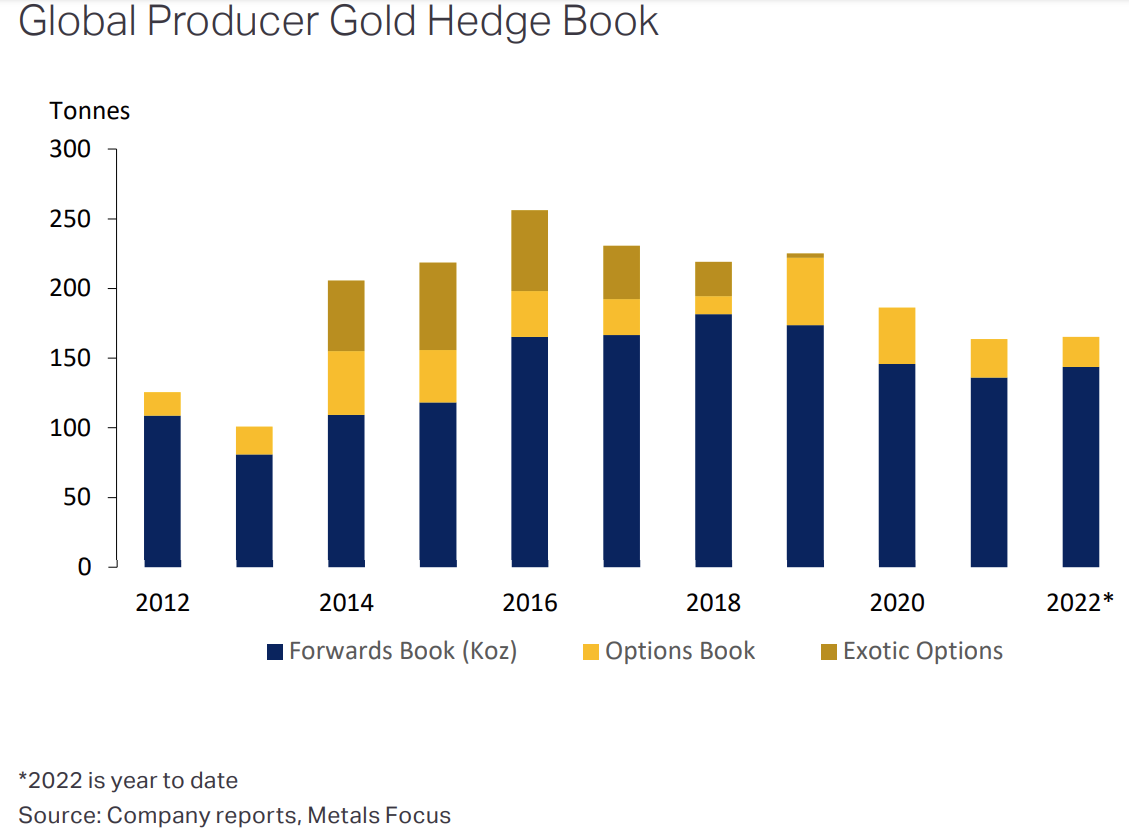
Gold miners mainly hedge the price risk with futures (Source: Metals Focus)
Since the corona crisis, the profit margins of the gold mining sector have been strong againIncreased, mainly due to a higher gold price. To take full advantage of this, some mines decided to lock in prices for much longer periods. An example of this is Australia's Northern Star, which sold a total of 41 tonnes of gold four years in advance in order to take maximum advantage of the high gold price in Australian dollars.
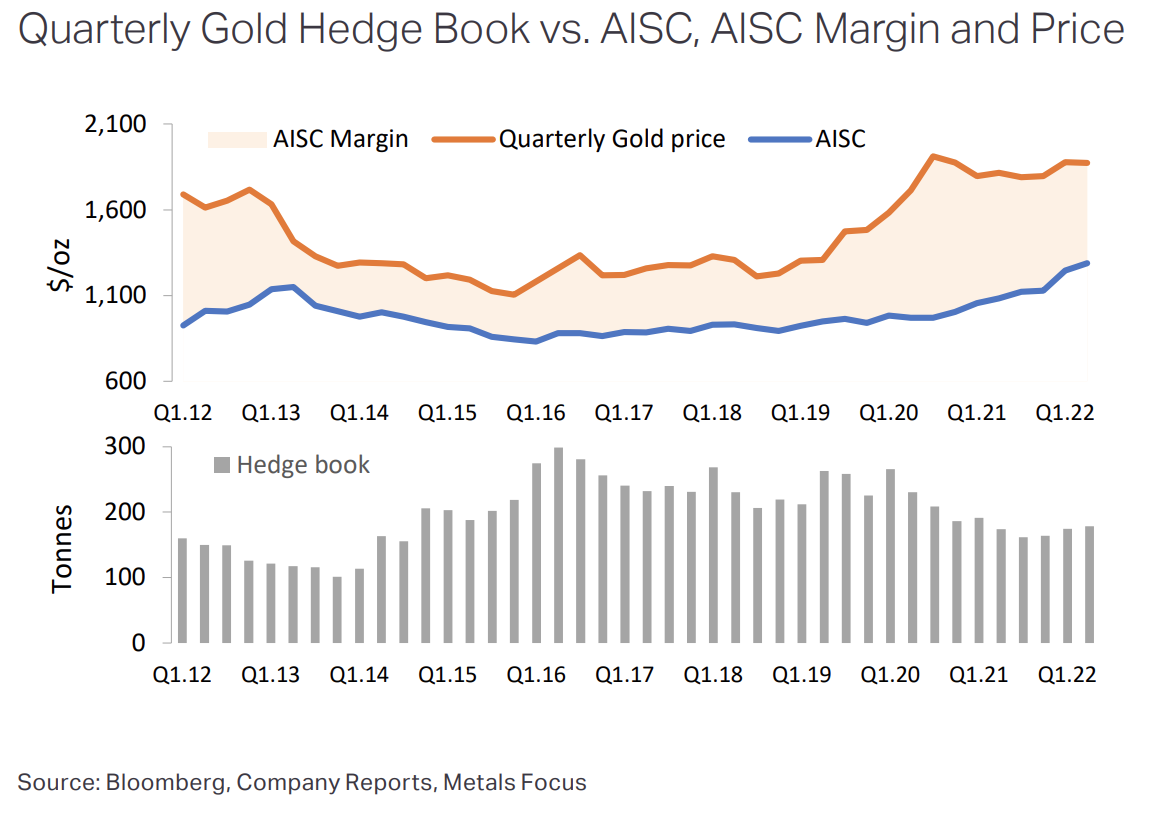
Especially when profit margins are tight, gold miners hedge the price risk (Source: Metals Focus)
Gold miners use futures and options not only to hedge the risk of a falling gold price, but also to attract funding. Opening a new mine or expanding an existing mine is a very capital-intensive process, for which mines sometimes require additional funding. To reduce the risk of these long-term investments, lenders often ask for collateral, such as locking in a portion of the proceeds of future production. This may also be a reason why mines hedge part of their production. Since 2020, the percentage of all Hedging related to financing increased from 34% to 52%.
Due to the rising dollar, the gold price has been under pressure in recent months. Combined with rising costs of fuel, personnel and financing, this has created a Pressing effect on the profit margins of gold mines. If this trend continues, more gold miners will start hedging their production again to secure profit margins.
This contribution was made from Geotrendlines


