9.3
8.064 reviews

English
EN


Shortly after the collapse of two U.S. banks, Credit Suisse is now also under pressure. The Swiss bank's stock was down 30% on Wednesday afternoon, hitting a new low in its history. The immediate reason for this was the decision of the Saudi National Bank to close its position in the troubled bank. Cannot be expanded further. Many investors see this as a signal to sell their shares at a rock-bottom price.
Last year, the Saudi National Bank paid an amount of 1.4 billion Swiss francs for a stake of almost ten percent in Credit Suisse. A stock that has since lost almost a third of its value. Ammar Al Khudairy, chief executive of the Saudi bank, spoke in a statement to Bloomberg about 'numerous reasons' for not taking more shares in the bank. He gave the most politically secure reason, which is that there will be much more supervision involved if their share in Credit Suisse rises above ten percent:
"If we go above 10%, all the new rules will come into force, whether it's our regulator or the Swiss regulator or the European regulator. We are not inclined to plunge into new regulations. I could cite five or six other reasons, but one reason is that there is a glass ceiling and we have no intention of exceeding it."
Credit Suisse had to announce the publication of its annual report last week postpone after a phone call from the American stock market watchdog SEC, which questioned the financial figures for 2019 and 2020. That's on top of the Swiss bank's previous problems with the collapse of hedge fund Archegos Capital Management and financial services provider Greensill. In both cases, the Swiss bank's risk management failed, resulting in billions in losses.
The fact that things were not going well at the bank was highlighted last year clear, as Credit Suisse's earnings fell short of other European banks quarter after quarter. In October last year, the CEO sent an e-mail to all employees about the bank's solvency and liquidity. The bank would 'Standing at a crossroads', but are not in difficulty. In September, there were also plans to split the bank into three parts and to divide the riskiest assets into one 'Bad bank' to be accommodated. The bank also announced a major reorganization, which would result in the loss of 5,000 jobs.
These problems had faded into the background for a while, but they never completely went away. Due to the collapse of two medium-sized banks in the United States, Silicon Valley Bank and Signature Bank, the banking sector is once again under pressure. Bank stock prices are falling across the board, but Credit Suisse is a notable negative outlier. With a price of 1.56 Swiss francs, the share is now more than 97% lower than the peak of 2007.
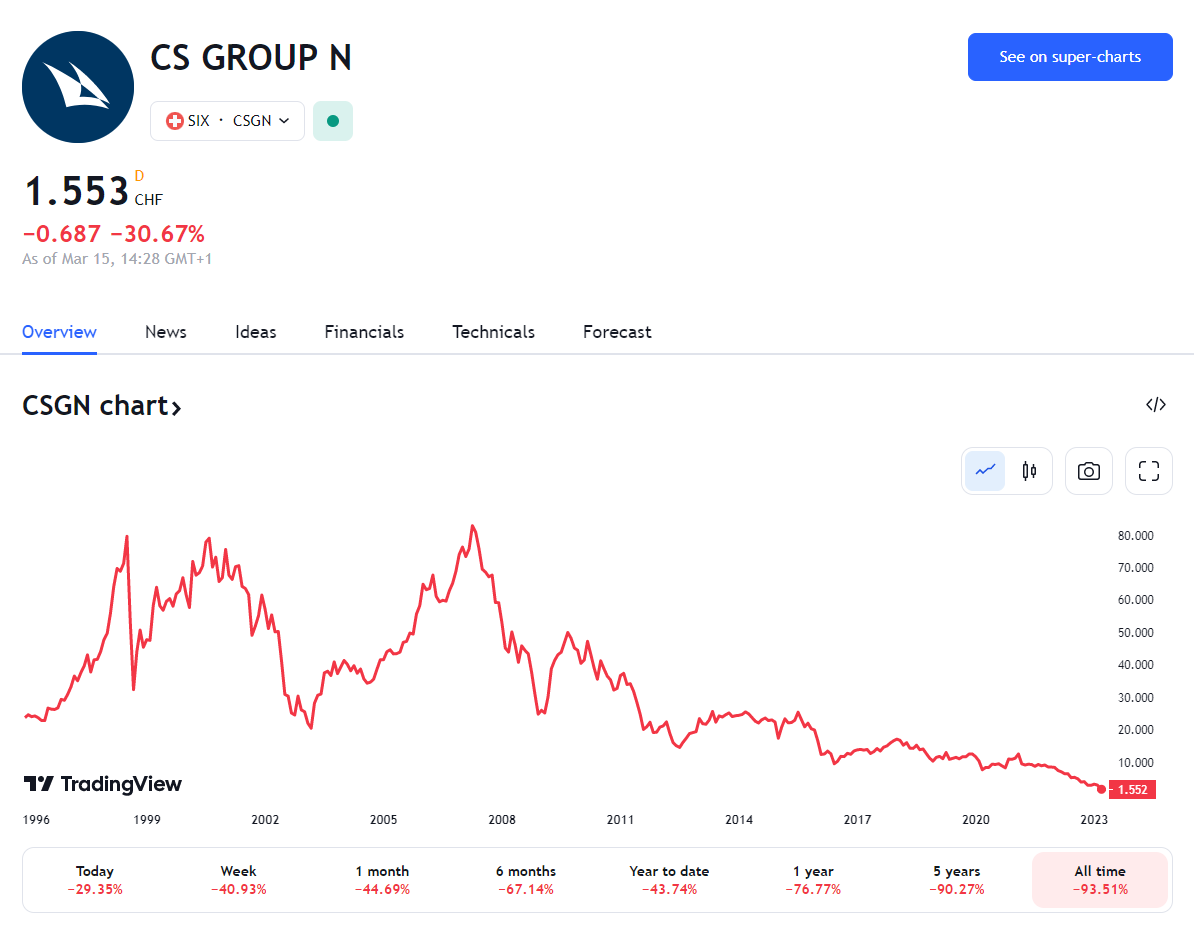
Credit Suisse shares are down 30% (Source: Tradingview)
The premium to insure against the risk of default of the bank, so-called Credit default swaps (CDS), have skyrocketed to nearly 800 basis points. The highest level ever. At the time of writing, the market is pricing in a default risk of 47% for the bank, which was founded in 1856 and has therefore already weathered several crises.
The bank has about $200 billion of exposure in Switzerland, a similar amount in the United States, and just under $100 billion in Europe and the rest of the world.
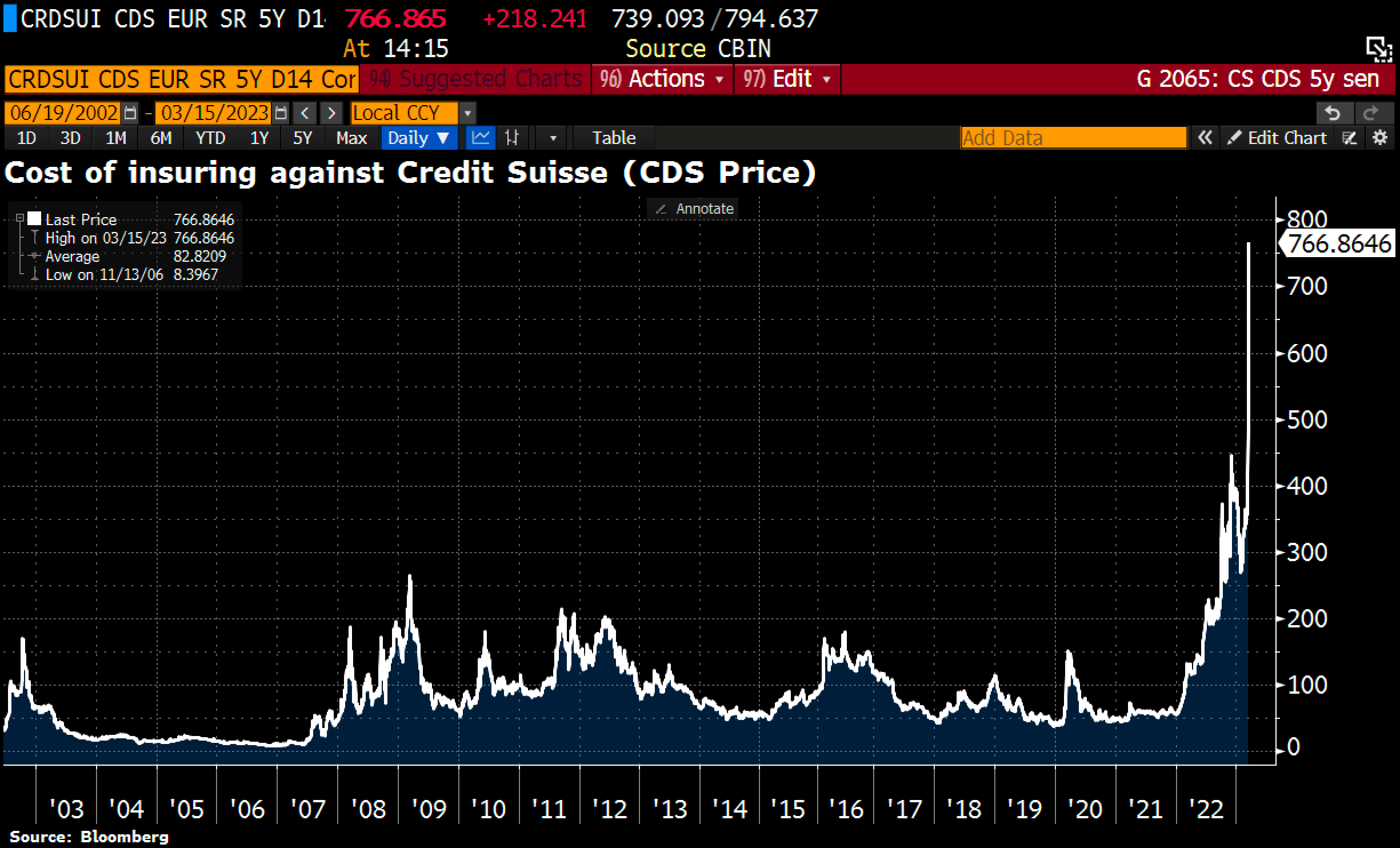
Insurance premium against Credit Suisse bankruptcy to record high (Source: Bloomberg)
Last week, the U.S. Silicon Valley Bank problems, after suffering large losses on the forced sale of government bonds. When the bank tried to offset that loss with a new stock issue, investors panicked. On Friday, the bank was shut down by the U.S. Deposit Insurance Scheme (FDIC) after depositors withdrew their money.
The bank was unable to directly allocate the inflows of assets in 2021 and 2022 and therefore parked a large part of these assets in low-yielding US Treasuries and mortgage loans. When interest rates started to rise in 2022 due to the war in Ukraine, inflation skyrocketed, and uncertainty in financial markets increased, the tech sector was in big trouble.
Many tech companies had to lower their profit expectations and small startups found it increasingly difficult to raise new capital from investors. SVB's customers had to draw on their financial reserves, causing balances at the bank to fall by 13% in the past three quarters. Savers withdrew money, causing more regional banks to run into problems. Signature Bank also collapsed and was taken over by the FDIC.
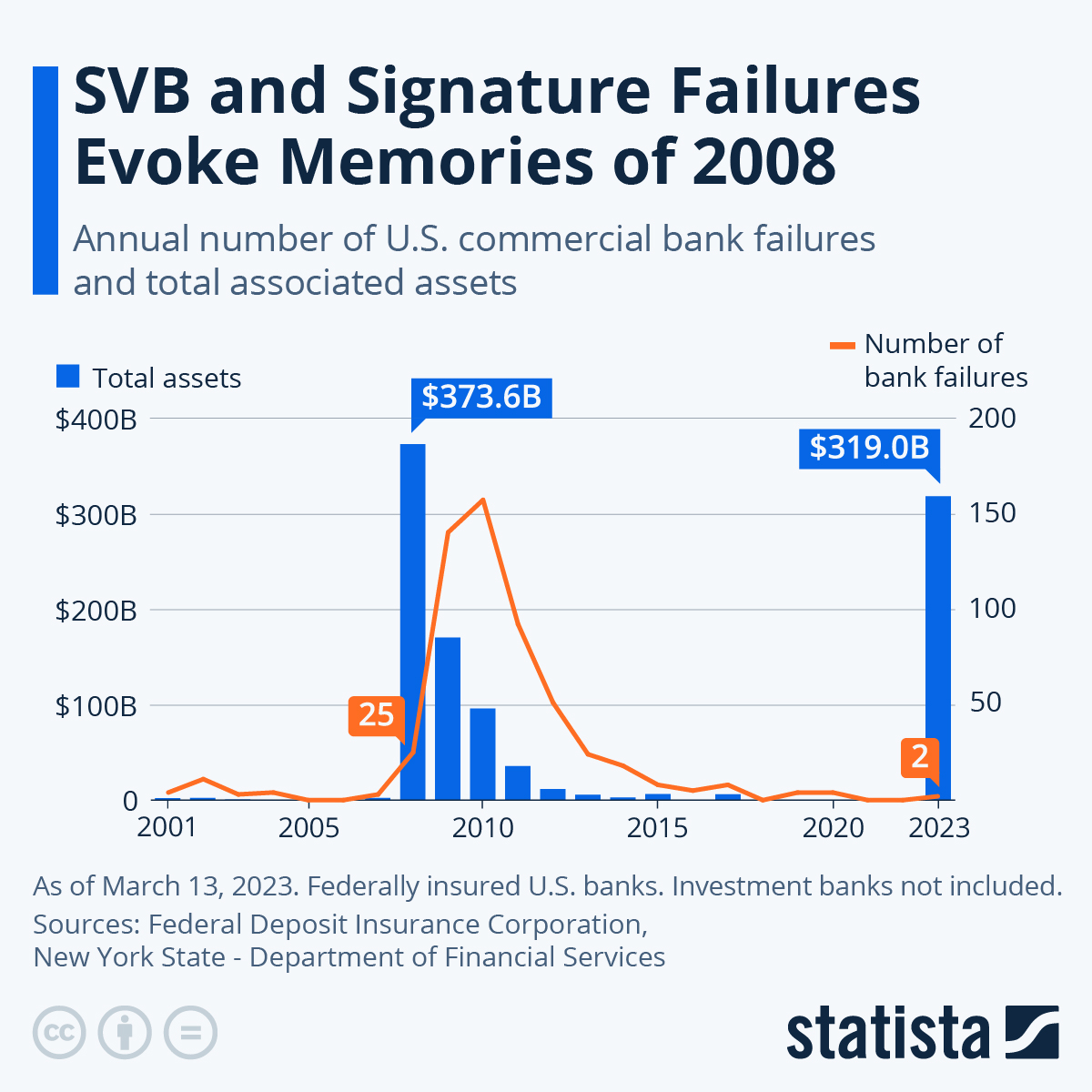
New banking crisis looms after collapse of two US banks (Source: Statista)
The fact that no banks of this magnitude have failed since the 2008 financial crisis raises the question of how this could have happened and whether this is a harbinger of more mishaps in the financial sector. The rapid rise in interest rates is the main reason why some banks are now in trouble. As a result, banks' bond portfolios have fallen sharply in value.
The U.S. central bank has already issued a new Emergency fund to support banks facing liquidity problems. She also announced together with the FDIC that account holders at Silicon Valley Bank will lose all their money recover. This is a dangerous precedent, because it rewards risky behaviour. If Credit Suisse is in danger of collapsing, then the Swiss central bank will come under great pressure to save the bank and its account holders.
The turmoil in the financial markets is causing a flight to safe havens. For example, short-term U.S. Treasury yields fell by more than a percentage point to 4%, while alternative safe havens are also benefiting. Bitcoin initially fell on the news about SVB, but on balance it has risen more than 10% in value and stood at €23,568 in the afternoon on Wednesday.
The prices of precious metals are also skyrocketing. The Gold price On Wednesday, silver was up 2.8% at €58,574 per kilo, while silver prices rose 3% to €669 per kilo. For silver, this is the highest level in more than a month, for gold the highest price since April last year. The euro slipped 1.75% against the dollar and stands at $1.055 at the time of writing.
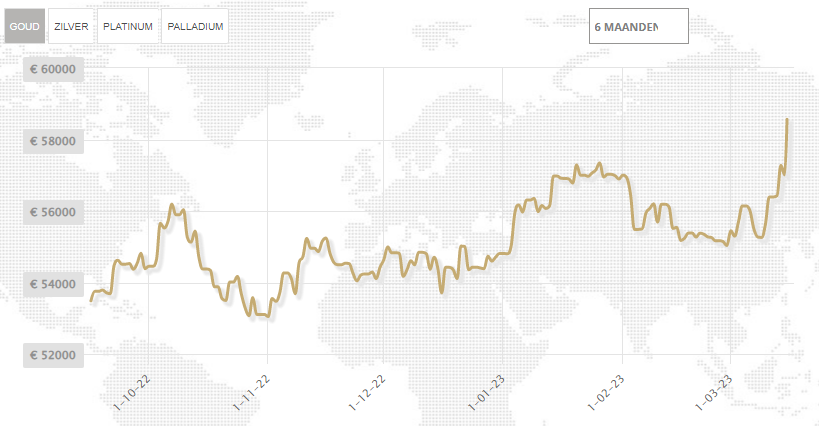
Gold price skyrockets to highest level since April 2022


