English
EN


US national debt is rising towards $40 trillion, months earlier than expected, partly due to lost revenue from Trump’s import tariffs after courts overturned them. The yield on 30-year US Treasuries climbed above 5.33% on Tuesday (18 Aug), its highest level since 2007. What does this mean for gold and silver?
The figures remain staggering. US national debt is expected to break through the $40 trillion mark. Written out in full, this amounts to €34,488,000,000,000.00. A further challenge for governments such as those of the United States, the United Kingdom, Germany, Japan and France is that yields on their bonds are also rising. Investors are demanding increasingly higher compensation for inflation, duration and fiscal risks, among other factors.
For the United States, rising interest costs are also a major contributor to the widening budget deficit. So far this fiscal year, interest expenses have reached $1.17 trillion, an increase of 15% compared with last year.
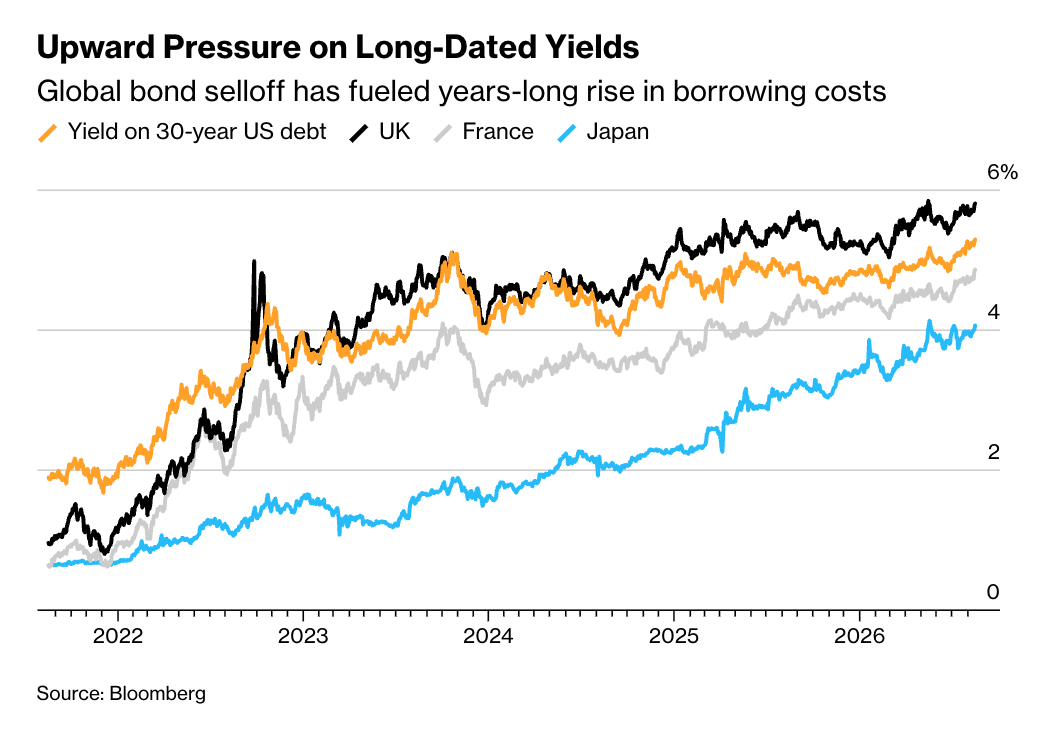 Yields on long-term government bonds in the US (yellow), UK (black), France (grey) and Japan (blue) have been rising steadily since 2021. (Source: Bloomberg).
Anshul Pradhan of Barclays argues that inflation expectations are not so much the cause, but that three other factors are at play:
An additional effect is that pension funds internationally are shifting their focus from government and other bonds towards equities and other securities. Our own pension system, which was recently overhauled, is a good example. The Netherlands has one of the largest pension sectors in Europe and, from the end of 2025, is putting as much as €125 billion in government bonds up for sale.
|
Explainer: Why did the US have such low interest rates on its government debt, despite being internationally known for its extremely high debt levels? This was because yields on US Treasuries were suppressed by strong demand for those bonds. American baby boomers were loyal savers and invested in bonds for their pensions. China, which had a huge trade surplus with the US, bought US government bonds to prevent its own currency, the renminbi, from appreciating too much. Saudi Arabia and other oil-producing states did the same, using the dollars they received for oil to buy US debt securities. (Source: Bloomberg). |
Gold and silver prices corrected in response to rising yields. “Higher yields on US Treasuries increase the opportunity cost of holding an investment that generates no yield of its own for gold,” said Ewa Manthey, commodities strategist at ING Bank.
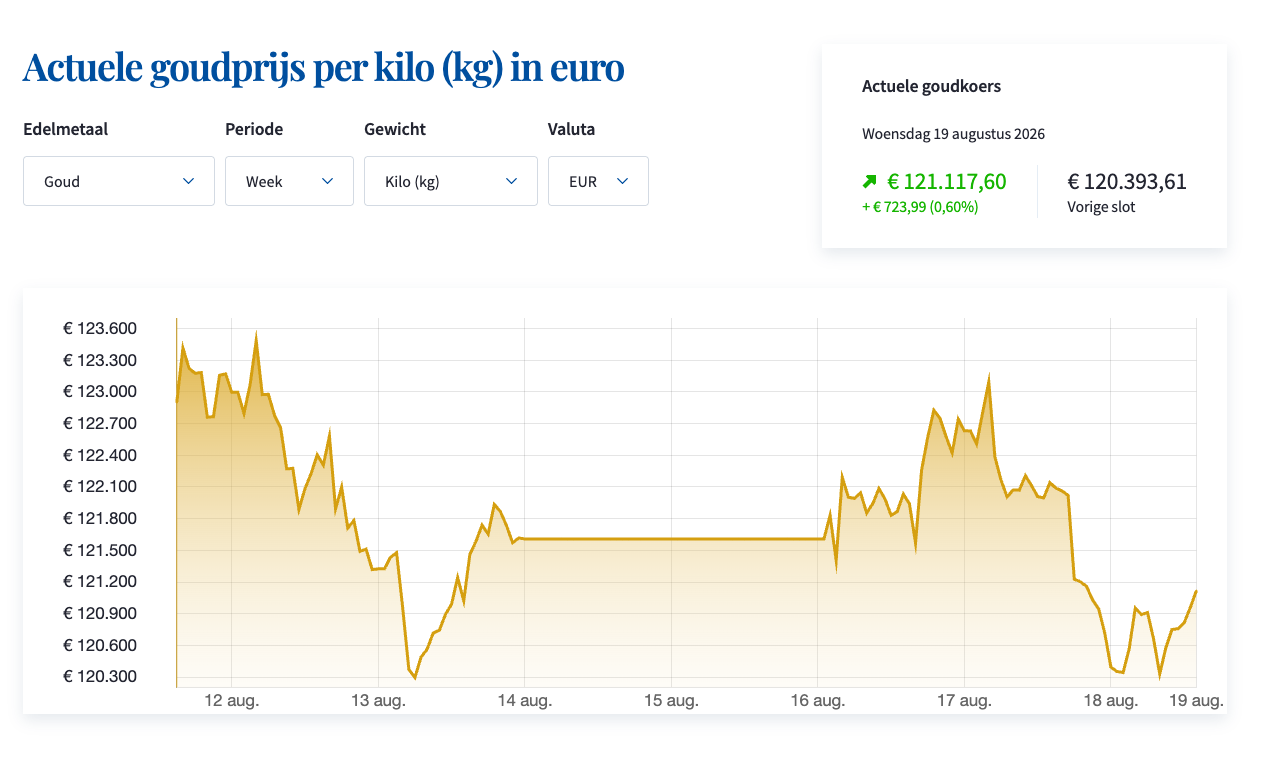 Gold price over the past seven days.
Although this is putting short-term pressure on gold and silver prices, the underlying processes may be favourable for precious metals, according to Ole Hansen of Saxo Bank. In addition to the points described above, there is also concern about how well economies can still withstand supply shocks from the energy sector. The longer the situation around Hormuz persists, the more dwindling oil reserves and rising prices will take their toll. This coincides with concerns about government spending and widening budget deficits.
“Such a backdrop could actually create an unusual but potentially favourable environment for gold, causing the historically negative relationship between gold and US Treasury yields to weaken further,” Hansen told Bloomberg. What he effectively means is that the relationship Manthey at ING draws between gold, interest rates and opportunity costs could break down if concerns about government deficits increase.
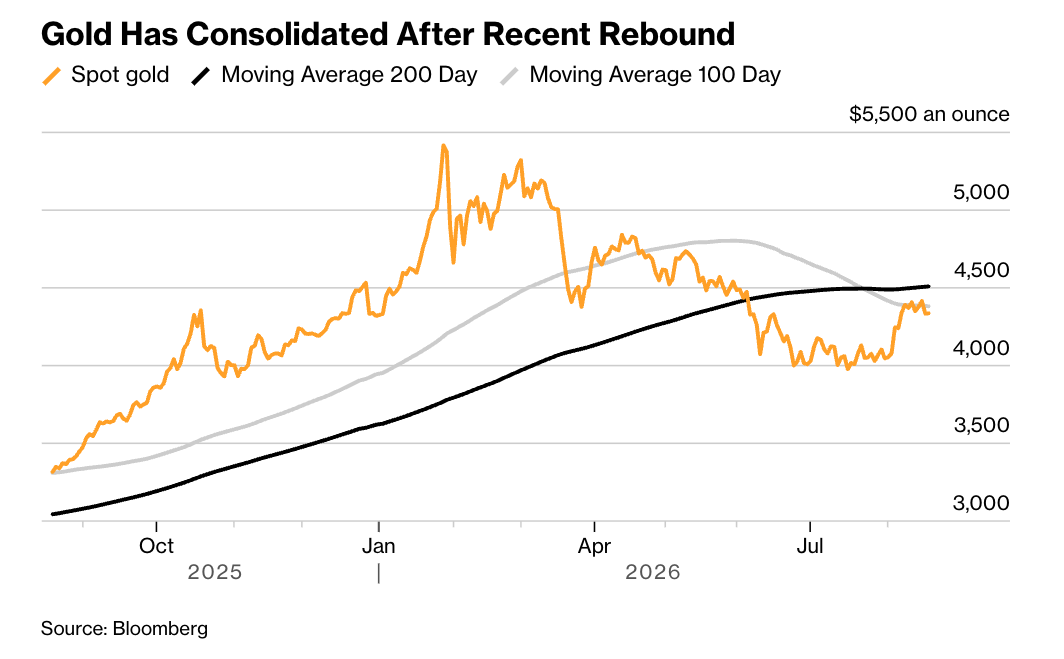 Gold is consolidating around its 100-day moving average. The 200-day moving average is hovering around $4,500 per troy ounce. (Source: Bloomberg).
Before gold can break out further, the yellow metal must first rise above $4,500 per troy ounce (31.1 grams), according to Hansen. To do so, the price must move above its 200-day moving average. In addition to this technical target, gold will probably need an end to the war with Iran and cooling inflation in order to rise further. If those conditions are met, Hansen considers a gold price of $5,000 per troy ounce (€4,300) by the end of the year highly likely.
This is in line with a recent analysis by US bank Wells Fargo, which maintains a price target of $4,900 to $5,100 by the end of 2026.
- Wednesday, August 19, 20:00 Dutch time: the minutes of the US central bank, the Federal Reserve, will be released. Markets will be looking for hints pointing to an interest-rate increase or cut.
- Next week, August 27 to 29: the Fed’s Jackson Hole symposium will take place, where Chair Kevin Warsh will deliver a speech on August 28. As we described last week, the speech by his predecessor Powell last year marked the starting point of a rally in gold.
Holland Gold Event
|


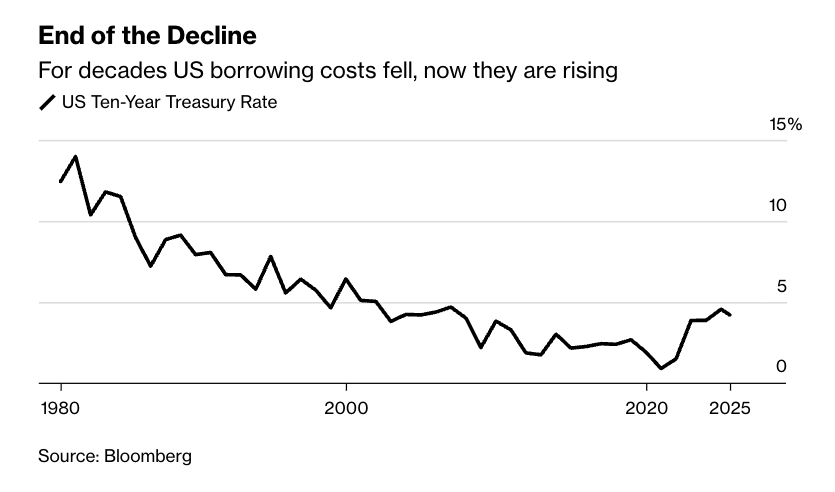 Interest expenses for the US government declined for years, but have been rising again in recent years. The chart runs through 2025 and does not yet show developments after that point. (Source: