English
EN


Gold is heading for its worst year since 2013. Since its late-January peak, the price has fallen by 36%, a steeper decline than during the 2008 financial crisis. This is particularly striking given the absence of the widespread panic seen in equity markets at the time. What is driving this decline, and what does it mean that 90% of investors are now bearish on gold?
Adding to the pressure is the relentless search for increasingly expensive capital, which is creating a liquidity shortage. Demand for capital is coming from, among others, governments seeking to finance or refinance their debt, AI companies going public (Anthropic) and hyperscalers making multibillion-dollar investments. Combined with falling equity prices, this can quickly trigger margin calls for leveraged investors. This dynamic reinforces the downward trend and ultimately leads to widespread sell-offs.
The volatility has spread beyond the semiconductor sector and AI stocks to precious metals, culminating in a sharp intraday reversal on 25 November. The extended Thanksgiving weekend may offer some respite, with only a half-day trading session on 27 November. Gold and cryptocurrencies are among the biggest casualties of this scramble for liquidity, as they can be sold very quickly.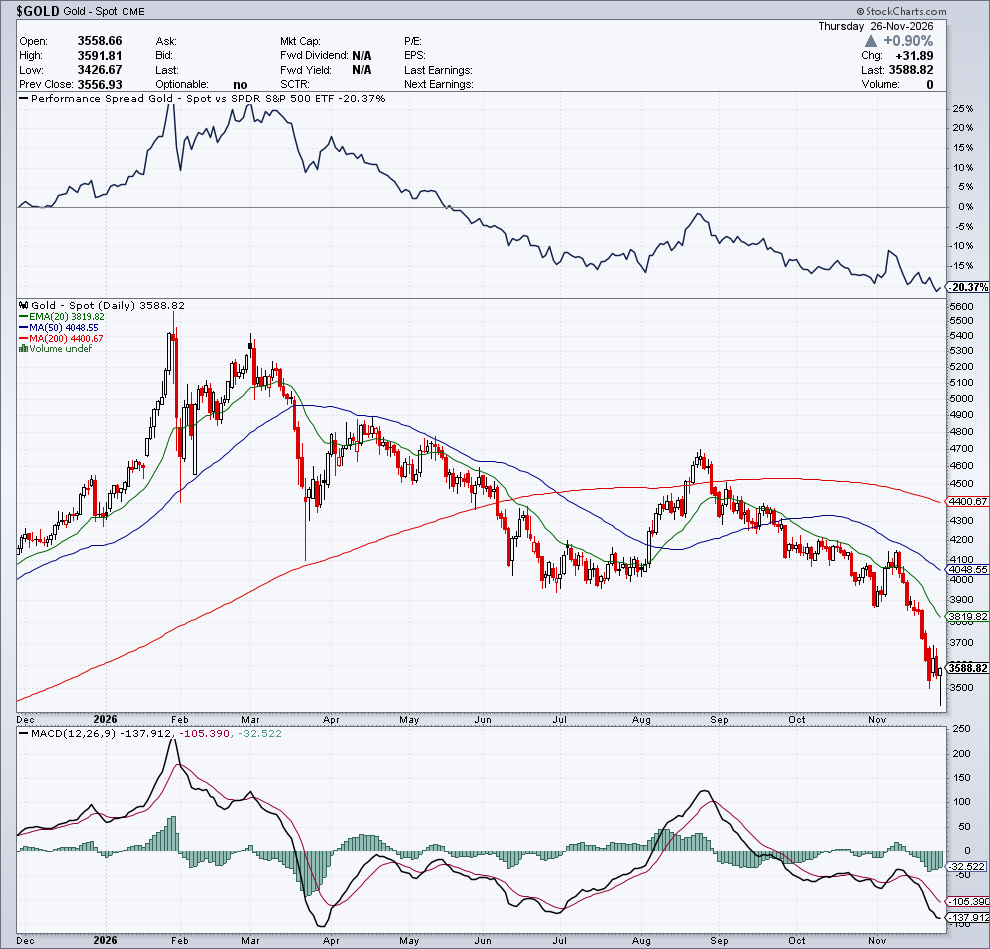
With just one month left in 2026, gold is trading 18% below its level at the start of the year. In euro terms, the decline stands at 13%. Gold is therefore on track to post its worst annual performance since 2013. The decline from its late-January peak is even more pronounced, at 36%. However, it is important to put these figures into perspective, as the gold price nearly tripled between March 2024 and January 2026. During this period, there was barely a meaningful correction. The current gold price also remains 80% above its breakout level in early 2024.
Nevertheless, the current drawdown is now greater than that seen during the 2008–2009 financial crisis. This is particularly remarkable given that the decline in equity indices comes nowhere near the scale of what happened back then. In 2008, the collapse of Lehman Brothers triggered widespread panic across financial markets. There is no comparable panic today, yet gold has suffered a steeper percentage decline.
According to several technical indicators, gold is now oversold. A key technical support level is believed to lie around $3,400. Sentiment indicators also paint a very bearish picture, with 90% of investors classified as ‘bears’ and just 10% as ‘bulls’. Historically, such extreme sentiment has often served as a contrarian indicator, although there is no guarantee that the gold price will not fall further in the short term.
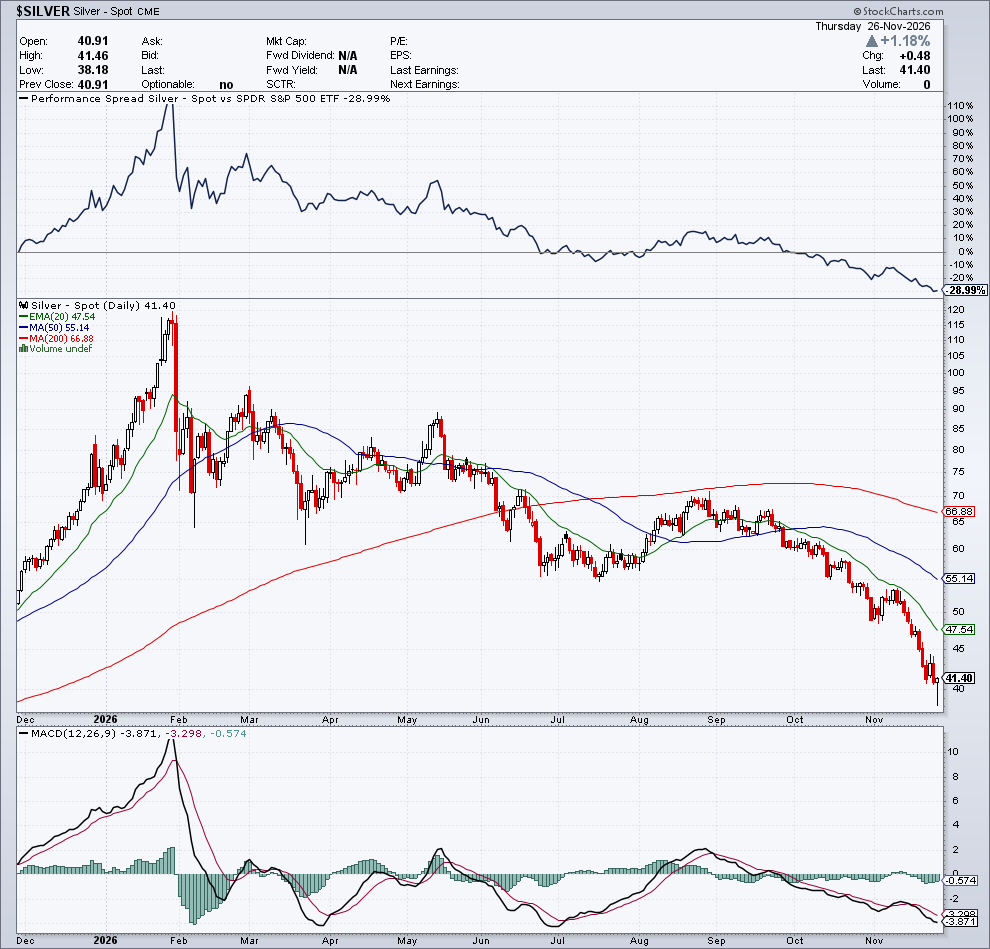
The situation is even more extreme for silver, which has fallen nearly 70% from its peak. However, as with gold, the preceding rally needs to be put into perspective: silver quadrupled in price in just seven months! An initial technical support level for silver lies at $38, a level that was briefly touched earlier this week.
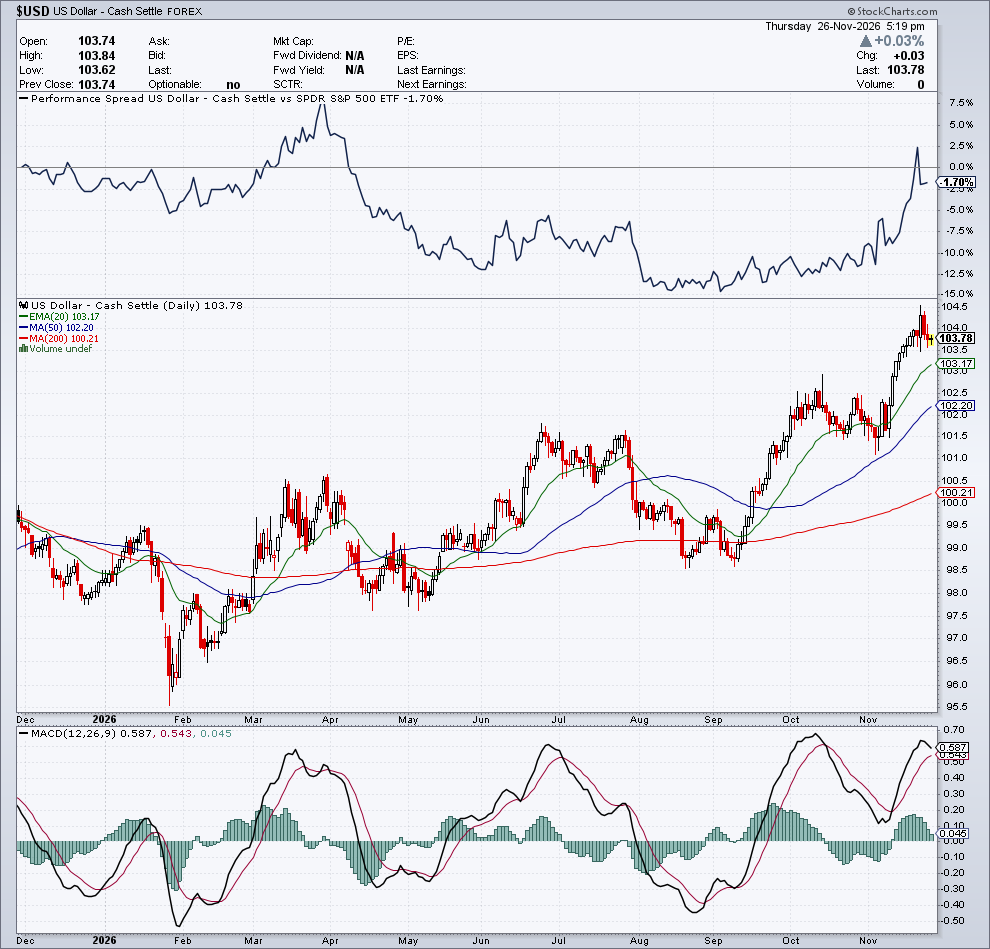
Over the past few weeks, virtually every macroeconomic data release and statement by Fed officials has been interpreted as further evidence of impending interest rate hikes by the Federal Reserve. This has also pushed the US dollar higher, creating an additional headwind for gold.
The PCE deflator, the Federal Reserve's preferred measure of inflation, rose to 3.8% in October. Excluding food and energy, inflation came in at 3.3%, above the expected 3.2%. The US economy grew in the third quarter at an annualised rate of 4.3%. This exceeded the previous estimate of 3.4% and marked the strongest pace of growth since 2023. Notably, however, long-term interest rates, as measured by the yield on the 10-year US Treasury, did not rise despite stronger economic growth and higher core inflation.
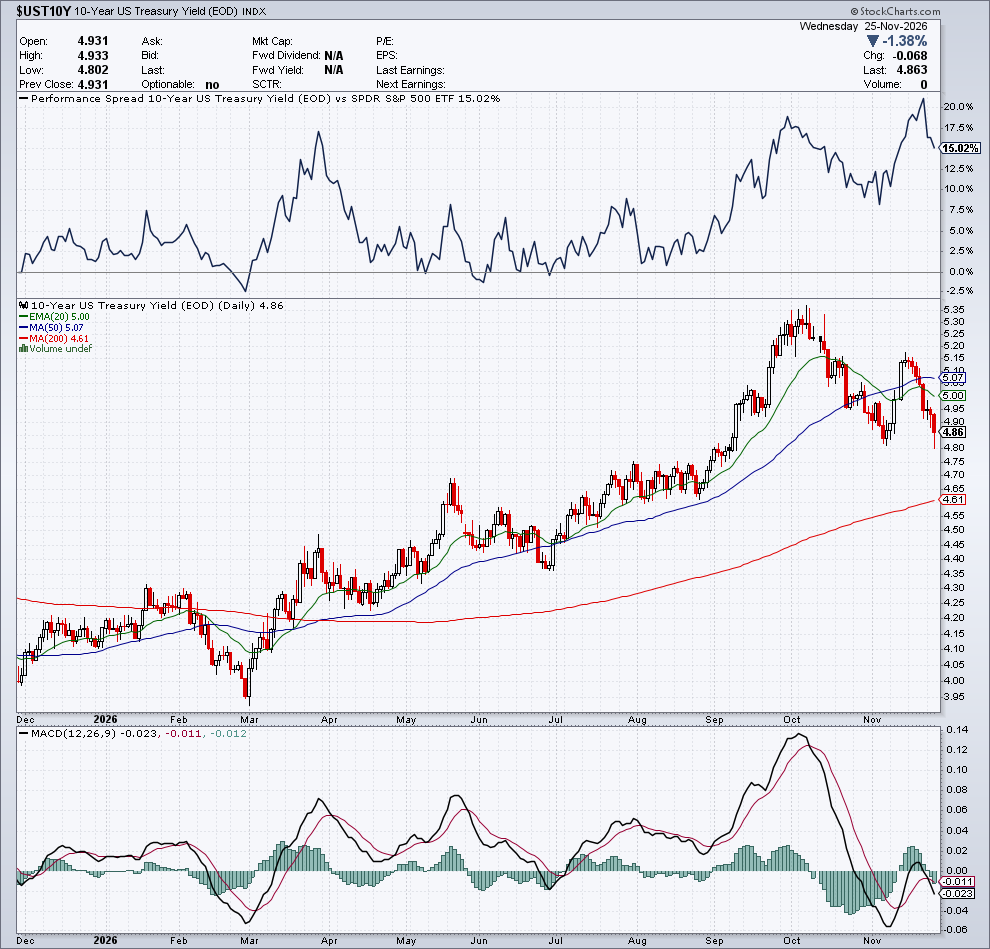
Meanwhile, a US interest rate hike on 9 December now looks almost certain. According to the CME FedWatch Tool, the market is pricing in a 99% probability of a 25-basis-point hike. The prospect of a 50-basis-point increase has now faded entirely. The market has therefore effectively priced in a second rate hike following September's increase. The real question is what comes next in 2027. For the first monetary policy meeting of the new year on 27 January, the market is currently pricing in a 62% probability of another 25-basis-point hike.
Markets should not expect much in the way of forward guidance from Fed Chair Kevin Warsh. Warsh is no fan of ‘Fedspeak’ or dropping hints about future monetary policy between meetings. Instead, he prefers to base each interest rate decision on incoming economic data. However, the Fed Chair does not appear to have his colleagues on the FOMC entirely in check, and several members of the monetary policy committee clearly have a penchant for seeking the limelight. The recent ‘performances’ by Christopher Waller and John Williams, among others, are a case in point. Both are advocating further interest rate hikes to bring inflation back towards 2% more quickly.