9.3
8.064 reviews

English
EN


The gold market was dominated by a sharp increase in demand for investment gold and gold ETFs in the second quarter, while demand for gold jewellery in key markets such as China and India fell significantly. An increasing supply of scrap gold resulted in a small net surplus in the global gold market, according to research firm Thomson Reuters GFMS in its latest quarterly gold market report.
In the first half of this year, a flight to safe havens led to an impressive increase in Gold price. The precious metal gained almost 25% in value, as investors sought refuge in investment gold and gold ETFs on a large scale. In the second quarter, these investment funds added 232 tonnes of gold to their stocks worldwide, after they also withdrew 336 tonnes of gold from the market in the first quarter. A remarkable trend shift, when you consider that the demand for these types of investment products has been almost exclusively negative over the past two years.
According to Thomson Reuters GFMS, gold benefited not only from a flight to safe havens, but also from the rise of negative interest rates in the world. As a result, it is less costly to hold gold instead of other investments that do earn interest or dividends. Brexit has also caused a flight to gold, but the full impact of this will only become visible in the next quarterly report.
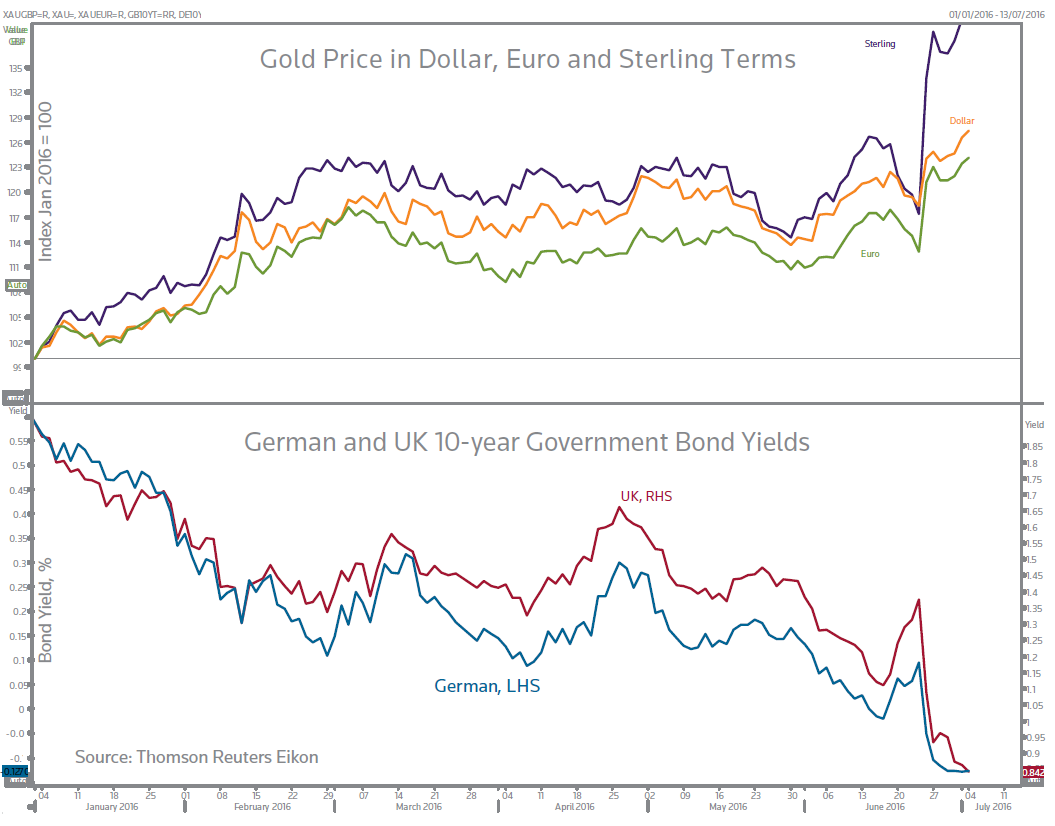
Brexit boosted gold prices (Source: Thomson Reuters GFMS)
In recent years, we have written about the continuous flow of gold from West to East, but now we see a reverse movement. This year, it is not China or India where most of the gold flows, but the United Kingdom. That's because many gold ETFs hold their physical gold stash in London, namely in the form of 400 troy ounces of 'Good Delivery' gold bars. These were flown in on a large scale to replenish the stocks of ETFs. In recent years, these Exchange Traded Funds still have to liquidate hundreds of tons of gold.
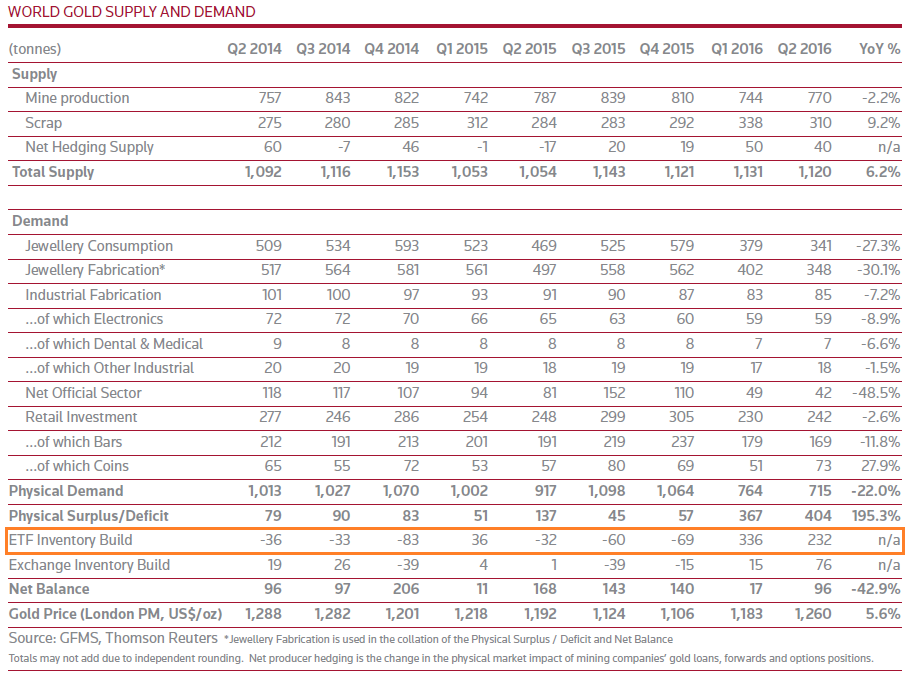
Investors are getting back into gold ETFs this year (Source: Thomson Reuters GFMS)
While the demand for gold has increased, especially among Western investors, the gold market in China and India is not doing well. In China, for example, 31% less gold jewellery was sold in the second quarter than a year ago, while the Indian gold market even showed a decline of 56%. These are unprecedented percentages, which can partly be explained by the fact that jewellers reduced their stocks. This happened on such a large scale in India that gold has been sold for less than the global spot price in recent months. Globally, demand for gold jewellery fell by 27% in the second quarter compared to the same period last year.
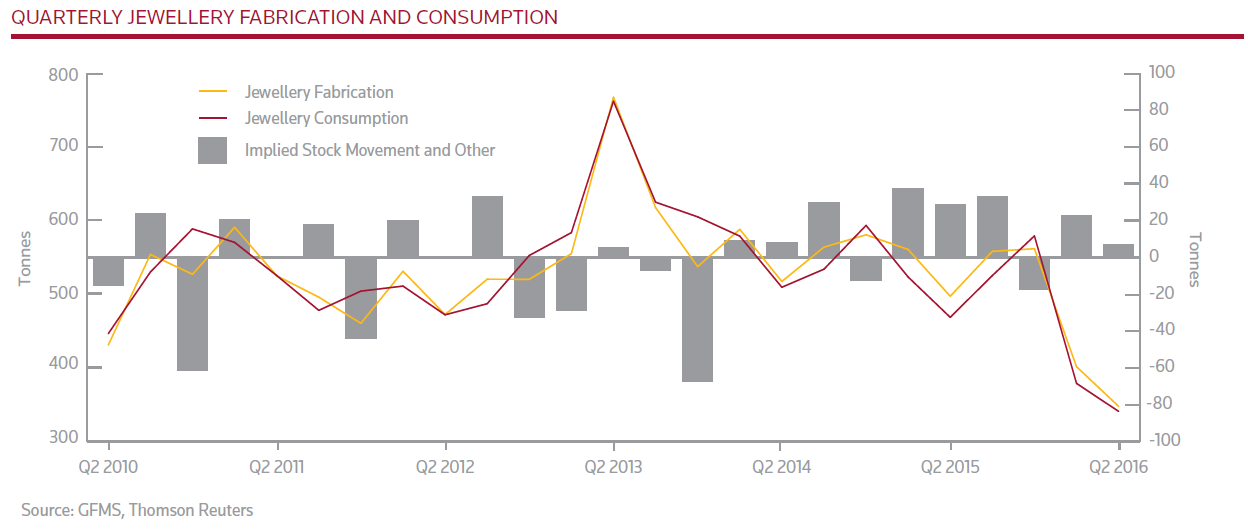
Demand for gold jewellery sharply reduced (Source: Thomson Reuters GFMS)
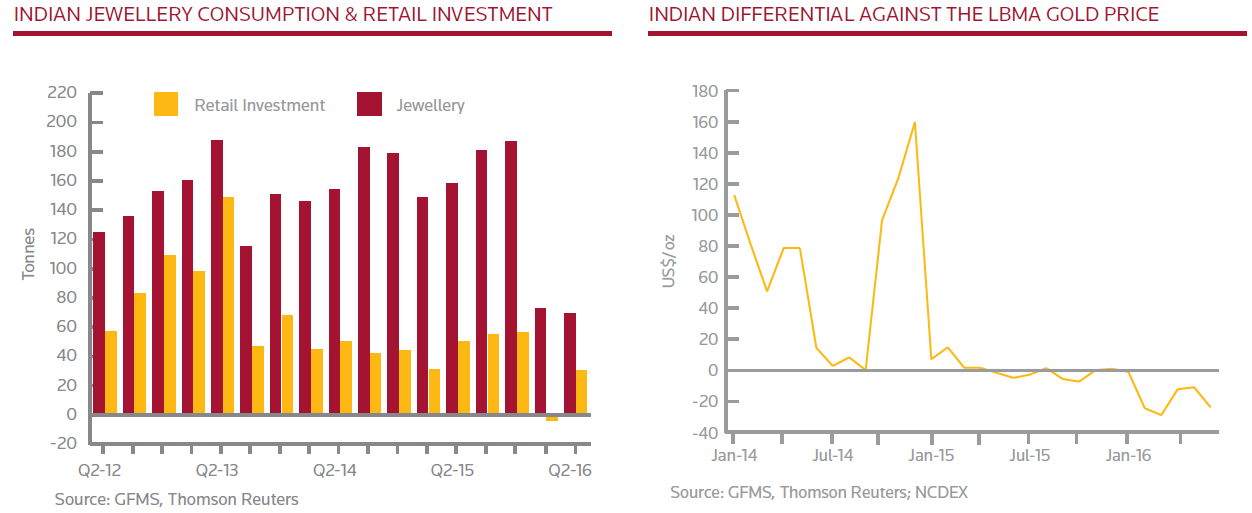
Indian gold market in lower gear (Source: Thomson Reuters GFMS)
The gold mining sector produced 744 tonnes of gold in the first quarter of this year, similar to the production in the same period last year. Due to the relatively low price of gold, the gold mines were forced to reduce their costs. And with success, because the following graph from the report shows that the gold mining sector has been able to further reduce its costs. Combine the low production costs with the rise in the price of gold and you can see why the shares of gold miners have already more than doubled in value this year.
According to calculations by Thomson Reuters, in the first quarter of this year, gold miners managed to reduce their production costs by 9% to a 'Total cash cost' of $634 per troy ounce. Favourable exchange rate effects and the fall in oil prices made a significant contribution to the lower cost price. The 'total cash cost' should not be confused with the much higher 'all in sustaining cash costs', which also includes overhead and exploration costs.
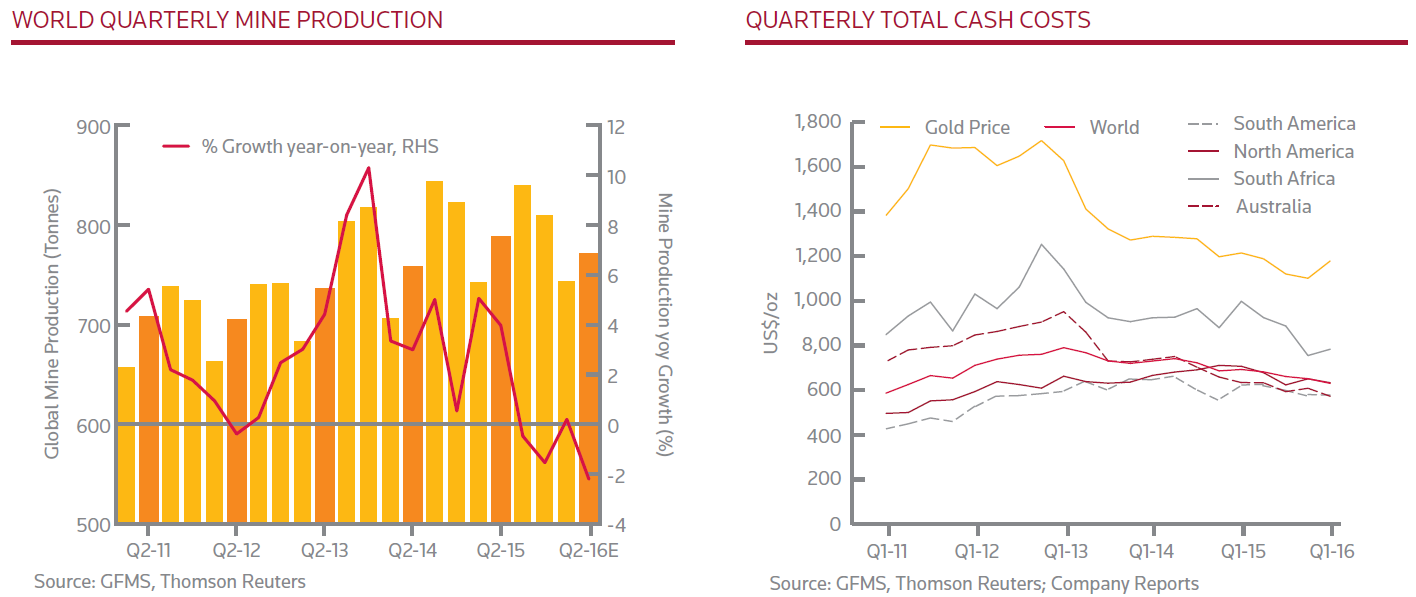
Gold mines reduce production costs (Source: Thomson Reuters GFMS)