9.3
8.064 reviews

English
EN


Poland's central bank bought nearly 15 tonnes of gold in April, which is the largest purchase in nearly four years. According to the National Bank of Poland, the country's gold reserves rose from 228.7 to 243.5 metric tons last month. This was the largest purchase since June 2019, when Poland's gold reserves rose by 94.9 tonnes.
The value of the total gold stock rose to $15.52 billion from $14.55 billion in April. The purchase in April follows earlier statements by central bank governor Adam Glapinski that Poland planned to add 100 tonnes to its gold reserves to prepare for "the most adverse conditions".
"Why does the central bank own gold? Because gold retains its value even if someone cuts off the flow to the global financial system," Glapinski told a local newspaper. "Of course, we don't assume this will happen. But as the saying goes, being prepared is always assured. And the central bank must be prepared for even the most adverse conditions. That's why we see a special role for gold in our currency management process."
Poland doubled its gold reserves in 2019 to 228 tonnes and decided to withdraw more than 100 tonnes of gold from the vaults of the Bank of England in London in the same year. By storing more precious metals domestically, the central bank has more control over its reserves. Other Eastern European countries have also returned gold to their own countries in recent years, such as Hungary and Serbia.
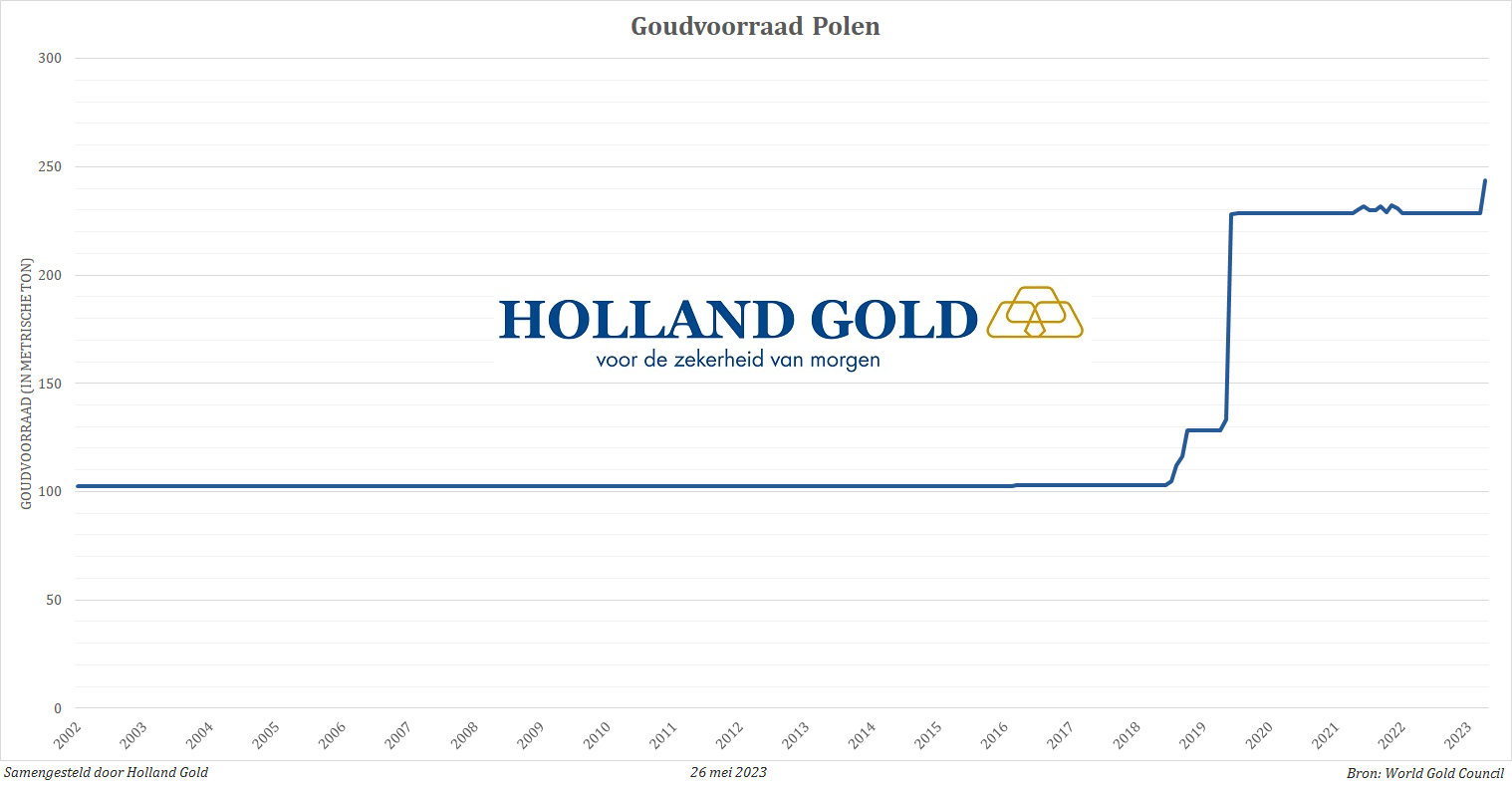
Poland further expands gold reserves (Source: World Gold Council)
This means that more purchases may follow, according to Colin Hamilton, managing director at BMO Capital Markets. "We expect central bank purchases of gold to remain strong this year (+596 tonnes), which will provide a continued boost to gold prices and sentiment", Hamilton told Kitco.
Central bank purchases of gold have been one of the driving forces behind higher gold prices this year. Last year, they bought a Record quantity of 1,136 tonnes and in the first quarter of this year, central banks remained in a Record pace buy gold. The precious metal is considered a safe haven by central banks, because it has no counterparty risk and currency risk.
According to the World Gold Council, other central banks also bought gold in April, including the People's Bank of China (+8.1 tonnes), the Czech National Bank (+1.8 tonnes) and the Central Bank of Mongolia (1 tonnes).
On the other hand, Turkey's central bank is estimated to have sold as much as 80.8 tonnes of gold in April, to meet soaring domestic demand. After Turkey bought more gold than any other central bank last year, it began selling in March and April to meet growing domestic demand, according to the World Gold Council.
The central bank's sale of gold on the domestic market is an attempt to limit the need for gold imports, as it has a negative impact on Turkey's current account. Much more foreign exchange reserves would then flow away to other countries. In February, the country imported another Record quantity gold.
Demand for gold in Turkey has surged recently, as citizens have embraced the precious metal as a hedge against high inflation. At its peak, inflation was over 85% year-on-year, which saw people see the purchasing power of their savings evaporate.


