9.3
8.064 reviews

English
EN


 According to HSBC, the gold price could still be rise to $1,200 to $1,225 per troy ounce, an increase of almost ten percent from the gold price of $1,119 per troy ounce at the time of writing. In a new report released last Friday, analysts at the bank put forward five arguments as to why we should see a higher Gold price Expect. We have summarised the five points for you:
Financial markets have been anticipating an interest rate hike by the US central bank since 2013. Since then, the gold price has been in a downward trend. According to HSBC, this news has already been priced into the market and the actual rate hike (if any) will no longer have a negative effect. If the interest rate hike does not materialise, the gold price may even rise again.
The interest rate hike is often explained as negative for gold, because gold does not generate cash flow and you miss out on more returns by being in gold when interest rates rise. But HSBC comes up with a different analysis in its report. Analysts at the bank noted that historically, the dollar has tended to weaken when interest rates rise. If we look at the previous four periods in which the Federal Reserve raised interest rates over the past thirty years, we see that the dollar actually weakened in the first hundred days after the first interest rate hike.
"This pattern has important implications for gold. History shows that the price of gold generally rises, sometimes with a lag, after the first interest rate hike," This is how the bank writes.
Due to last month's price drop, the gold price has fallen to the lowest level in more than five years. As a result of the price drop, hedge funds returned to net income for the first time in a long time short on gold, which may be a good contrarian indicator. When so many investors and hedge funds are short on gold, a short-covering rally can occur. All that is needed is a slight change in sentiment, according to HSBC. On July 7, the short position gold on the Comex reached another record level. So a lot of speculators are already short on gold.
Also at HSBC, they have noted that a decline in the price of gold is usually accompanied by an increasing demand for physical gold, especially in the Asian market. "In key gold markets such as China, India, Indonesia and Vietnam, as well as in other emerging markets, consumers have fewer resources available to safely store their savings," HSBC writes. In addition, only a limited amount of gold is bought per capita in India and China. These markets still have a lot of growth potential.
The increase of the Chinese central bank's gold holdings are very positive for the gold market in the longer term. "The PboC is an important central bank with significant influence. The fact that they buy gold may encourage other central banks to do the same. Many central banks still have a small gold reserve relative to their foreign exchange reserves," HSBC writes in its report.
Like China, Russia has been adding a lot of gold to its reserves in recent years. Since 2010, central banks have been net buyers of gold.
Not only HSBC is more positive about gold, Thomson Reuters GFMS also expects a Rise in the price of gold.
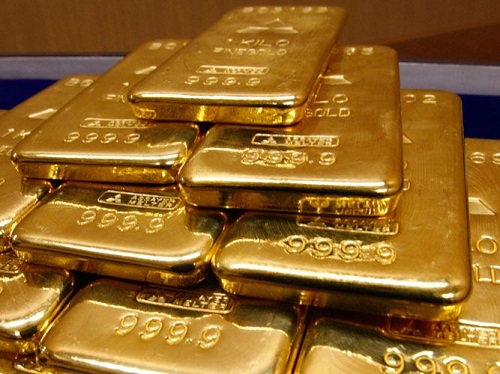
HSBC expects gold price to recover later in 2015


