9.3
8.064 reviews

English
EN


The ECB is increasing emergency support to Greek banks by an estimated €3.5 billion to prevent no more money from coming out of ATMs. Last Wednesday, €1.1 billion was made available to Greek banks, but the stress is so great that those reserves are already depleted.
Greek savers have already withdrawn more than €3 billion from their bank accounts this week amid fears of bank closures and possible capital controls. The pledge of a few more billion euros for the Greek banking sector was made at the end of a conference call between the central bankers of the euro area countries and the six ECB board members.
The billions that the ECB is making available to keep Greek banks afloat are part of the Emergency Liquidity Assistance (ELA) program. Normally, the ECB provides emergency loans in exchange for collateral in the form of government bonds with a good credit score and any losses are distributed on a pro-rata basis among the 19 Eurosystem central banks. ELA goes one step further, as this credit facility is not backed by government bonds. Instead, the central bank (in this case, the central bank of Greece) acts as guarantor and the banks that need the credit pay a higher interest rate.
Greek banks would have collapsed long ago if the ECB had not made liquidity available, it writes Financieel Dagblad. The central bank is doing everything in its power to prevent total chaos in Greece. That is why they try to avoid a so-called 'bank holiday' at all costs. The ELA is a temporary provision for countries that run into difficulties. Cyprus' banking sector has also used it in the past.
In total, the ECB provided around €85 billion in liquidity to the Greek banking sector. To put that figure in perspective, the size of the Greek economy was around €170 billion last year and the country's total public debt is more than €350 billion. The chances of Greece being able to repay all its debts are very slim, and the question is who will ultimately bear the losses. The Eurogroup, led by Dijsselbloem, has indicated that not only shareholders, but also bondholders and wealthy savers will have to pay for the losses.
Source: Marketupdate.nl
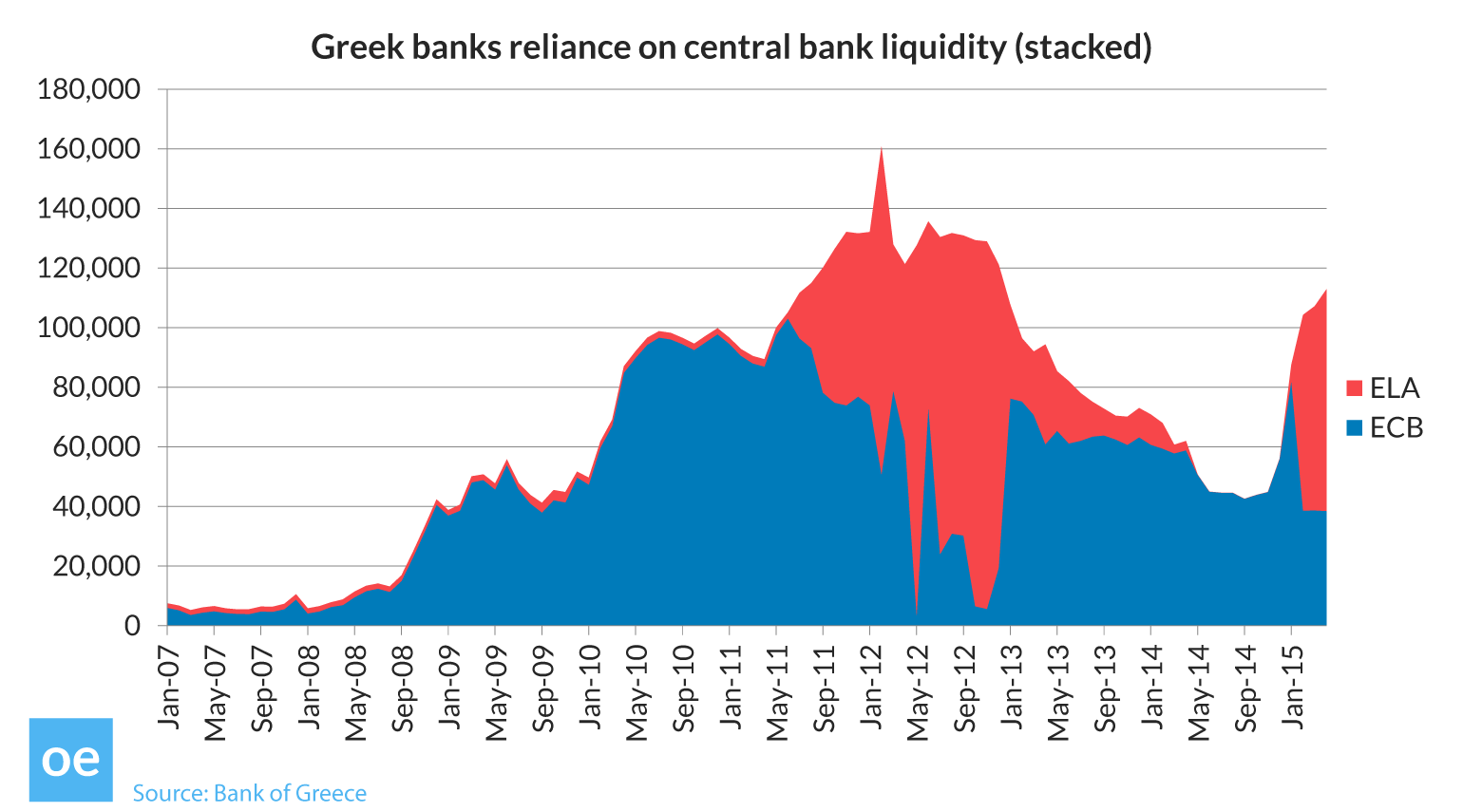
Greek banks are increasingly dependent on the ECB's drip

Greeks withdraw money from the bank en masse


