9.3
8.064 reviews

English
EN


The global economy seems to be doing very well again, but at the same time we see several emerging economies getting into trouble and geopolitical tensions in the world are also increasing. In the meantime, the Gold price to the lowest level in more than two years. How should we weigh these developments? And is this a good time to add bullion to your portfolio?
Asset manager Incrementum has summarised the key trends in the global economy in the latest edition of its annual 'In Gold We Trust' report. We will list the most important graphs from the 65-page report for you below, but you can of course also download the full report via this link.
One of the most important developments in recent years is that central banks are slowly but surely trying to turn off the money tap. The Federal Reserve is raising interest rates and has already removed government bonds from its balance sheet, while the ECB wants to end its bond-buying program this year. If we look at the monetary policy of the world's five major central banks, we see that this year is the first time monetary tightening.
By removing liquidity from the market, interest rates rise, which in the long term affects public finances and the demand for credit from households and businesses. We don't know how big that influence will be, because it is the first time in history that central banks on a global scale have taken liquidity out of the market and rolled back their stimulus programs.
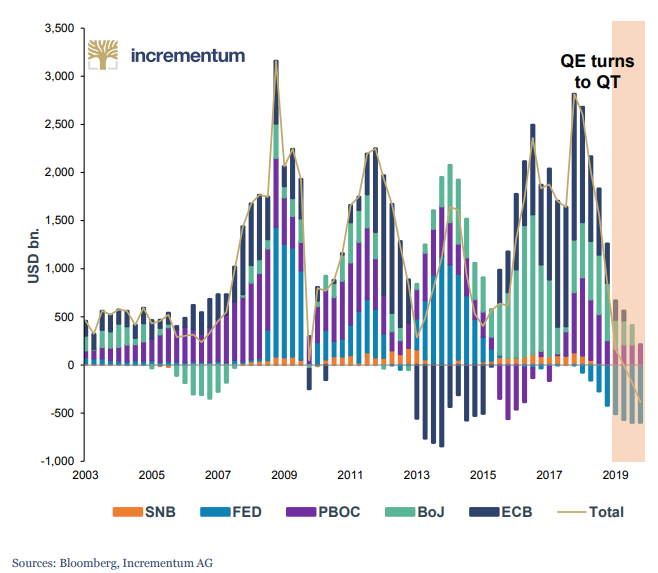
Central banks start monetary tightening (Source: Incrementum)
The rise in interest rates also increases the interest costs of the US government, the country with the highest national debt. For the 2018 fiscal year, the U.S. government lost $523 billion in interest on the debt, a new record. The question is how sustainable the debt is if interest rates rise even further.
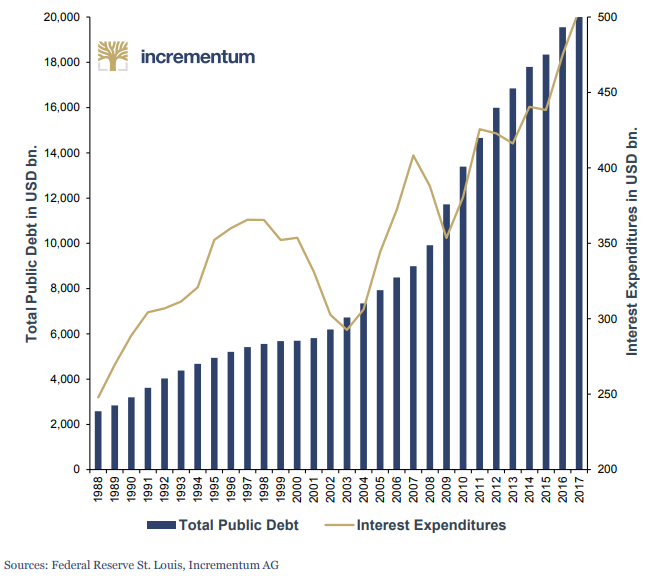
U.S. government debt and interest charges continue to rise (Source: Incrementum)
Negative real interest rates are normally beneficial for gold because it means that inflation is higher than interest rates. Interest rates are now rising again, but not enough to compensate for inflation. As a result, the precious metal remains an interesting form of capital in the investment portfolio.
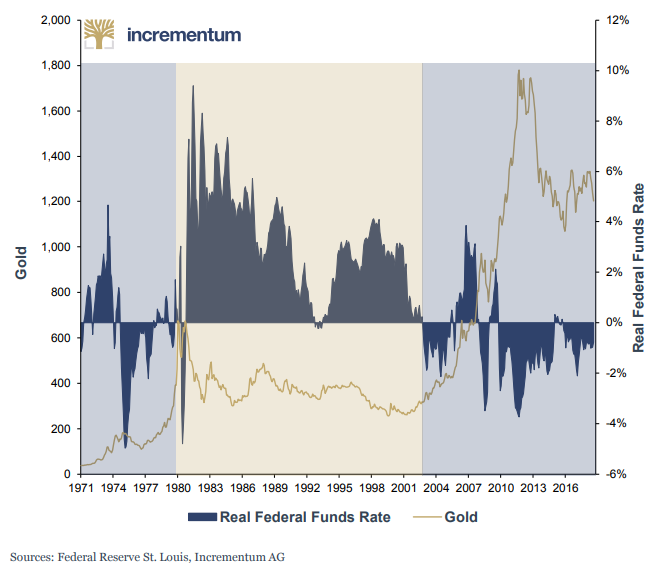
Real interest rates remain negative (Source: Incrementum)
Central banks have been adding gold to their reserves since the beginning of the credit crisis. In addition, it is mainly emerging economies that continue to expand their gold reserves. Central bank purchases are an important foundation for the gold market and it is expected that central banks will continue to add gold to their stocks as a form of diversification in the coming years.
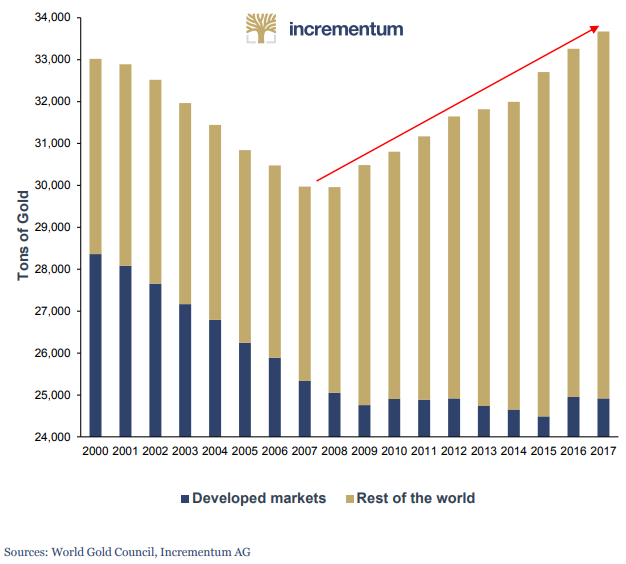
Central banks add gold to reserves again (Source: Incrementum)
The negative sentiment in the gold market should not go undiscussed. In recent months, the price of gold has fallen to its lowest level in more than two years, but at the same time, we see that many asset managers currently consider the precious metal to be undervalued. That's a stark contrast to 2011, when the price of gold peaked and many asset managers believed the precious metal was overvalued.
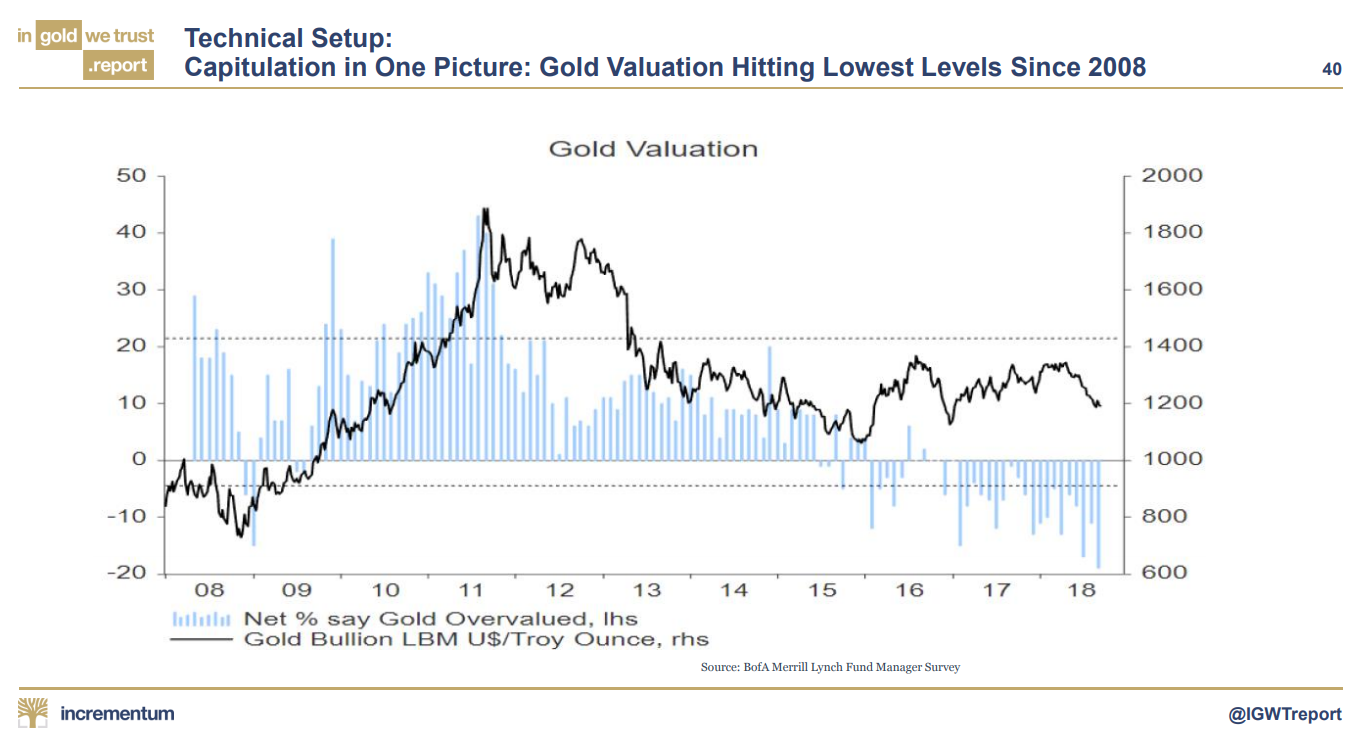
More asset managers find gold cheap again (Source: Incrementum)
When silver is relatively cheap compared to gold, it is often explained as a reason to buy silver. But the following chart shows that a high ratio in recent years has also proven to be a good entry point for gold. Of course, past performance is no guarantee for the future, but it is an interesting observation.
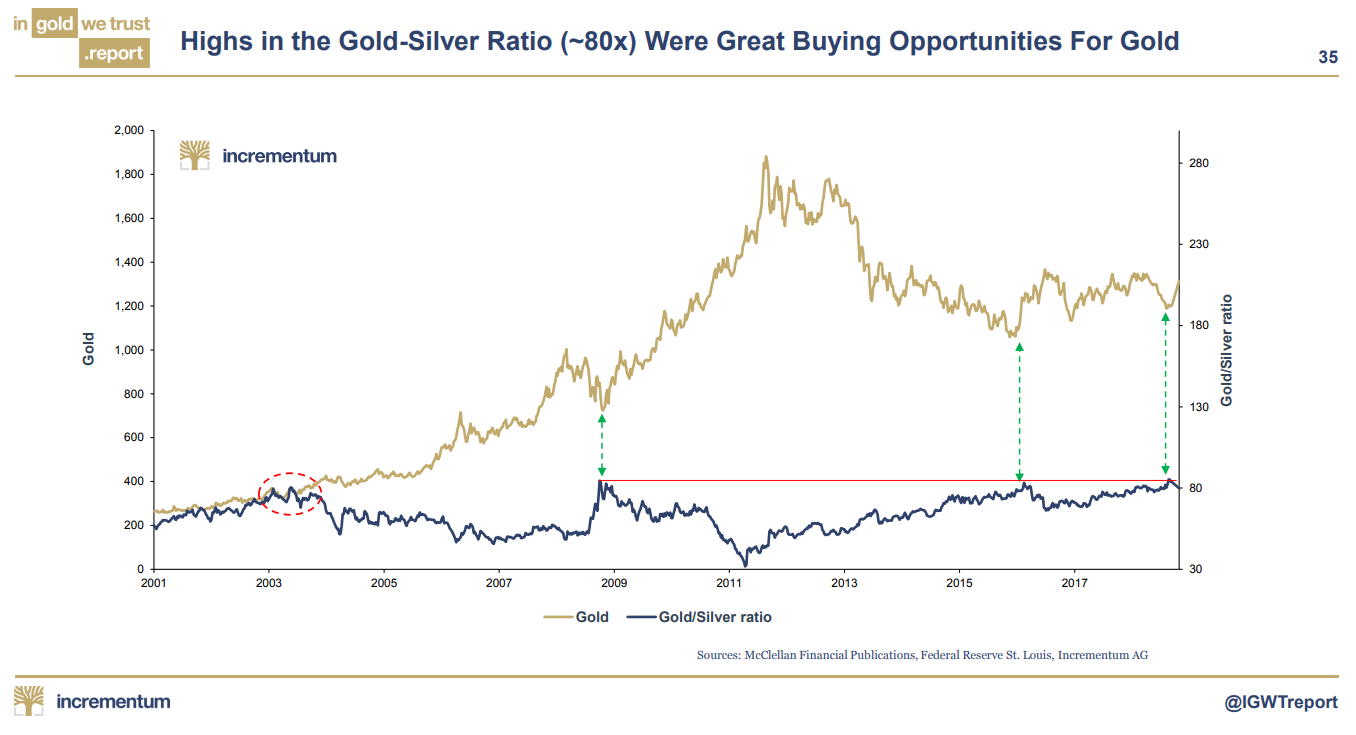
High gold/silver ratio also remains favorable for gold (Source: Incrementum)
One of the strengths of precious metals is that they retain their value in a currency crisis. The examples of Turkey and Venezuela show that gold corrects for currency depreciation, while money loses its value.
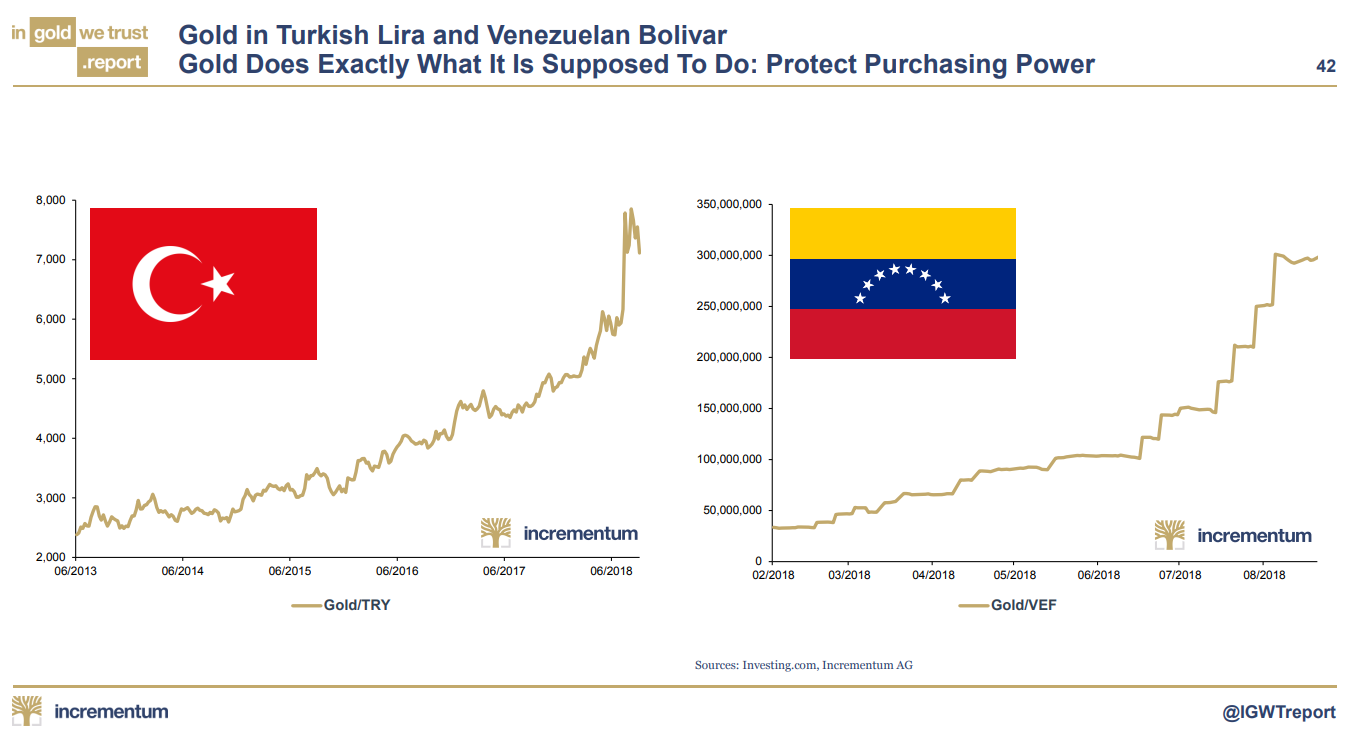
Gold appears to be a good hedge against currency depreciation (Source: Incrementum)
When you count gold and silver as commodities, the following graph is also relevant. If we compare the prices of raw materials with the value of shares, we see that raw materials have not been as cheap as they are today since 1971.
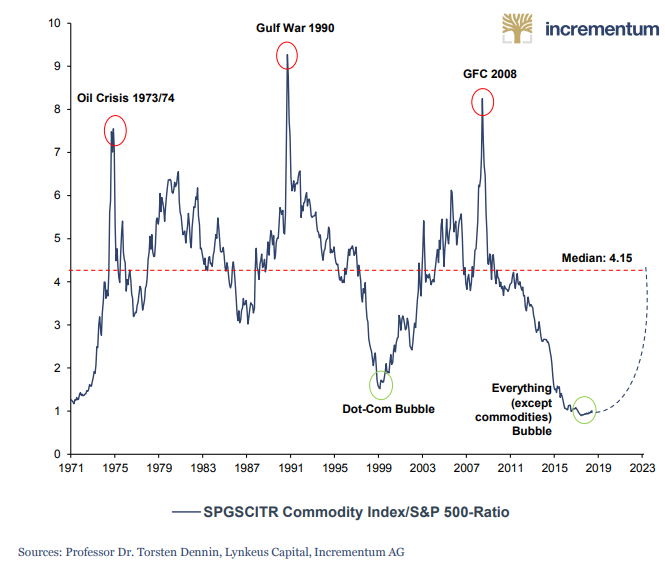
Commodities cheap relative to stocks (Source: Incrementum)
Finally, an example that shows how gold manages to maintain its purchasing power. Below we see the price development of a litre of beer since 1950, expressed in euros (blue) and in gold (yellow). Over the years, you need more and more money to buy the same amount of beer, while the price in gold seems to be falling. And that probably applies to a lot of other foods...
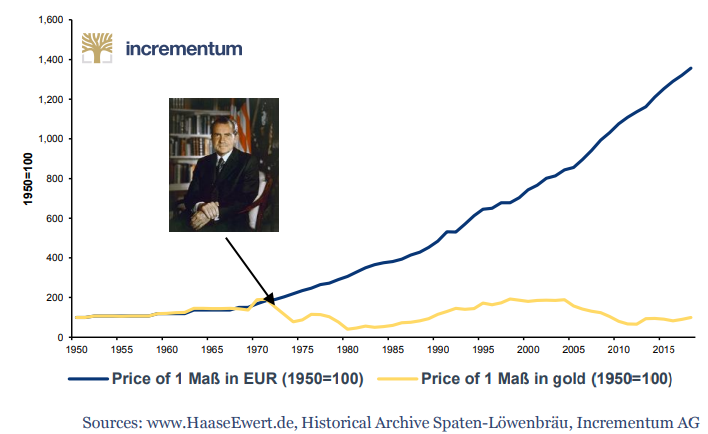
Purchasing power of gold in liters of beer remains constant (Source: Incrementum)
Disclaimer: Holland Gold does not provide investment advice and this article should not be considered as such. Past performance is no guarantee of future results.


