9.3
8.064 reviews

English
EN


The value of China's gold stock reached an all-time high of $78.89 billion in July. Digits The central bank added 5.3 tonnes of gold to its reserves in July, bringing the country's total gold holdings to 1,828 tonnes. This gives China the fifth largest stock of precious metals of any country in the world.
The value of China's gold reserves increased not only due to the purchase of more than five tons of gold, but also due to the increase in the price of the precious metal. Since June 2015, the central bank has been putting its assets on the balance sheet at their current value every month, which means that the precious metal is on the books at a higher value due to the price increase in July.
The following chart shows at a glance how China's gold supply has increased since 2002. As you can see, the central bank only released information about its gold reserves a few times between 2002 and 2015.
Last year, the central bank had to be more open in order to get the Chinese yuan into the IMF's currency basket. As a result, the outside world also gained insight into the central bank's gold strategy. They probably bought some bullion every month before that time, but this information was not publicly available.
In the graph above, we have calculated the development of the value of the gold reserve since 2002. Of course, this is only an indication, because China probably added precious metal to its reserves on a regular basis before June 2015.
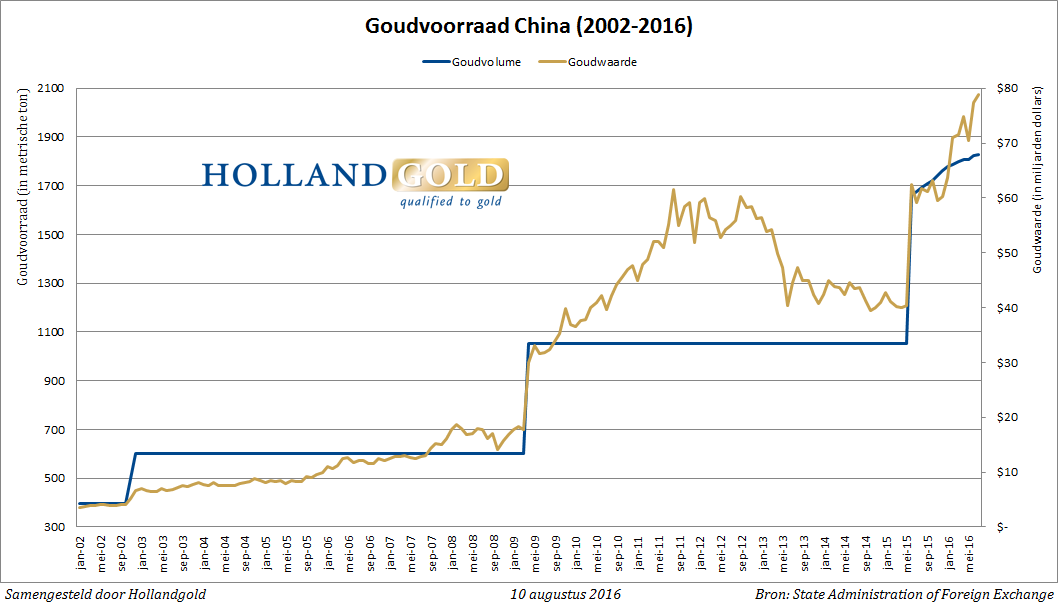
China's central bank's gold reserves since 2002
What this graph does make clear is that China wants to convert an increasing part of its foreign exchange reserves into Physical Gold. In June 2015, only 1.65% gold consisted of gold, just over a year later it is already 2.39%. And while the country's foreign exchange reserves reached a record of almost $4 trillion in 2014, it has now been reduced to $3.2 trillion.
China is doing more and more trade with Russia and Europe and therefore needs fewer dollar reserves. The country also wants to put its own yuan more prominently as an international trading currency. For example, the People's Bank of China has already agreed dozens of currency swaps with other central banks.
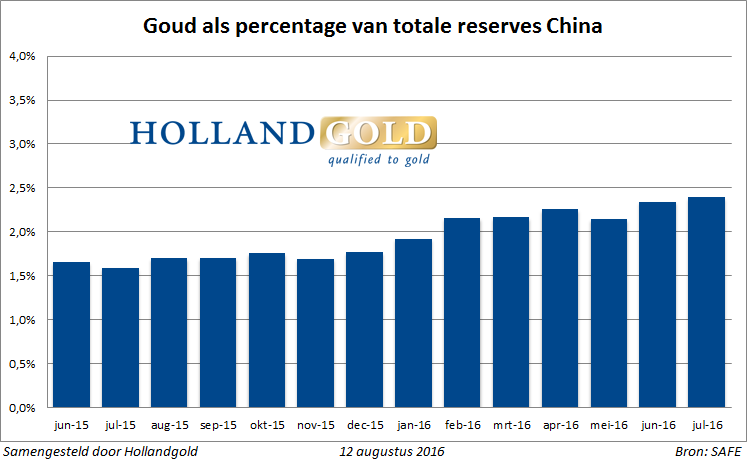
China shifts focus from foreign exchange reserves to gold