9.3
8.064 reviews

English
EN


The economic outlook seems to be deteriorating by the day due to rising energy prices, rising geopolitical tensions and ever-higher interest rates. Governments are trying to maintain the purchasing power of households with new support measures, but is that enough? In this analysis, we take stock. Can we already speak of an economic crisis in Europe? And what's in store for us in the coming months?
As we mentioned in a previous article, Wrote There is only a recession when the economy shows contraction for two months in a row, a decline in gross domestic product. We concluded that the United States is already close to recession, while the European economy was still showing minimal growth. But what is the situation now, more than two months later?
There are more economic indicators that provide insight into the state of the economy, such as the labour market, industrial production, retail sales and the development of real income. The U.S. National Bureau of Economic Research (NBER) tracks all of these indicators to determine what stage of the economic cycle we are in. What do these indicators currently say about the state of the eurozone economy?
According to the latest Eurostat figures, GDP in the eurozone increased by an annual rate in the second quarter 4,1%. That seems like an excellent growth figure, but on the other hand, inflation has also risen sharply. In August, inflation in the eurozone was even higher on average 9,1% on an annual basis, which means that real GDP in the currency union is negative. More than one hundred percent of the growth of the economy is attributable to rising prices, which means that we can answer this question with yes. Inflation is overshadowing economic growth, which means that the real economy is already shrinking.
Answer:Yes
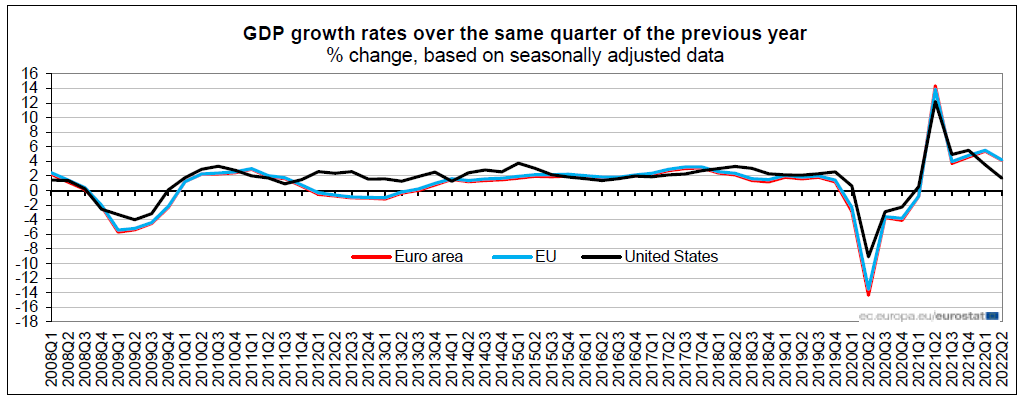
Gross domestic product is growing, but less than inflation (Source: Eurostat)
In the second quarter of this year, wages in the eurozone rose by an average of 4% on an annual basis. In the past ten years, wage growth has never been as high as it is now. In some cases, wages are rising much faster, see for example the exceptional raise at the Dutch Railways. There, employees will receive a total wage increase of 9.25% and two one-off payments of €1,000. This example will encourage employees at other companies to also ask for additional pay rises, especially now that expensive groceries and high energy prices are affecting purchasing power.
We expect average wage growth to rise further in the third quarter, but not enough to compensate for the aforementioned inflation of 9.1% on average in the eurozone. So in this area too, most employees are not actually improving at the moment. On the contrary, with a wage increase of 4% and an inflation rate of 9.1%, real income is still falling by about 5%.
Answer:Yes
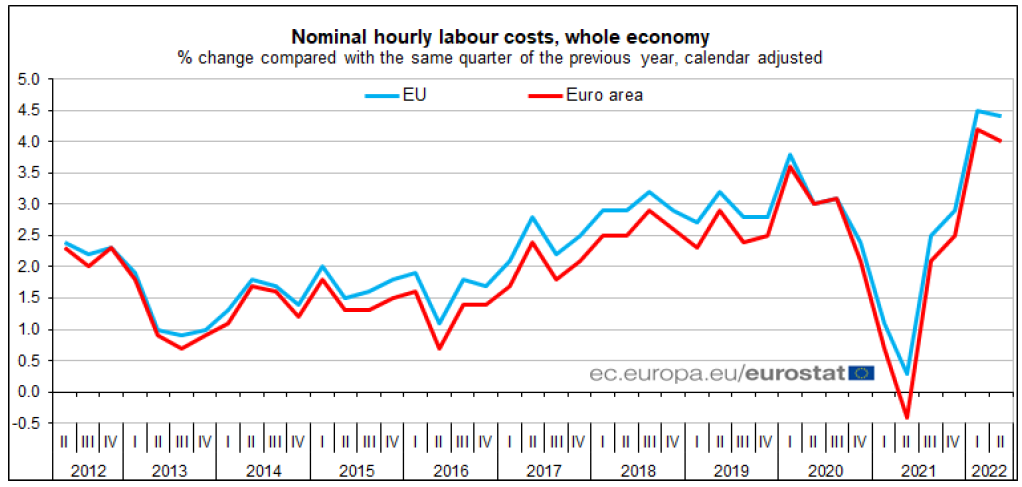
Wages are rising, but again less than inflation (Source: Eurostat)
According to the latest Eurostat figures, unemployment in the eurozone reached a new record of only 1000 in July. 6,6%. As a result, unemployment is currently even lower than before the 2008 financial crisis. The coronavirus pandemic caused a sudden rise in unemployment, but all the monetary and fiscal stimulus measures kept the number of bankruptcies low and jobs are up for grabs. According to the UWV, there is now even a Shortage of staff.
This exceptionally tight labour market is part of the boom, an economy that is running at full speed. That sounds hopeful, because people who are secure in their jobs spend their money more easily. But if we look at the impact of high energy prices on industry, small and medium-sized enterprises and consumers, it is almost inevitable that the labour market will deteriorate. If people have less money left over for luxury spending due to skyrocketing energy bills, this will undoubtedly have an effect on certain sectors of the economy.
It also remains to be seen whether companies that require a lot of energy can still produce profitably. The prospect of declining consumer spending and higher production costs for businesses will also ultimately lead to more bankruptcies and thus job losses. The first signs of this are already visible in the Netherlands, where the Unemployment rate has been rising again in recent months. Employment is therefore slowly starting to deteriorate, although we are coming from a very good starting position.
Answer:Yes
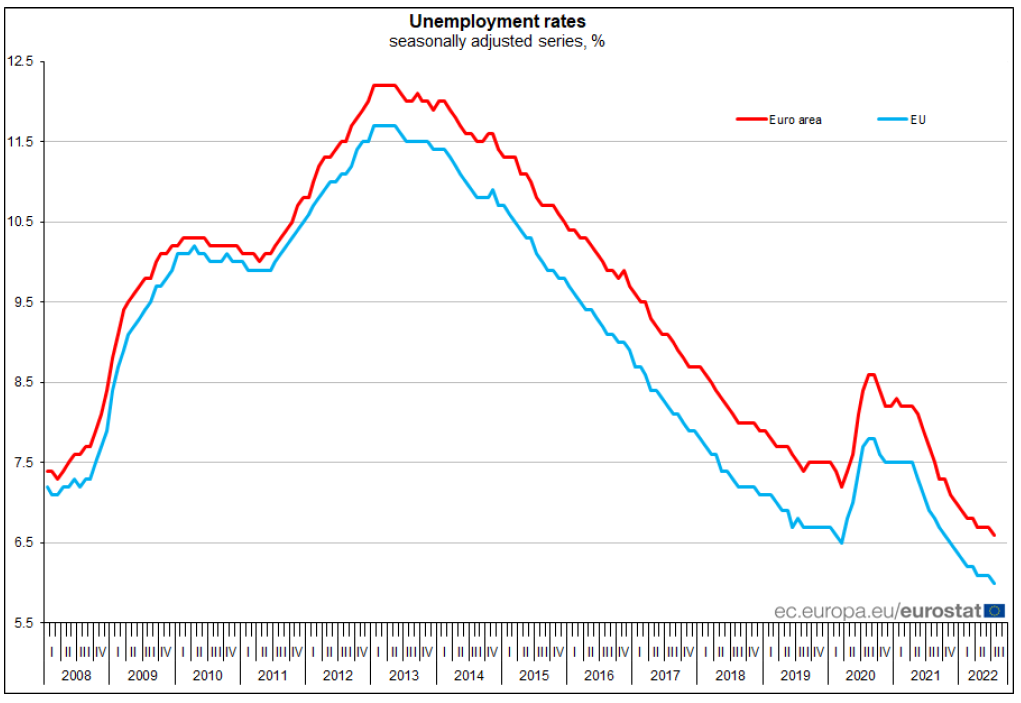
Unemployment in the eurozone is exceptionally low, but is already rising again in the Netherlands (Source: Eurostat)
According to the latest Eurostat figures, industrial production in the euro area increased by 2,3% compared to the previous month. That was the biggest month-on-month decline in more than two years. Moreover, the contraction turned out to be much larger than a contraction of 1% on average that economists had taken into account. The reason for this decline will be well known, namely the skyrocketing energy prices. Electricity and gas prices are currently three to four times more expensive than they were a year ago, putting some industries in a bind. The production of capital goods such as machinery and cars fell in particular.
We expect that the longer high energy prices persist, the greater the impact on industrial production. Companies will invest less and may even temporarily shut down production or move to other countries where energy is cheaper. Unfortunately, we also have to answer this question in the affirmative. Answer:Yes
If consumers have less confidence in the economy or in their own financial situation, they are more likely to keep their hands on their wallets. And this is reflected in the figures from Statistics Netherlands, because consumer confidence in the Netherlands is at an all-time low Dropped. With a score of -59, confidence in August was well below the average of -9 over the past two decades. Consumers' willingness to buy also declined. Especially with large purchases, people have become much more cautious, because more and more people simply have no money left at the end of the month.
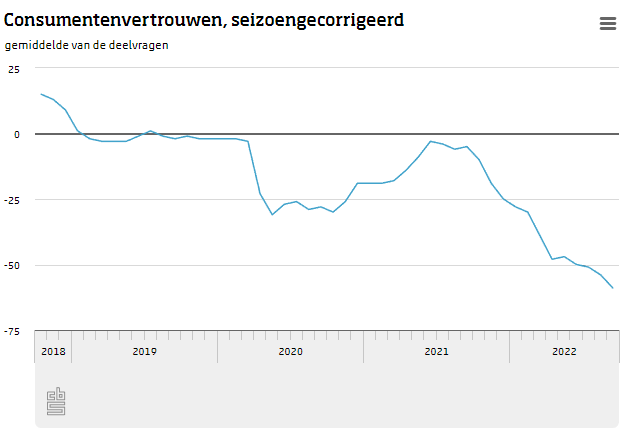
Consumer confidence to new low in August (Source: CBS)
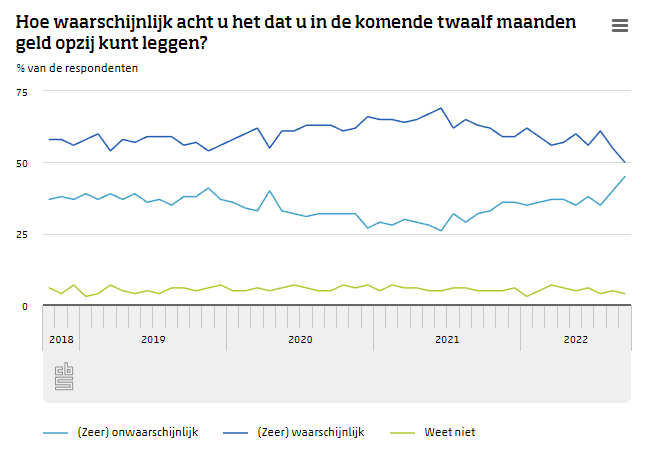
Fewer and fewer people are able to put money aside (Source: CBS)
This pessimism is not yet reflected in Eurostat's figures, as retail sales in the eurozone fell by only 1000 euros in July. 0,9% compared to a year ago. On average, people spent 2.4% less on food, 0.9% less on durable consumer goods and 0.6% more on fuel. So they are already cutting spending, given the sharp increases in the price of food and fuel. So there is no question of a sharp decline in store sales, but there has been a clear stagnation in the last year. See also the graph below.
Answer:Yes
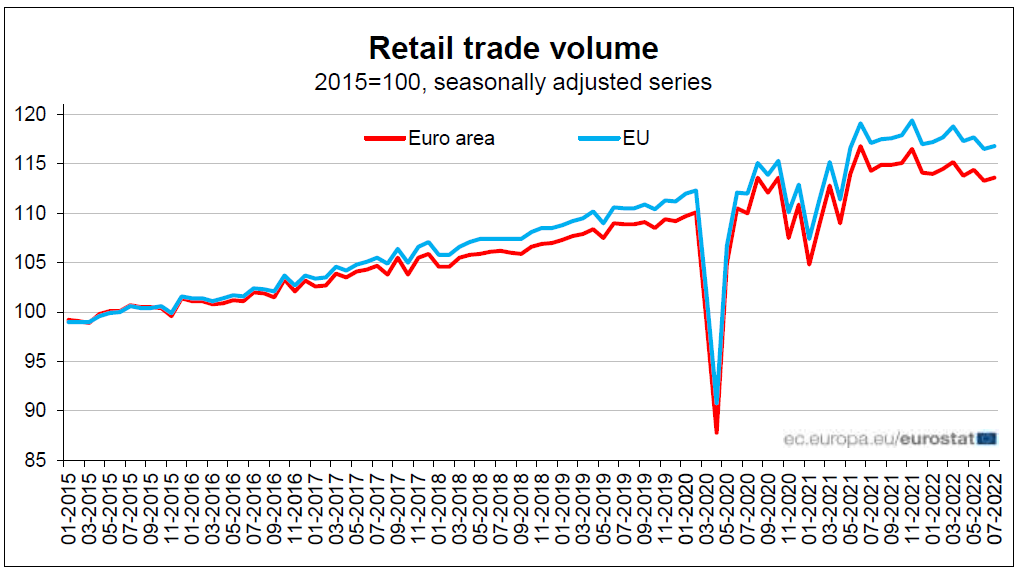
Store sales are not yet declining, but upward trend is stagnating (Source: Eurostat)
In this analysis, we looked at various criteria that the NBER also uses to interpret the state of the economy. This analysis relates to the situation in the euro area as a whole, which means that the situation for the Netherlands or Belgium may deviate from this average. It is well known that the Dutch economy is sensitive to changes in house prices due to the extremely high mortgage debt. For many households, their own home is their greatest asset. A fall in house prices means that equity evaporates and that some households may be underwatered. And that has a major effect on buying behaviour and therefore on the economy.
Finally, we should mention that this analysis is based on figures from Eurostat and Statistics Netherlands and that these may differ from reality. For example, in the United States, there is the website Shadowstats, which calculates inflation and unemployment based on the old calculation methods from the 1980s and 1990s. Based on their calculations, unemployment and inflation since 2008 have been structurally higher than officially reported. It is therefore possible that the figures in the Eurozone are also overly optimistic. Based on the five criteria mentioned above, we can conclude that we are already partially in a recession and that consumer spending and unemployment will lag behind.
 Have a look at us YouTube channel
On behalf of Holland Gold, Paul Buitink and Joris Beemsterboer interview various economists and experts in the field of macroeconomics. The aim of the podcast is to provide the viewer with a better picture and guidance in an increasingly rapidly changing macroeconomic and monetary landscape. Click here to subscribe.


