


43. What is the Central Bank Gold Agreement?
The Central Bank Gold Agreement, also known as the Washington Agreement, is an agreement between several central banks that was signed on September 26, 1999. The gold price was almost at its lowest point at the time and central banks wanted to prevent uncoordinated gold sales by central banks from disrupting the gold market too much. At the same time, the participating central banks wanted to reduce the sale of gold stocks and end gold lending, a practice that became increasingly popular after the breakup of the London Gold Pool.
It was mainly European central banks that signed this agreement. They agreed on a number of things:
- Gold remains an important component of monetary reserves.
- No more gold is being sold by central banks than what has already been promised.
- Sales will be limited to 400 tonnes of gold per year and a maximum of 2,000 tonnes over the full five-year period
- The lending of gold is not extended
- The agreement will be reviewed after five years
This agreement was revised in 2004, 2009 and 2014. Remarkably, the U.S. central bank never signed this agreement. They prefer to see the dollar as their monetary reserve.
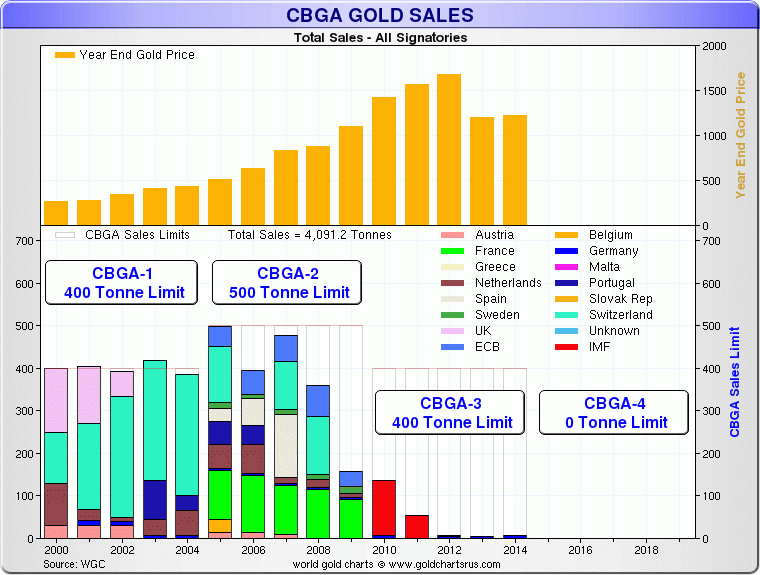
Gold sales under the Central Bank Gold Agreement
Source: ECB


