English
EN


Gold +2.27% and silver +3.31% (08:33, 5-8) following Wednesday morning’s market open, as part of a broad ‘relief rally’ across equities and financial markets. Hopes of reopening the Strait of Hormuz are increasing. Gold and silver had lost much of their gains for the year. Is this the turning point?
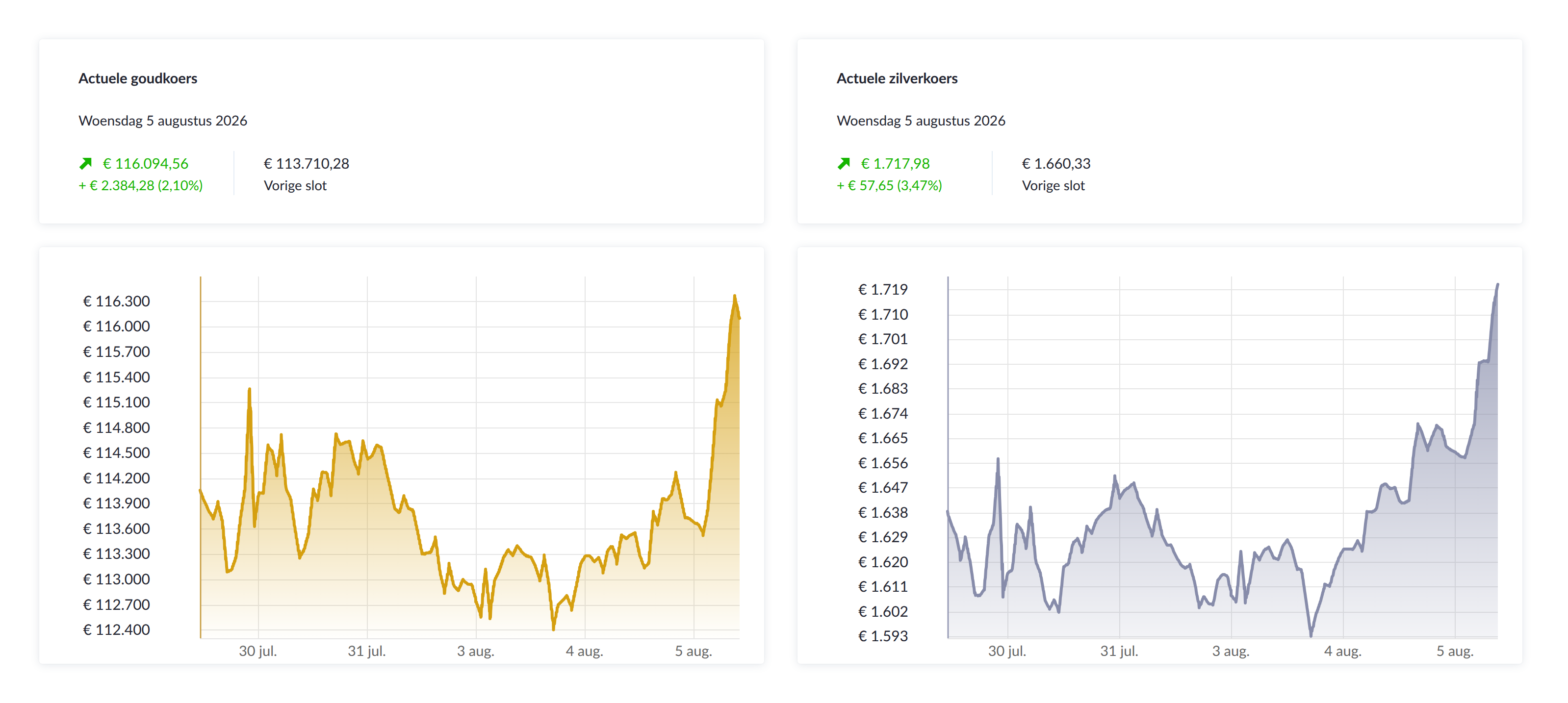 Gold price in euros per kg on the left, silver price in euros per kg on the right. Gold and silver both opened sharply higher on Wednesday, August 5. (Source: Holland Gold).
While recognising that all prices and market directions can change in an instant, we have seen a rapid market recovery in recent days. Gold and silver are recording gains for the third consecutive day, after their gains for the year had evaporated since the war between Iran and the United States began.
The reason? Substantial indications that the reopening of the Strait of Hormuz is becoming a reality. Brent Crude, one of the leading oil benchmarks, fell on the news to below $79 per barrel. Lower oil prices reduce inflation expectations, which in turn lowers expectations that the US Federal Reserve (Fed) will raise interest rates. Markets currently expect only one more interest-rate increase this year, compared with two previously. This represents a positive shift for gold.
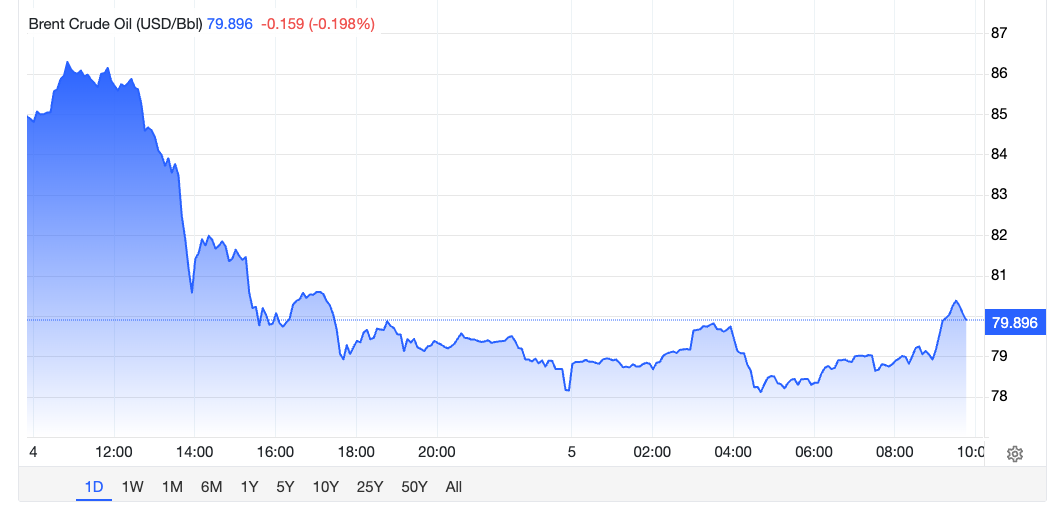 Brent Oil, a key international oil futures contract, fell sharply on August 4. (Source: Trading Economics).
|
Explainer: interest rates, gold and silver: A higher policy rate set by the Fed is negative for gold because it makes interest-bearing safe-haven assets, such as government bonds, more attractive. The Fed also uses higher interest rates to slow the economy, reducing demand for commodities such as silver. |
The good news? The United States, Iran and Oman may announce a 60-day shipping agreement today, Wednesday, August 5. Ships would not be required to pay tolls. Inbound vessels would take the northern route through the Strait of Hormuz along the Iranian coast. Outbound vessels would be able to sail through Omani waters.
The central passage through the narrow strait has been strewn with mines during the conflict. According to diplomats, Iran is also considering allowing European countries to clear the mines. This is relevant because Europe has minesweepers that the United States lacks, but also because Iran appears to be inviting Europe to act as an additional party to and guarantor of a ceasefire.
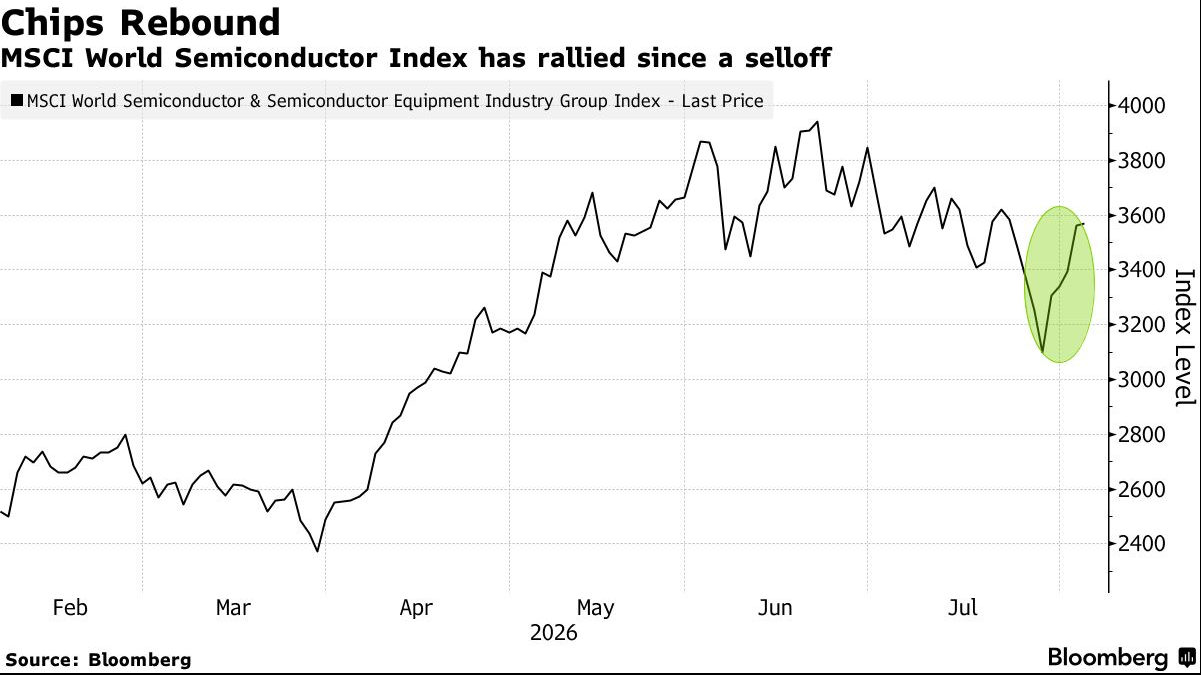 Chip and semiconductor stocks, including ASML and Nvidia, are also recovering following the news. (Source: Bloomberg).
Markets appear to be responding positively to the news. Technology stocks are back in positive territory after a correction appeared to have begun in recent weeks. The AEX closed 0.9% higher at 1,112.49 points on Tuesday, August 4. This was its highest closing level ever.
The major question hanging over the markets? Whether a genuinely durable and sustainable agreement will be reached today. During previous negotiations, an apparently ‘imminent’ deal ultimately failed to materialise, and markets returned to negative territory just as quickly. Even if an agreement on shipping through the Strait of Hormuz is reached, this would not bring the war to an end, nor would it mean that Trump’s objective of limiting Iran’s nuclear capabilities had been achieved. If the deal falls through or the conflict worsens again, another correction in equity and precious-metal prices is entirely possible.
Since the gold price fell to $4,000 per troy ounce (31.1 grams), interest among Chinese institutional investors has picked up again, according to Steve Zhou, an analyst at Huaan Fund Management. This has become clearly visible over the past two weeks through fresh inflows into Chinese gold-backed ETFs. Refinery PAMP told news agency Bloomberg that its physical inventories were being bought up rapidly. Demand for gold is being fuelled by the poor performance of Chinese stock markets, prompting retail investors to return to a safe-haven asset such as gold.
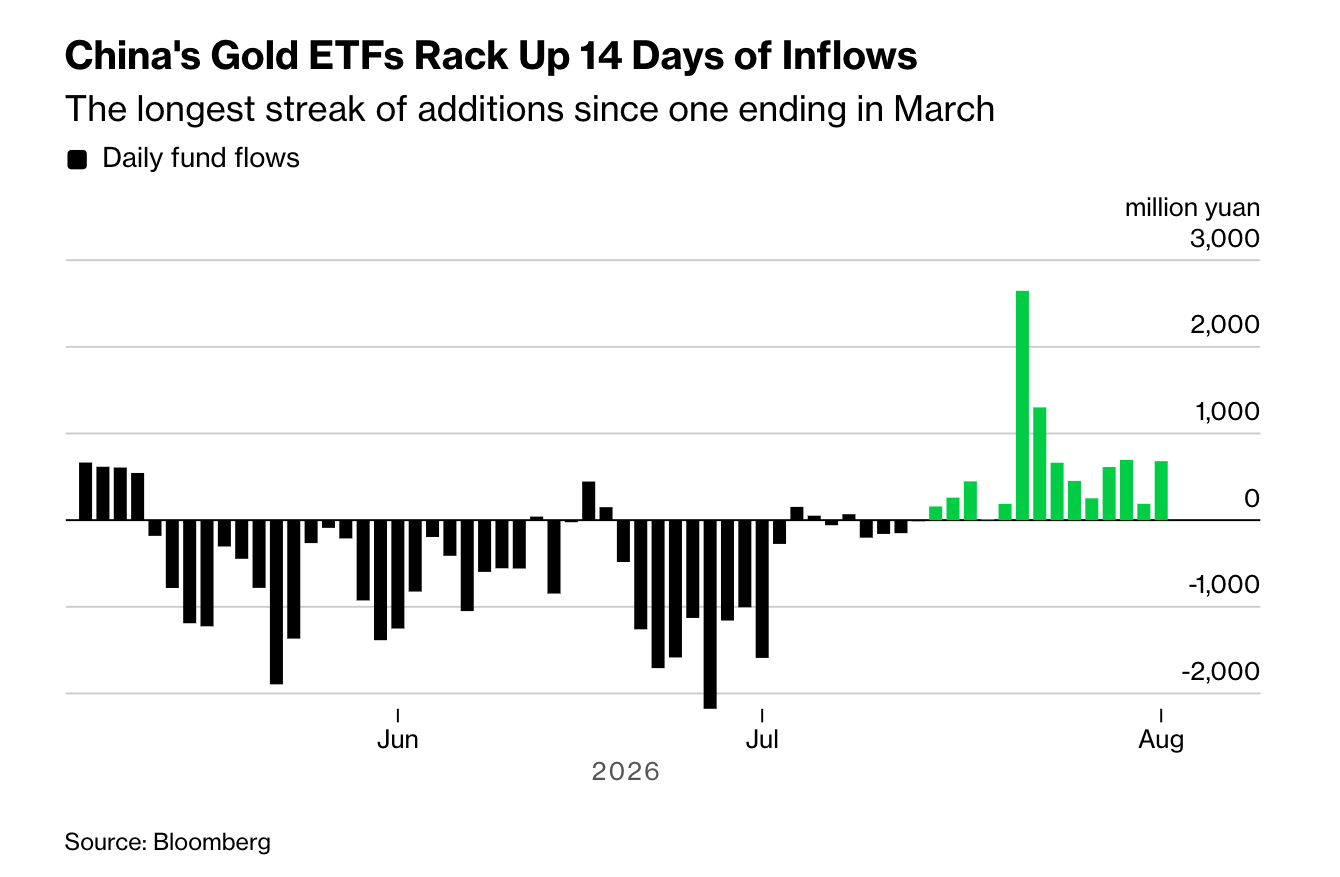 Chinese gold-backed ETFs have consistently attracted new investment over the past 14 trading days, resulting in physical gold being bought up rapidly. (Source: Bloomberg).
This renewed demand is important, as is the news that the Bank of Korea has announced that it intends to start buying gold. Just last week, it emerged that central-bank gold purchases had been considerably weaker than expected in the first quarter of 2026. Read our full analysis in the news article ‘Inflation is rising again: are central banks buying less gold?’. Central-bank gold purchases appear to have resumed in the second quarter. On Monday, August 3, the Bank of Korea announced that it intends to start actively purchasing gold again for the first time since 2013.
The United States is importing a record quantity of copper. In July, more than 200,000 tonnes of copper arrived in the United States, the largest monthly inflow in the past 14 years. Traders are importing additional copper because high import tariffs on the commodity may be announced. The White House has yet to announce when Trump will make a final decision on the tariffs, and this uncertainty is adding to tensions in the copper market.
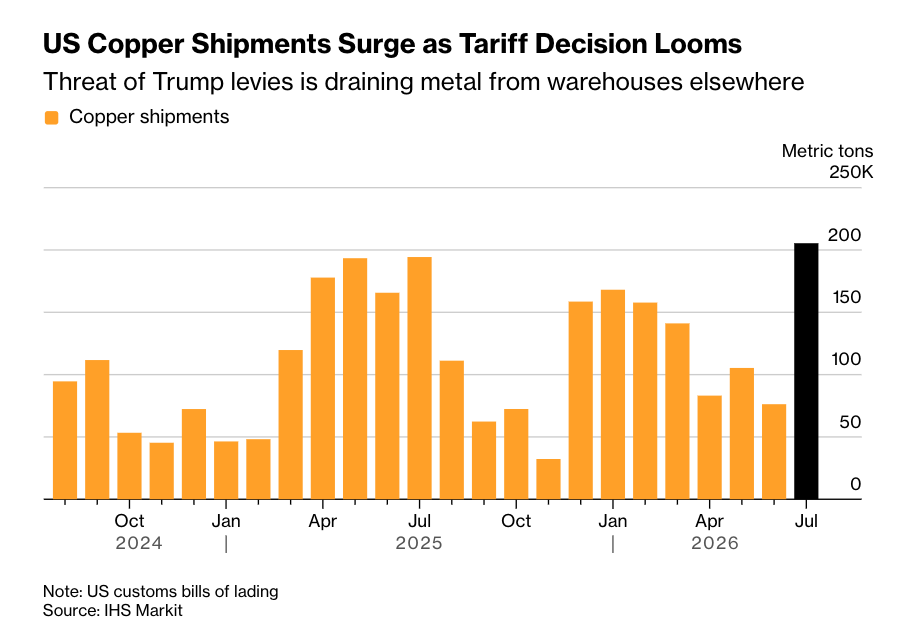 US shipping data for copper and copper imports are rising rapidly amid renewed concerns about tariffs. (Source: Bloomberg).
Key points to watch in the coming days:
On October 8, Holland Gold will bring well-known podcast guests to Theater Figi in Zeist for Freedom & Wealth 2026. View the programme and reserve your ticket for an evening about the future of the Netherlands, Europe and your wealth.