9.3
8.287 reviews

English
EN


The Chinese central bank added more than 10 tonnes of gold to its reserves in June. This is evident from New figures of the Chinese State Administration of Foreign Exchange (SAFE). The central bank has been active in the gold market again since December last year and has bought a total of almost 84 tonnes of gold in the past seven months. With the latest purchase, China's official gold reserve rises to 61.94 million troy ounces, converted to 1,926.6 tonnes.
China has more than $3.22 trillion in reserves, but most of them are foreign currency assets. With a market value of $87 billion, the gold stock represents a fraction of the total reserves. So it is not surprising that the Chinese central bank wants to diversify more by buying gold. Relative to the total size of the Chinese economy, the gold reserve is still relatively small.
In recent years, China has become the largest producer and buyer of physical gold in the world. Last year, more than 400 tonnes came from Chinese gold mines, but most of it finds its way to the private market. In fact, domestic demand is so high that China has to import a few hundred tons of gold from abroad every year. This means that there is already a lot of gold in China, but that it is mainly in private hands.
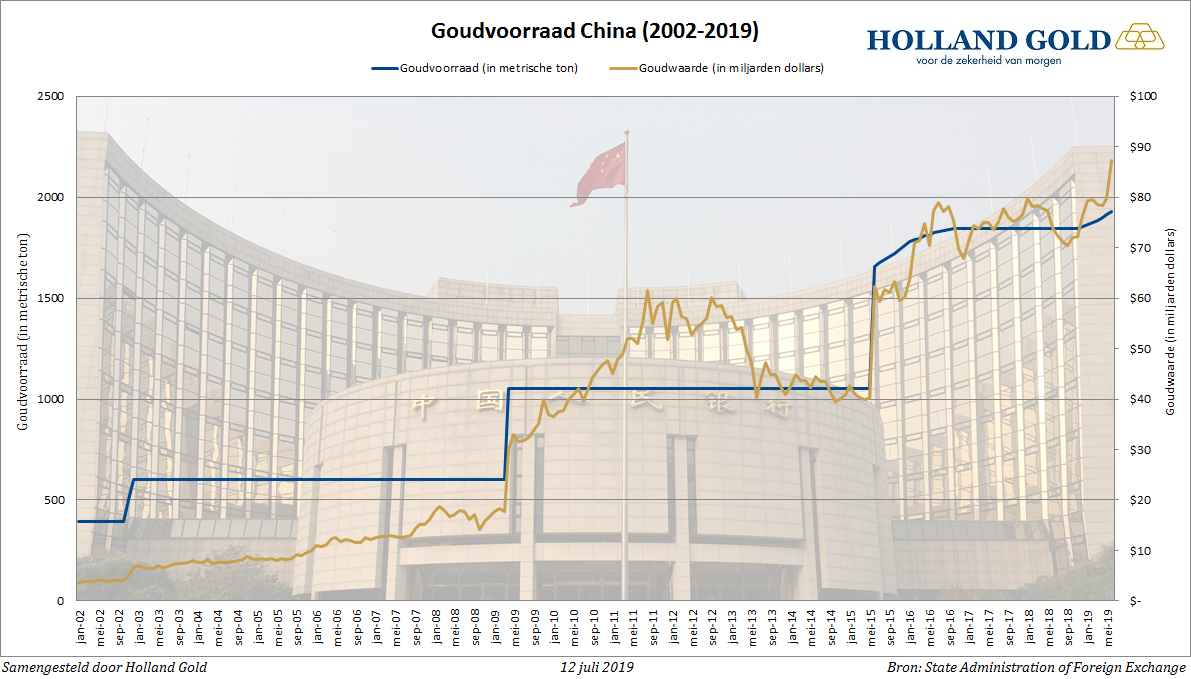
China added gold to reserves again in June
China is one of an increasingly large group of countries that Buy gold. Some do so from a diversification perspective, while others also cite geopolitical risks as a reason. Over the past decade, China has bought the most gold along with Russia, but countries such as India, Turkey and Kazakhstan have also added a relatively large amount of precious metal to their reserves. More recent are the gold purchases of European countries such as Hungary and Poland.
Central banks added net income last year 651 tonnes of gold to their reserves, the highest volume since 1967. China made a small contribution to this, as China's central bank only became active in the gold market again in December. According to figures from the World Gold Council, central banks' gold purchases this year have even increased even higher.
Interest in gold among central banks has increased in recent years due to rising political and geopolitical tensions. Consider, for example, the trade war and various economic and financial sanctions. Gold is a neutral reserve with no counterparty risk and a resource that is De Nederlandsche Bank can be used to restart a failing monetary system.
The graph below shows the countries with the largest gold reserves, supplemented by a number of smaller countries that have bought a lot of precious metal in the past ten years. Of course, there were also countries and institutions that sold gold in recent years, such as the IMF (-400 tons) and Venezuela (-195 tons). In 2009, the IMF sold 200 tonnes of gold to India, while Venezuela has to buy precious metals due to money problems. sell.
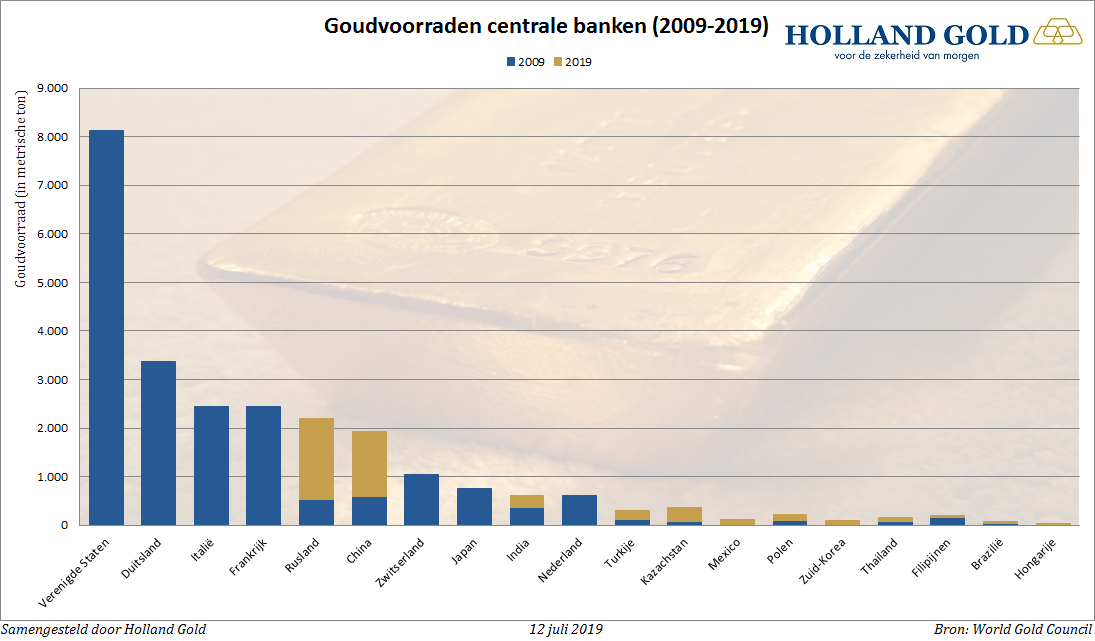
Several central banks have expanded their gold holdings in recent years


