9.3
8.638 reviews

English
EN


The price of palladium has risen spectacularly in recent years and seems to be little affected by the corona crisis. In a few years, the precious metal has both platinum and gold Caught up and is therefore the most expensive precious metal. At the time of writing, a troy ounce costs $2,375, more than anything ever paid for the same weight in gold or platinum. Five years ago, the Palladium price still less than $500 per troy ounce. How is it possible that the price of this precious metal has quadrupled in five years?
Palladium, along with ruthenium, rhodium, osmium, iridium, and platinum, belongs to the platinum group of metals. It is a relatively rare metal, as it is about thirty times as scarce as gold. It was discovered in South Africa in 1803 while researching the ore from platinum mines. Like platinum, palladium is very suitable for catalytic converters due to its unique properties and good heat resistance.
More than 85% of the annual supply is used by the automotive industry, which processes the precious metal in catalytic converters of gasoline cars. The application of the precious metal helps to reduce the emission of harmful exhaust gases. In addition, the precious metal is used on a limited scale in electronics, the dental industry and for jewelry. Palladium is largely mined in Russia and South Africa. It occurs in nature as a by-product in the mining of nickel and platinum.
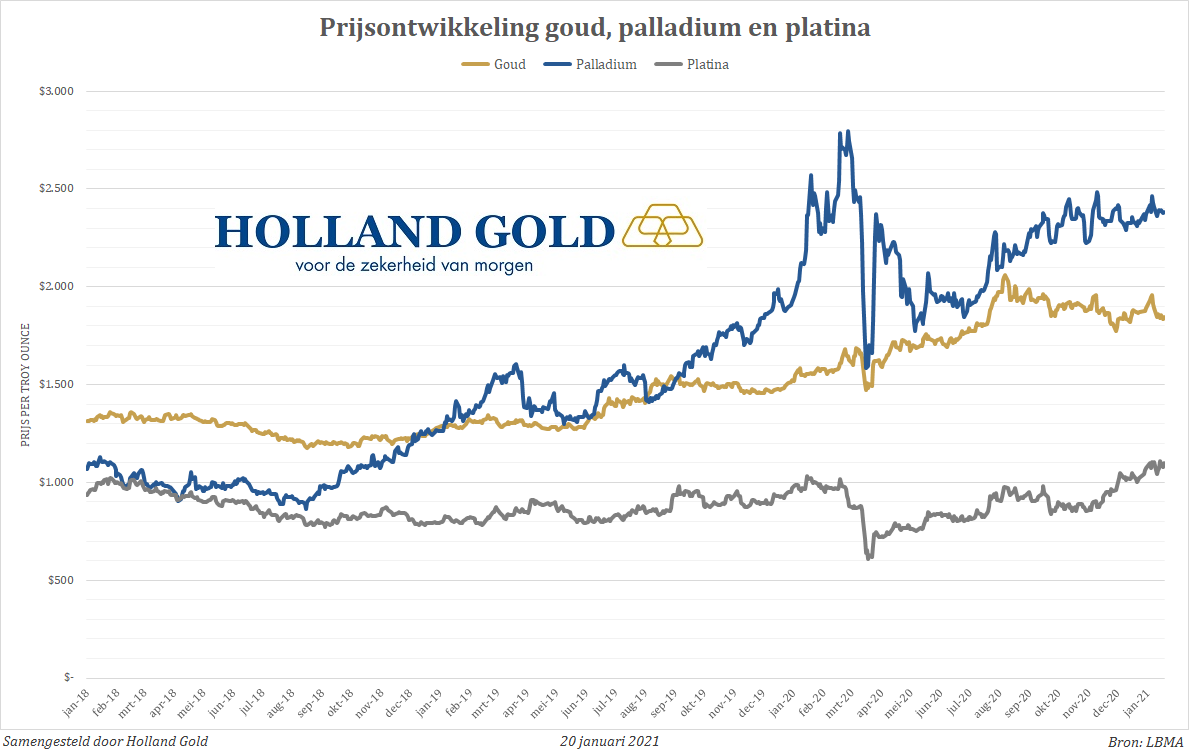
Price development gold, palladium and platinum (Source: LBMA)
The price of palladium has risen sharply in recent years due to a structural shortage in the market. Due to stricter environmental standards, car manufacturers worldwide have increasingly palladium while the supply of this precious metal is rising less rapidly in line with demand. As mentioned, most of the supply comes from two countries, namely Russia and South Africa. And because the precious metal is mainly mined as a by-product, it is difficult to scale up production further. Nickel and platinum producers are less likely to react to an increase in palladium prices.
As a result, the palladium market has been in deficit since 2012. Including investment demand, the deficit fluctuates between half a million and one million troy ounces per year, with a peak of 1.3 million troy ounces in 2016. As long as that balance is not restored, there will continue to be upward pressure on the palladium price.
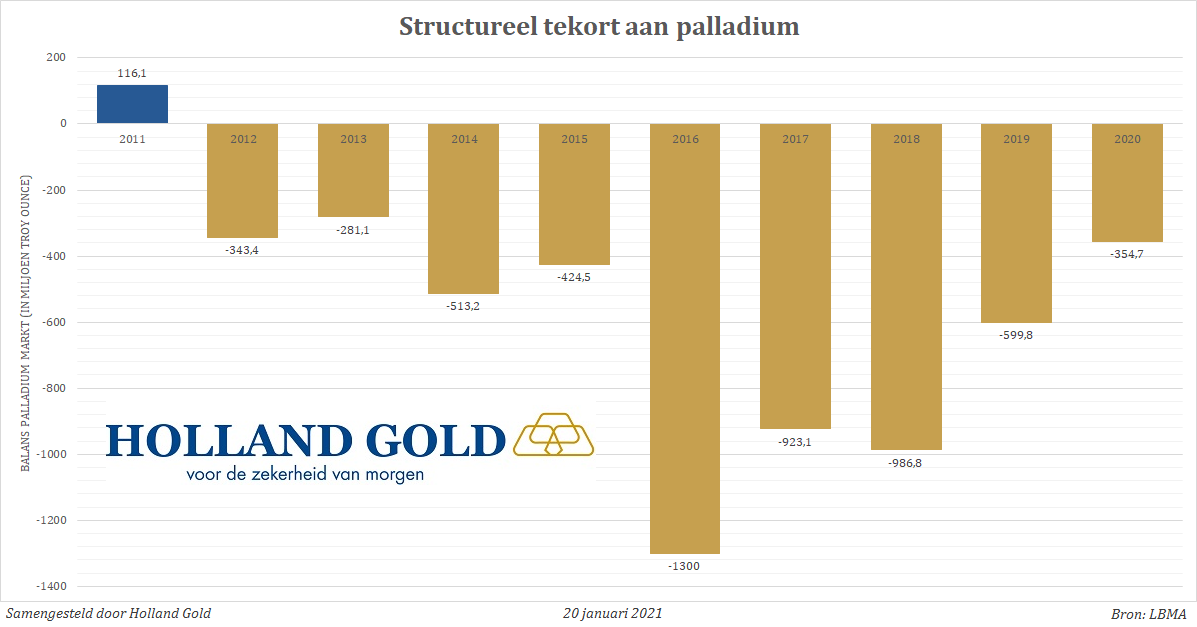
Structural shortage of palladium (Source: Metals Focus)
The price of palladium, like that of platinum, is quite volatile. As mentioned, the price was about $500 per troy ounce five years ago. These large price fluctuations are the result of a relatively constant supply in combination with large changes in demand. In times of economic prosperity, the demand for cars increases and so does the demand for palladium. In a crisis, however, the price can also fall just as quickly.
An example of this is the platinum market. Between 1998 and 2008, the platinum price by more than 500% to a record of about $2,300 per troy ounce. However, after the outbreak of the financial crisis, the price crashed to $800 per troy ounce. The price of palladium has also been driven up by speculators in the past. This happened between 1996 and 2001, when the market was concerned about the continuity of the supply of palladium from Russia.
Automakers use both palladium and platinum to reduce harmful emissions from cars, with the former working best for gasoline cars. Platinum, on the other hand, is more often used in diesels. Chemical company BASF is now working on a new technology that will allow car manufacturers to replace some of the palladium with the cheaper platinum. If that is a success, they can use more platinum, which could increase the platinum price.
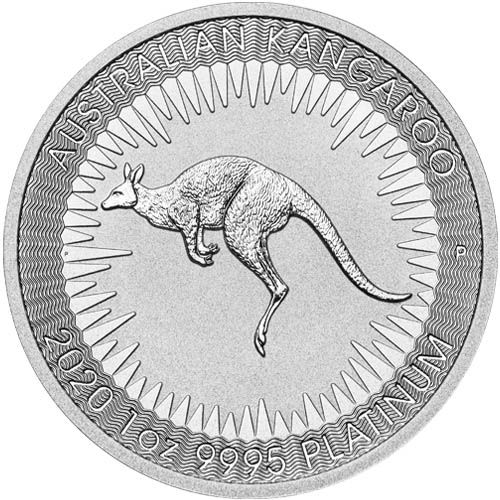 The price of platinum has lagged far behind in recent years and could potentially be a Catching up. The precious metal is currently relatively cheap compared to both gold and palladium, while it is of interest to both the industry and investors. For example, platinum can also be found in jewelry, especially on the Chinese market.
The rise of electric cars could also be detrimental to palladium, as these cars do not produce exhaust fumes and therefore do not require a catalytic converter. However, car manufacturers do use silver and platinum for the production of electric cars and battery packs. That could boost the demand for these precious metals.
Click Here To Buy Platinum / Click here for palladium
This contribution was made from Geotrendlines


